
Delfoi on Mount Parnassus, where temples meet the slope
Published on 08/14/2026 at 14:25 | Editorial responsibility: Rafael Müller, Editor-in-Chief AD HOC NEWS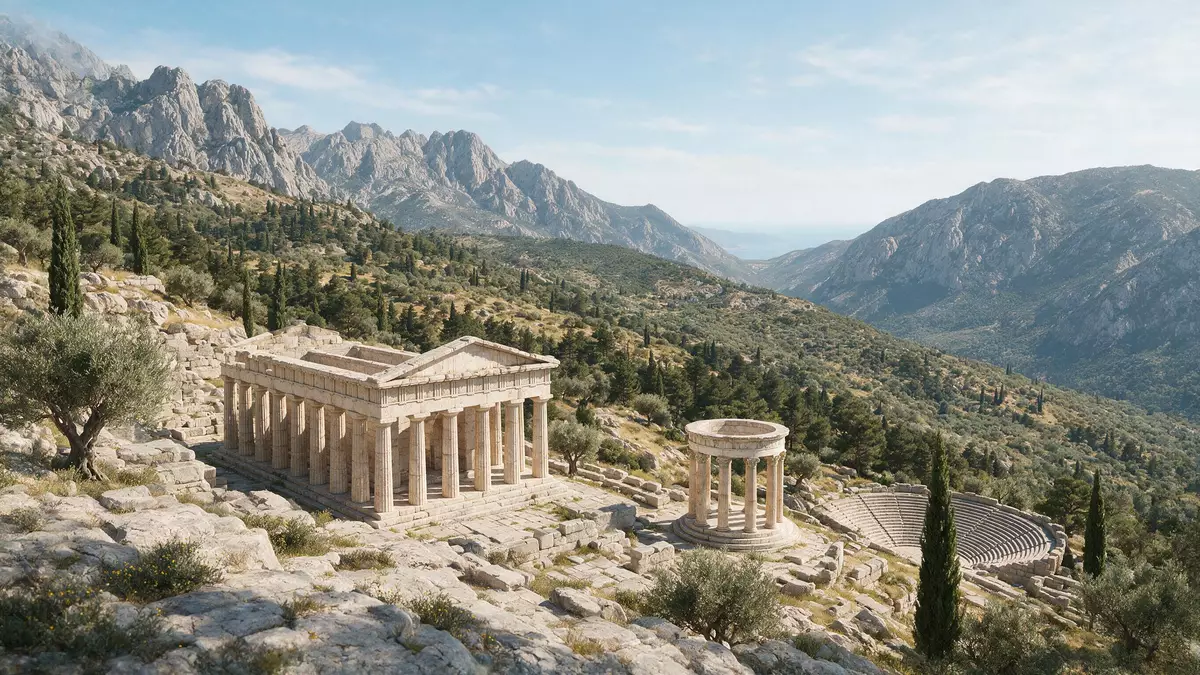
Delfoi rises on the slope of Mount Parnassus in Central Greece, where the sanctuary of Apollo, the theatre and the stadium climb the hillside in clear stages. The site is part of the Archaeological Site of Delphi, a UNESCO World Heritage site inscribed in 1987.
Delfoi on the Parnassus slope
The setting is the first thing that gives Delfoi its shape: a sanctuary spread across steep ground, with ruins stepping upwards instead of lying on a level plain. The ancient complex occupies land between the Phaidriades Rocks and the valley below, in Phocis.
The Temple of Apollo belongs to the centre of the site, and the Sacred Way once led visitors past votive monuments and treasuries towards it. The place was long associated with the oracle of Apollo, the omphalos and the religious life of the Greek world. World Heritage site
Temples, treasuries and the sacred route
Two sanctuaries define the archaeological area. The southern part belongs to Athena Pronaia, while the northern sector holds the sanctuary of Apollo, with the theatre above it and the stadium farther up the hill.
The surviving Temple of Apollo dates from the fourth century BC, after earlier phases on the same site. Ancient buildings along the Sacred Way include treasuries and stoas, and the Athenian Treasury remains one of the clearest faces of the sanctuary. Temple of Apollo fourth century BC
The theatre sits above the sacred area and the stadium lies higher still. That arrangement gives the site a vertical reading, with ritual, gathering and athletic space separated by the mountain’s natural rise.
Myth, oracle and museum pieces
Delfoi belongs to the Greek imagination as much as to archaeology. It was the seat of the oracle of Apollo, and its religious standing grew through the classical period, when pilgrims and city-states brought gifts to the sanctuary.
The modern visitor also encounters the site through the museum, which holds objects such as the Charioteer of Delphi, the Sphinx of Naxos and the bronze and marble fragments found in the sanctuary. These finds make the place legible as a long-lived religious centre rather than a single ruined monument. oracle of Apollo Archaeological Museum
Myth and stone remain closely linked here. The sanctuary is identified with the omphalos, the “navel of the world”, and the landscape itself is part of the site’s identity.
Visiting Delfoi: what travellers from Western Europe should know
- Delfoi lies in Phocis, in Central Greece, on the slope of Mount Parnassus. The modern town sits beside the archaeological zone on the road between Arachova, Amfissa and Itea.
- The site rises in terraces, and the upper parts require movement over uneven ground and uphill paths. The stadium and other high points sit well above the sanctuary floor.
- The archaeological area includes the sanctuary of Apollo and the sanctuary of Athena Pronaia. Both parts are separated by the modern road that crosses the site.
- The place is linked to the oracle of Apollo, the Sacred Way and the Pythian Games. Those names explain why the ruins matter as a religious and civic landscape.
Searching for Delfoi on social platforms
These links open searches for Delfoi on each platform.
Frequently asked questions about Delfoi
Where is Delfoi?
Delfoi is in Central Greece, on the slopes of Mount Parnassus in Phocis. The modern village stands beside the archaeological site.
What does a visit involve?
The site combines a hillside walk with ruins, museums and wide views across the sanctuary layout. The ground rises steeply towards the theatre and stadium.
What makes Delfoi distinctive?
Delfoi is marked by the oracle of Apollo, the Sacred Way and the layered arrangement of sanctuaries, temples and terraces. Its UNESCO status reflects that combination of archaeology, landscape and religious history.


