
Dolomiti and the limestone towers above Cortina d'Ampezzo
Published on 09/24/2026 at 08:48 | Editorial responsibility: Rafael Müller, Editor-in-Chief AD HOC NEWS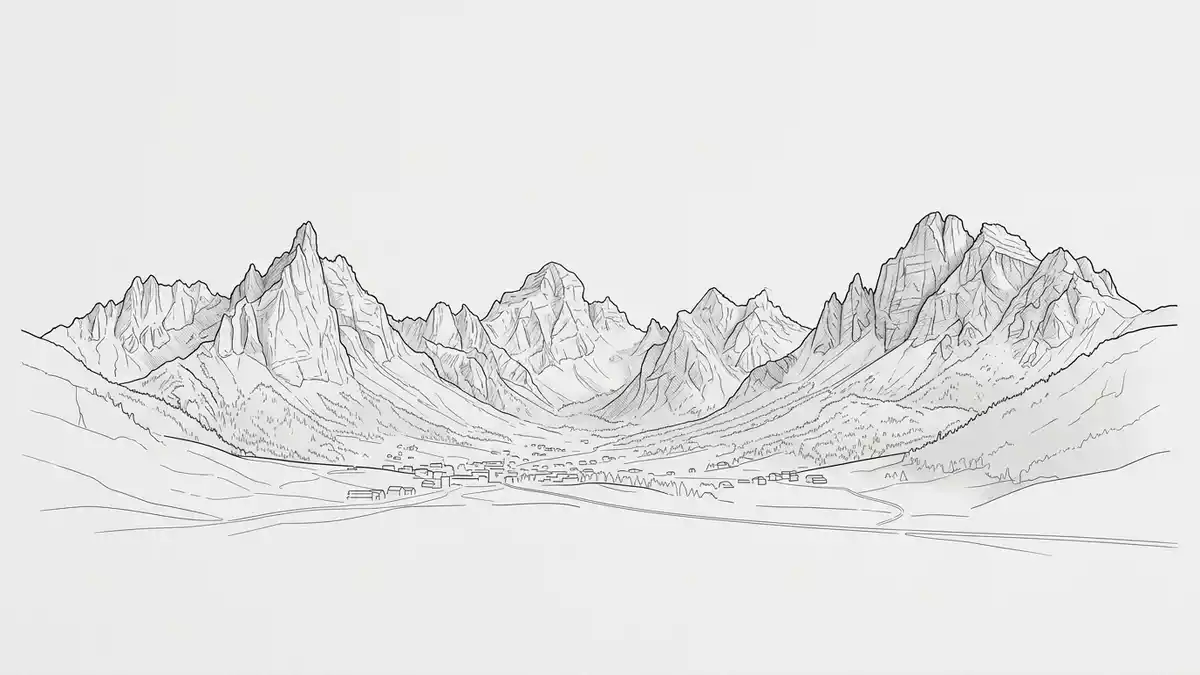
Dolomiti is a mountain landscape of pale limestone towers, pinnacles and high valleys around Cortina d'Ampezzo in northern Italy. Its visible drama comes from rock formed in ancient tropical seas, then raised, eroded and divided into cliffs, ridges and basins.
Limestone towers shaped by an ancient sea
The rock gives Dolomiti its distinctive pale colour and its name. The mountains are made chiefly of dolomitic limestone, a carbonate rock associated with reefs and marine deposits from the Triassic period.
About 250 million years ago, shells, corals and algae accumulated beneath a tropical sea. The material became layered limestone, while later geological movements raised the seabed into mountain country. Around 70 million years ago, the emerging land began to acquire its Alpine form through erosion and geological change. Dolomiti geological history
Vertical walls stand beside scree slopes, grassy meadows and wooded valleys. Narrow pinnacles rise above broader plateaux, while deep gorges cut between the mountain groups. The result is a landscape where marine fossils and Alpine relief belong to the same visible story.
From Dieudonné Dolomieu to UNESCO recognition
The mountains take their name from Dieudonné Dolomieu, the French geologist who studied the characteristic rock in the eighteenth century. His name also gave the mineral dolomite its scientific identity.
Dolomiti entered the UNESCO World Heritage List on 26 June 2009. The designation covers a serial property formed by several mountain areas, recognised for geological and geomorphological importance as well as landscape quality. UNESCO World Heritage status
The mountains around Cortina d'Ampezzo belong to this protected setting. North of the town, the Natural Park of the Ampezzo Dolomites covers 11,200 hectares and reaches the border between Veneto and South Tyrol. Its mountain groups include Tofana, Fanis, Col Bechei, Croda Rossa d'Ampezzo and Cristallo.
Cortina d'Ampezzo among valleys, walls and high peaks
Cortina d'Ampezzo lies in the Ampezzo Valley, surrounded by limestone massifs and high passes. The town provides a cultural and geographical reference point for exploring the surrounding Dolomiti landscape.
The area contains more than mountain summits. Forests occupy lower slopes, while meadows, streams, waterfalls and Alpine lakes appear between the rock formations. At higher elevations, glacial landforms and exposed cliffs mark the transition from valley scenery to alpine terrain.
Marmolada is the highest point of the wider Dolomites, reaching 3,342 m (10,964 ft). The range includes jagged ridges, rocky towers, scree and steep faces, with the pale stone changing colour in sunlight. Dolomiti mountain geography
Sunrise and sunset can produce the alpenglow known as Enrosadira, when the limestone takes on pink, orange and red tones. The phenomenon belongs to the visible character of the mountains, alongside their cliffs, forests and open valleys.
Visiting Dolomiti: what travellers from Western Europe should know
- Cortina d'Ampezzo stands in the Ampezzo Valley in Veneto, northern Italy. Road connections reach the town from Belluno and Dobbiaco, with the nearest railway stations at Calalzo-Pieve di Cadore-Cortina and Dobbiaco.
- The surrounding terrain includes steep rock faces, scree, narrow valleys and high mountain paths. Routes vary from valley walks to exposed alpine terrain, so the landscape demands appropriate route planning.
- The Natural Park of the Ampezzo Dolomites lies north of Cortina d'Ampezzo. It includes the Tofana, Fanis, Croda Rossa d'Ampezzo and Cristallo groups.
- The official language is Italian and the currency is the euro.
Searching for Dolomiti on social platforms
These links open searches for Dolomiti on each platform.
Frequently asked questions about Dolomiti
Where is Dolomiti?
Dolomiti is the mountain region of the eastern Italian Alps, with Cortina d'Ampezzo in the Ampezzo Valley as a principal town and access point.
What can visitors expect in Dolomiti?
The landscape combines pale limestone walls, pinnacles, scree slopes, forests, meadows, streams, waterfalls and high alpine terrain.
What makes Dolomiti distinctive?
Its cliffs and towers are made from dolomitic limestone linked to ancient marine reefs. UNESCO recognised the mountains in 2009 for their geological and geomorphological importance.


