
Dotonbori turns a historic canal into Osaka’s neon stage
Published on 09/22/2026 at 08:48 | Editorial responsibility: Rafael Müller, Editor-in-Chief AD HOC NEWS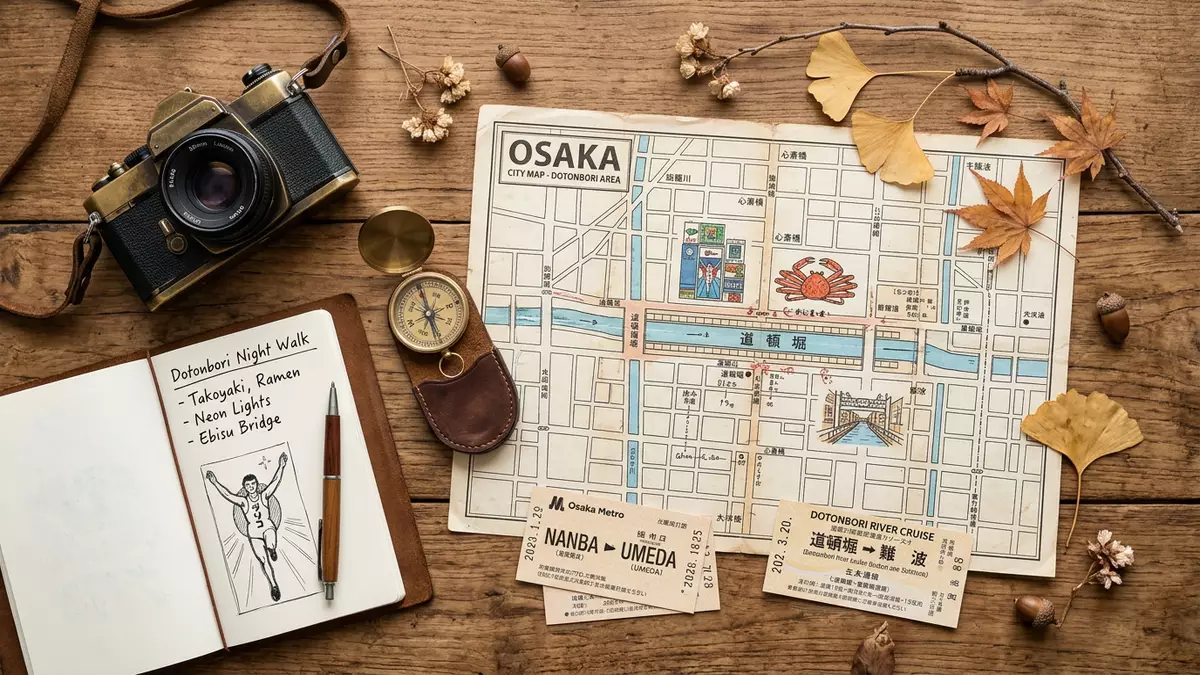
Dotonbori is a canal-side district in Osaka’s Minami area, where water, theatre history, restaurants and illuminated signs share a compact urban setting. The district’s visible centre is Ebisu Bridge, with the Glico running man facing the crossing and the canal continuing beneath a sequence of bridges.
Dotonbori’s canal and the name of Yasui Doton
The waterway began in 1612, when the local merchant Yasui Doton became associated with a canal project in southern Osaka. Construction was completed in 1615, and the name Dotonbori combines Doton’s name with bori, a form of hori, meaning canal or moat. Dotonbori’s recorded history preserves this connection between the waterway and its namesake.
The canal belongs to Osaka’s early modern urban landscape. Its banks connect Dotonboribashi Bridge and Nipponbashi Bridge, while the district name also covers the streets and commercial frontage beside the water. Bridges, promenades and shop signs create a layered view in which the canal remains the organising feature.
From theatre quarter to food-lined streets
Dotonbori became an entertainment district during the Edo period. In 1626, a theatre area was moved to the canal banks, bringing kabuki, puppet theatre, teahouses and restaurants into the same neighbourhood. The historic theatre district occupied the southern bank, while food and drink businesses developed around the audiences and performers.
The theatre buildings have largely disappeared, but their cultural setting remains part of Dotonbori’s identity. The district’s restaurant fronts use large sculptural signs, including representations of crabs, fish and other dishes. Takoyaki, okonomiyaki, ramen and other Osaka specialities appear in streets that run beside the canal and through the surrounding Namba area.
Ebisu Bridge, the Glico runner and the illuminated canal
Ebisu Bridge is Dotonbori’s most recognisable crossing. The bridge was rebuilt in 2007 with a broad central plaza, and its railings incorporate shapes associated with okonomiyaki spatulas. The canal walk and bridge place pedestrians close to the water, shopfronts and large advertising displays.
The Glico running man has overlooked the area since 1935. The sign shows an athlete crossing a finish line, and its position near Ebisu Bridge makes it a visual marker for the district. Ebisu Bridge and the canal appear together in descriptions of Dotonbori’s waterside landscape.
Illumination changes the canal’s appearance after dark, but the underlying arrangement remains clear: water in the centre, bridges across it, and commercial streets along both banks. A cruise presents the district from the canal, while the pedestrian routes show the signs, restaurant façades and bridge structures at street level.
Visiting Dotonbori: what travellers from Western Europe should know
- Dotonbori lies in Osaka’s Minami area, beside Namba. Osaka Metro stations at Namba and Shinsaibashi connect the district with the city’s rail network.
- The main streets are urban pedestrian routes, while the canal walk includes steps and riverside access points around the bridges.
- The official language is Japanese and the currency is the Japanese yen.
- Dotonbori’s restaurants, theatres, bridges and canal promenade occupy a dense central district rather than a separate gated attraction.
Searching for Dotonbori on social platforms
These links open searches for Dotonbori on each platform.Frequently asked questions about Dotonbori
Where is Dotonbori?
Dotonbori is in Osaka’s Minami area, beside the canal between Dotonboribashi Bridge and Nipponbashi Bridge. Namba and Shinsaibashi are nearby urban districts.
What can visitors expect there?
Visitors find a canal promenade, bridges, restaurants, food signs, illuminated advertising and streets connected with Osaka’s theatre history. The district combines waterside views with dense commercial activity.
What makes Dotonbori distinctive?
Its identity rests on the meeting of a canal completed in 1615, an entertainment quarter established during the Edo period, and landmarks such as Ebisu Bridge and the Glico running man.


