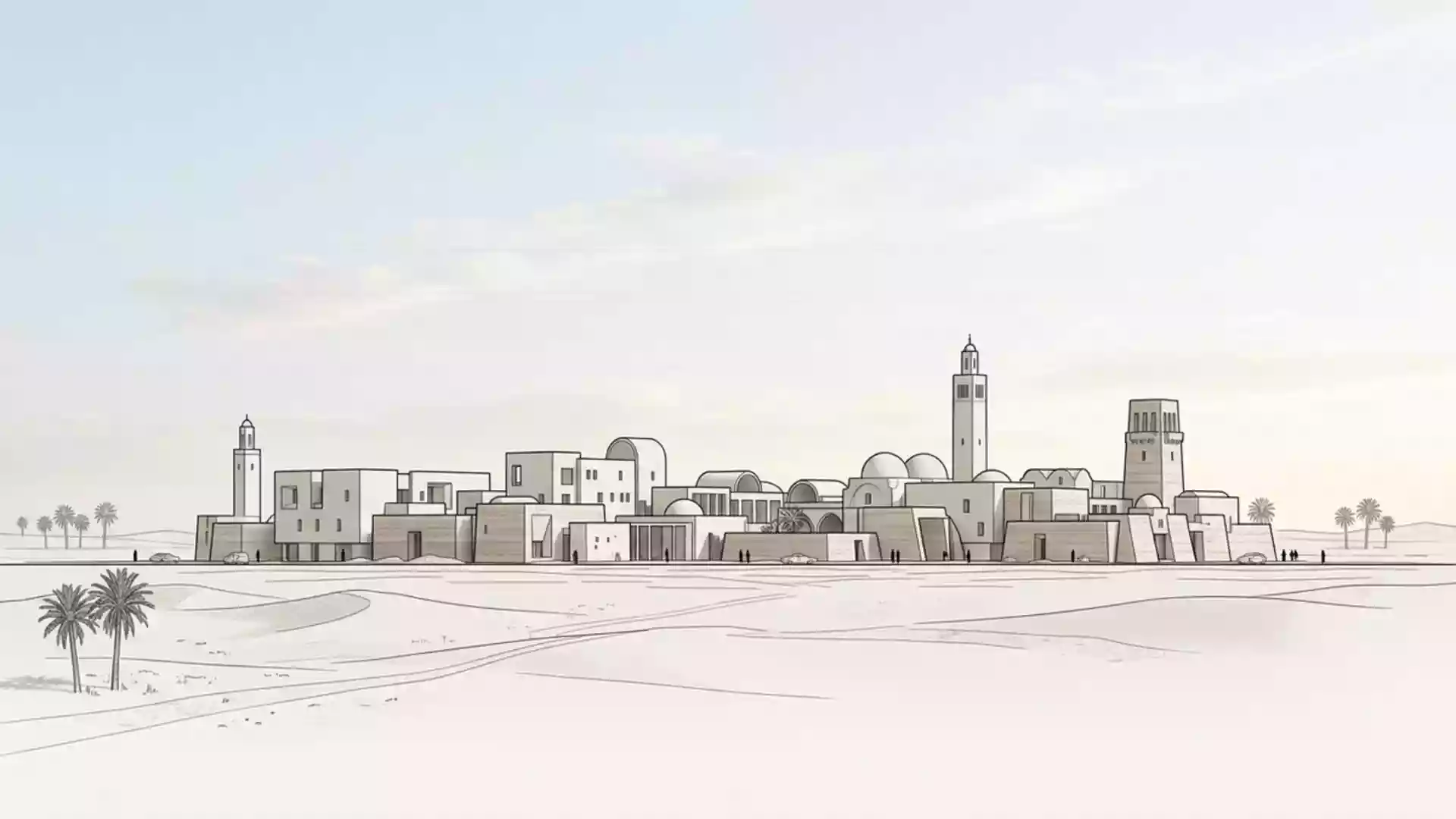
Douz, oasis town on the edge of the Tunisian Sahara
Published on 08/14/2026 at 14:30 | Editorial responsibility: Rafael Müller, Editor-in-Chief AD HOC NEWS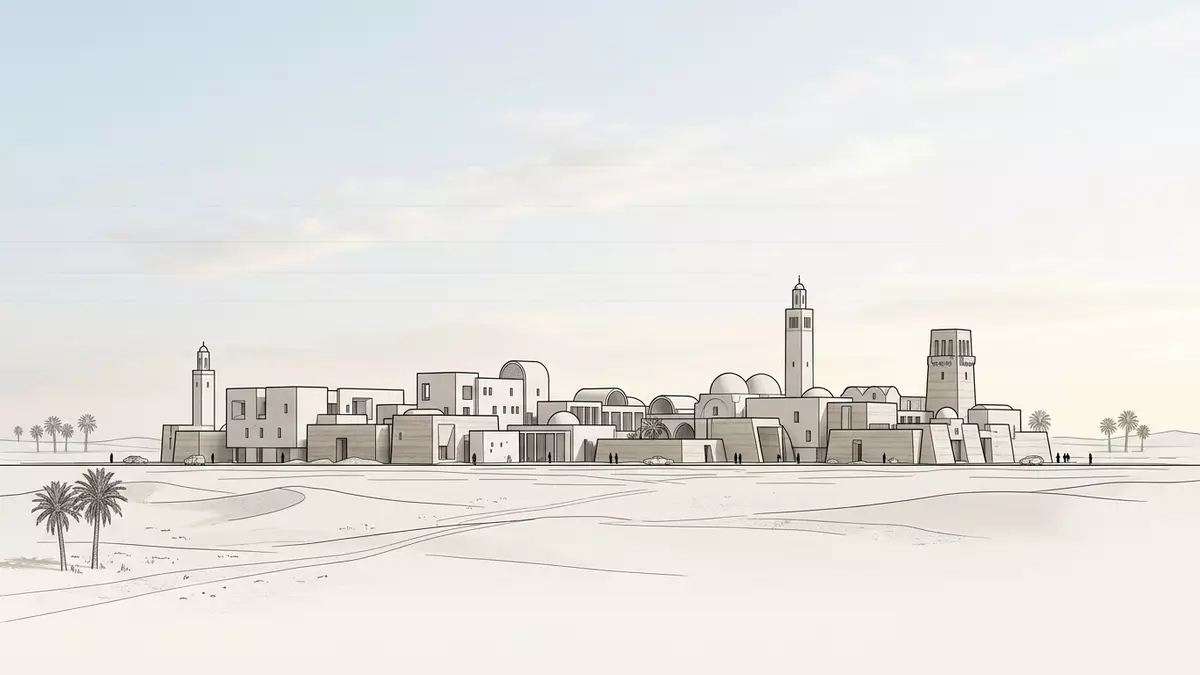
Douz is an oasis town in southern Tunisia where dense palm groves stand at the northern fringe of the Sahara, creating a clear meeting point between cultivated land and rolling desert dunes. In the Kebili Governorate, Douz is widely known by its nickname “gateway to the Sahara”, a reputation that rests on its location beside the Grand Erg Oriental and its long role as a stop for caravans crossing the desert.
An oasis town shaped by palms and sand
Douz lies in the south of Tunisia within the Nefzaoua region, administratively attached to Kebili Governorate and described as a municipality of more than 30,000 inhabitants in the mid-2010s.municipality of 30,245 inhabitants The settlement has grown around a large palm oasis that functions as a green island against surrounding desert and scrub land.large palm oasis Palm trees structurally dominate the townscape and the surrounding groves support extensive date cultivation, including varieties such as deglet nour that are strongly associated with southern Tunisia.
Geographically, Douz sits to the south of the salt lake Chott el Djerid and close to the sand seas of the Grand Erg Oriental.location in the Nefzaoua oasis region The desert begins almost at the edge of the town, where streets and low houses give way to dunes held back in places by barriers of dried palm fronds. This clear transition between oasis and desert landscape is one of the most striking aspects of Douz and underpins its role as a starting point for excursions deeper into the Sahara by camel or four-wheel drive.
Caravan crossroads and desert culture
Douz has long served as a crossroads for caravan routes linking the deep Sahara with northern Tunisia, and its identity is closely tied to desert travel and nomadic traditions.important stopover for caravans The town’s population includes the Mrazig, a group whose ancestors are linked by tradition to Arab migrants from the Banu Sulaym arriving in Tunisia in the thirteenth century, a historical association that connects Douz to wider movements across North Africa.Mrazig and Banu Sulaym Desert-related crafts, clothing and music remain part of local life, and camel caravans continue to depart from the outskirts of the town for routes into the dunes.
A museum dedicated to the Sahara in Douz presents objects linked to nomadic life, such as traditional clothing, tools and domestic utensils connected to desert travel and settlement.Museum of the Sahara Markets and souks in Douz bring together traders in dates, spices and everyday goods, while guides and drivers offer desert excursions ranging from short outings into nearby dunes to longer journeys towards places like Ksar Ghilane and the Jebil National Park described in regional travel guides.routes towards Grand Erg Oriental and Jebil National Park
Douz and the wider southern Tunisian landscape
Douz forms part of a wider desert and steppe landscape in southern Tunisia characterised by salt lakes, oases and vast dune fields. To its north lies Chott el Djerid, an extensive salt lake whose flat surface is crossed by roads linking Douz with Tozeur and other towns.road connections crossing Chott el Djerid To the south and east stretch the sands of the Grand Erg Oriental, a major sand sea within the Sahara where dunes of fine, pale sand form a continuous, shifting relief.
Within the oasis itself, the dominant feature is the palm grove, where irrigation channels support rows of date palms rising above underplanting and occasional cultivated plots. The contrast between shaded garden-like areas within the oasis and the open, sunlit dune fields outside the town gives Douz a particular spatial character. Low-rise buildings, sandy streets and clusters of palms form the built environment, while the surrounding desert and scrub provide the broader setting in which the town has developed.
Visiting Douz: what travellers from Western Europe should know
- Douz lies in southern Tunisia within Kebili Governorate, reached by road connections from towns such as Tozeur and Kebili, and sits south of the salt lake Chott el Djerid.
- The town stands at the edge of extensive sand dunes; excursions into the nearby Sahara usually involve walking on soft sand and, in places, climbing dune slopes.
- The surrounding landscape includes salt flats, desert scrub and palm groves, so conditions can involve strong sun exposure and occasional blowing sand on open ground.
- The official language is Arabic and the currency is the Tunisian dinar.
- Entry requirements depend on your nationality; UK travellers can check the FCDO travel advice at gov.uk/foreign-travel-advice, Irish travellers the Department of Foreign Affairs at ireland.ie.
Searching for Douz on social platforms
These links open searches for Douz on each platform.
Frequently asked questions about Douz
Where is Douz in Tunisia?
Douz is an oasis town in southern Tunisia within Kebili Governorate, south of the salt lake Chott el Djerid and close to the Grand Erg Oriental sand sea.
What should travellers expect on a visit to Douz?
Travellers encounter a town built around extensive palm groves, with nearby desert dunes accessible for excursions and a landscape that shifts rapidly from cultivated oasis to open sandy terrain.
What makes Douz distinctive among Tunisian towns?
Douz is distinctive for its position at the edge of the Sahara, its large palm oasis and its long association with caravan routes and desert culture, reflected in markets, museums and guided desert journeys.