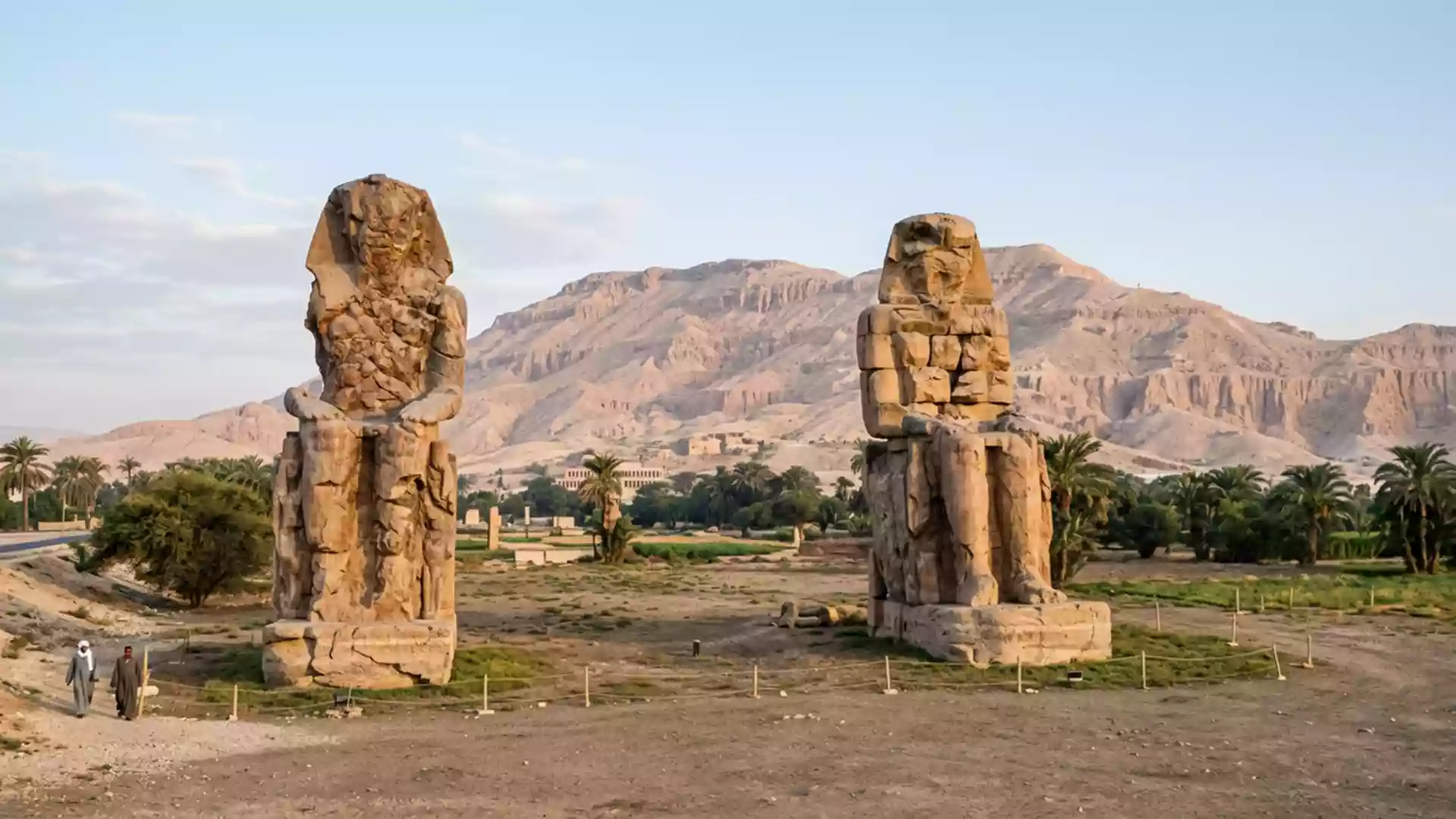
Egypt reports new finds at Colossi of Memnon on 22 October
Published on 11/14/2026 at 09:53 | Editorial responsibility: Rafael Müller, Editor-in-Chief AD HOC NEWSArchaeology and temple remains
- Egyptian and German archaeologists announced new finds at the Luxor site on 22 October 2026.
- Two sphinx statues measuring approximately 8 metres were found with Sekhmet busts and decorated remains.
- Amenhotep III's mortuary temple was built between 1390 and 1353 BC on Luxor's west bank.
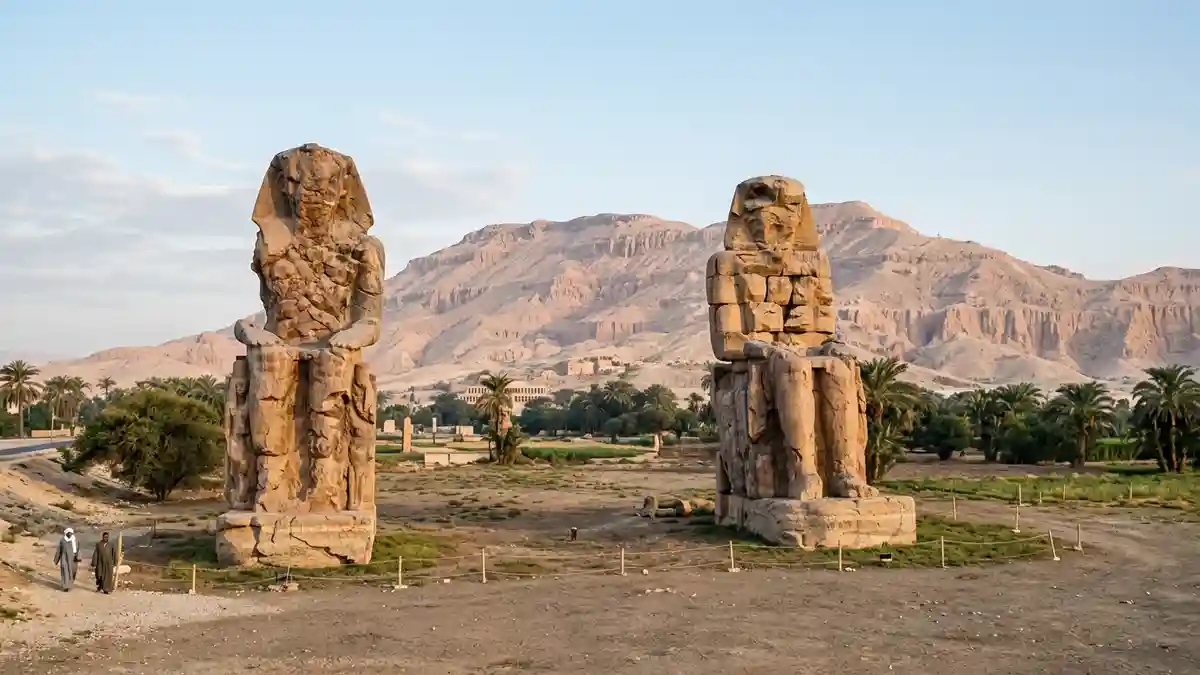
Colossi of Memnon (Timthalan Memnon) in Luxor, Egypt, are at the centre of new archaeological discoveries announced on 22 October 2026. An Egyptian-German mission working at the statues and the nearby mortuary temple of Amenhotep III found sphinx fragments, Sekhmet busts, decorated walls and column remains.
The findings connect the latest work directly with the monument that marks the entrance to Amenhotep III's ruined temple complex.
New archaeological discoveries reach the temple entrance
The Egyptian Ministry of Tourism and Antiquities said the mission uncovered parts of two colossal limestone statues of Amenhotep III shown as sphinxes. The pieces came from the area behind the Third Pylon gate and had undergone cleaning, strengthening and restoration.
The work revealed a royal inscription on one statue's chest. The mission also found three black granite busts of Sekhmet in the open courtyard and the great pillared hall, together with sandstone inscriptions showing ceremonial scenes and remains of additional columns.
Initial studies put the sphinxes at approximately 8 metres long. The ministry said the pieces are being grouped with earlier discoveries for restoration and possible reinstallation in their original positions. The announcement links the finds to the beginning of a processional road between the Third Pylon and the courtyard.
The ministry's archaeological discovery announcement names Luxor's west bank, the mission and the temple areas involved.
How Amenhotep III's temple frames the discoveries
The two seated statues depict Amenhotep III and stand where the entrance to his mortuary temple once began. The World Monuments Fund records that the temple was erected between 1390 and 1353 BC for the New Kingdom pharaoh.
The complex once included three pylons, an open solar courtyard, a roofed hall and a sanctuary. It measured 100 metres across and 600 metres in length, while the surviving statues originally stood at its main gate.
That setting gives the October discoveries a precise archaeological meaning. The sphinx fragments, Sekhmet busts and column bases are not detached finds from an unrelated excavation; they belong to the architectural sequence that connected the gateway, processional route and pillared hall.
The World Monuments Fund temple record describes the site as opposite modern Luxor on the Nile and notes that the colossi were the only substantial remains visible when the temple entered its conservation watch in 1998.
Restoration continues around the western bank statues
The Ministry of Tourism and Antiquities says the restoration project began in 1998 under its supervision and that of the German Institute of Archaeology. The current season therefore adds new material to a long-running effort to document, conserve and reassemble the temple landscape.
The discovery also clarifies what a visitor may see beyond the two roadside statues. The temple area contains active archaeological work, restored fragments and architectural remains, while the newly identified pieces are being prepared for treatment and potential return to their original locations.
Visiting Colossi of Memnon: what travellers from Western Europe should know
- The new archaeological discoveries were announced on 22 October 2026 at the Colossi of Memnon and the mortuary temple of Amenhotep III in Luxor.
- The announcement concerns ongoing conservation and archaeological work, including pieces from the Third Pylon, courtyard and great pillared hall.
- The statues stand on Luxor's western bank of the Nile, opposite the modern city and within the wider Theban archaeological landscape.
- The site includes monumental stone statues, temple remains, column bases and open archaeological ground; the work area may contain fragments undergoing restoration.
Searching for Colossi of Memnon on social platforms
These links open searches for Colossi of Memnon on each platform.
Frequently asked questions about Colossi of Memnon
What were the new archaeological discoveries?
The October 2026 announcement covered two sphinx statues, three Sekhmet busts, decorated walls, inscriptions, column bases and stone blocks.
Where are Colossi of Memnon and how do you get there?
They stand on the western bank of the Nile at Luxor, opposite the modern city, within the Theban archaeological landscape.
What is Colossi of Memnon?
They are two seated statues of Amenhotep III that once guarded the entrance to his mortuary temple, built between 1390 and 1353 BC.