
Elephantine and the layered edge of Assuan
Published on 08/20/2026 at 07:32 | Editorial responsibility: Rafael Müller, Editor-in-Chief AD HOC NEWS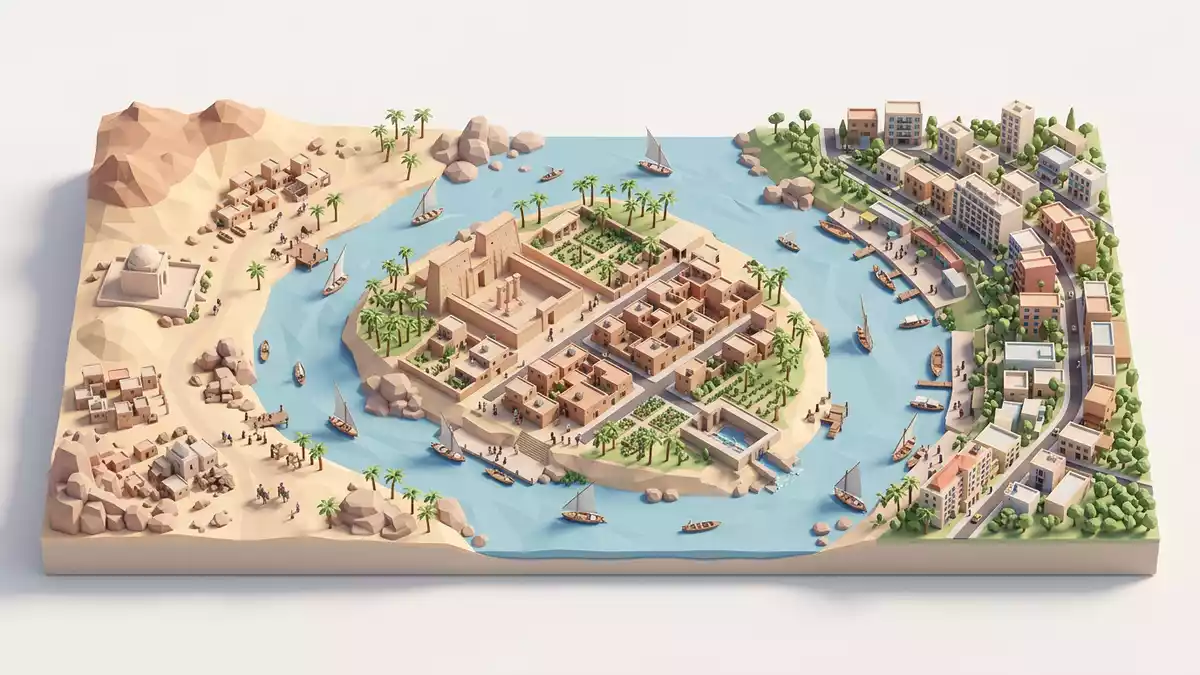
Elephantine is a Nile island in Assuan, part of the city and long tied to Egypt’s southern frontier. Its most distinctive feature is the layered mix of temples, ruins and living settlement that still marks the island today.
Elephantine’s island edge and ancient setting
At the level of place, Elephantine is easy to read: water on all sides, with the island lying in the river opposite Assuan. It belongs to the larger archaeological landscape of the First Cataract, where the Nile narrows and the riverbank changes character.
The island’s ancient Egyptian name was ?bw, linked with the word for elephant, and it has long been associated with frontier exchange between Egypt and Nubia. That position explains why Elephantine appears in so many histories of trade, religion and administration rather than in one neat period alone.
Temples, stones and the Khnum complex
The southern part of Elephantine holds the remains of the Temple of Khnum, the ram-headed god linked with the island. New Kingdom to Roman times are represented in the surviving fabric there, including granite elements and fragments of earlier building phases.
Khnum is only part of the picture. The island also preserves traces of Satet and Nilometer installations, which place Elephantine within the practical and religious life of ancient Assuan. The result is a site where temple remains, river measurement and settlement history sit close together.
Elephantine as archaeology and lived landscape
Elephantine is not only ruins. It is also an inhabited island, with modern movement, museum space and archaeological work all sharing the same ground. The island was inscribed on the UNESCO World Heritage List in 1979 as part of the Nubian Monuments from Abu Simbel to Philae.
That status sits well with what a visitor sees: fragments of stone, restored sections, museum displays and the river itself. The long sequence of use, from early settlement through later religious and administrative roles, gives the island a dense historical profile without turning it into a museum piece alone.
Visiting Elephantine: what travellers from Western Europe should know
- Elephantine lies in the Nile at Assuan, reached by boat from the city side. The island forms part of the river landscape opposite the urban waterfront.
- The ground combines archaeological remains, level changes and broken stone surfaces. Walking calls for attention on uneven terrain.
- The island includes temple ruins, a Nilometer and museum displays. These features make its archaeological character easy to recognise.
- The official language is Arabic and the currency is the Egyptian pound.
Searching for Elephantine on social platforms
These links open searches for Elephantine on each platform.
Frequently asked questions about Elephantine
Where is Elephantine?
Elephantine is an island in the Nile at Assuan, in Upper Egypt. It forms part of the city and sits opposite the urban riverfront.
What does a visit to Elephantine involve?
The island combines ruins, temple fragments, museum displays and river scenery. Its surface is uneven in places, with archaeological areas spread across the island.
What makes Elephantine distinctive?
Its distinctive quality is the combination of an inhabited river island and a major archaeological landscape. Temples for Khnum and Satet, the Nilometer and the island’s long historical sequence all belong to the same place.


