
Englischer Garten, München’s sweeping riverside park
Published on 08/24/2026 at 08:23 | Editorial responsibility: Rafael Müller, Editor-in-Chief AD HOC NEWS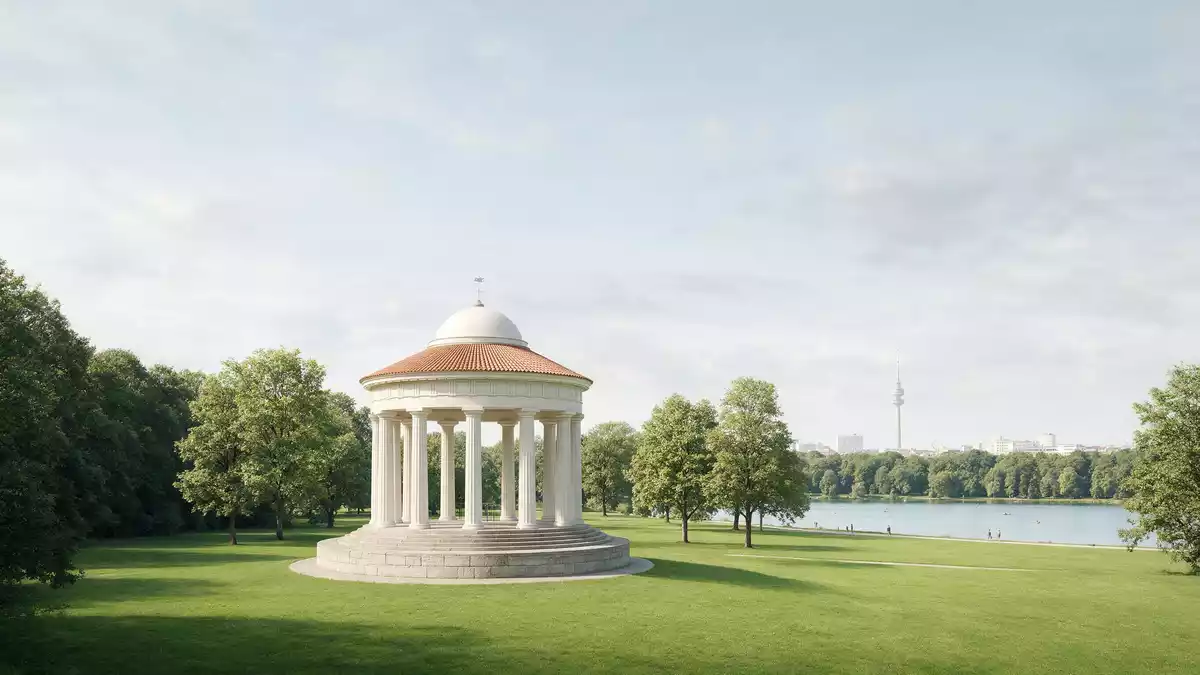
Englischer Garten in München is a vast riverside park laid out in the late eighteenth century as a public garden, extending for several kilometres along the River Isar and into the city’s north.
A late eighteenth-century landscape park along the Isar
Englischer Garten runs from the edge of München’s historic centre northwards along the western bank of the River Isar, forming a long green corridor between the city streets and the river meadows. The park was established in 1789 as a public garden under Elector Karl Theodor of Bavaria, part of a wider move towards landscape parks inspired by English models.established in 1789 Its name reflects that influence, referring to an English-style garden with sweeping lawns and informal groups of trees rather than rigid avenues.
The initial planning drew on the ideas of Benjamin Thompson, later known as Count Rumford, who worked for the Bavarian army and advised on turning military gardens into a public park open to all.Benjamin Thompson’s role Landscape designer Friedrich Ludwig von Sckell then shaped the grounds into a continuous park, adding features such as small hills, streams and pools that gave the English Garden its characteristic mix of open space and more intimate corners.Friedrich Ludwig von Sckell’s design
Scale, layout and landscape of Englischer Garten
With an area measured at around 3.7 km², Englischer Garten ranks among the largest urban parks in the world and covers hundreds of hectares of meadows, woodland and water.around 3.7 km² The park extends for roughly 5.5 km from near Odeonsplatz in the centre to the northern districts, forming a continuous band of green that parallels major city streets and the River Isar.length of 5.5 km Within this expanse, paths create a fine-grained network for walking and cycling, with dozens of bridges crossing the streams that branch from the Isar.
The park’s landscape is deliberately varied. Large meadows open out between belts of trees, while water is present in both flowing and still forms. The largest lake within the English Garden is Kleinhesseloher See, an artificial body of water of around 8 hectares, fringed by lawns and woodland.Kleinhesseloher See as largest lake Streams based on diverted Isar water run for many kilometres through the park, and more than 100 bridges and footbridges carry paths across them, turning short strolls into extended circuits.over 100 bridges
Historic features and focal points within the park
Beyond its open lawns and tree-lined paths, Englischer Garten contains several built landmarks that have become reference points for exploring the park. Near Kleinhesseloher See stands a monument to Friedrich Ludwig von Sckell, marking his role as designer of München’s landscape park and tying the lake to the history of the garden’s creation.monument to Sckell Elsewhere in the park, small hills and viewpoints give elevated perspectives over the surrounding trees and meadows, integrating architectural elements into the naturalistic setting.
The English Garden also incorporates long-established gathering places such as beer garden terraces close to major paths, blending traditional Bavarian social spaces with the landscape style introduced in the 1780s and 1790s.beer garden terraces In the southern section near the city centre, cultural institutions at the edge of the park, including art venues, sit within short walking distance of riverside lawns and groves, reinforcing the English Garden’s role as a transition zone between urban blocks and open landscape.beginning near Haus der Kunst
Visiting Englischer Garten: what travellers from Western Europe should know
- Englischer Garten begins close to München’s historic centre and runs north along the western bank of the River Isar; central landmarks such as Odeonsplatz and Haus der Kunst mark entrances to the southern section.
- The park’s network of paths includes long, gently undulating routes and narrower tracks, with numerous bridges over streams and an artificial lake, so expect varied terrain rather than a single straight promenade.
- In the northern reaches of the park the surroundings become more wooded, with extended meadows and fewer buildings, while the southern part lies beside major streets and cultural institutions.
- The official language is German and the currency is the euro.
Searching for Englischer Garten on social platforms
These links open searches for Englischer Garten on each platform.
Frequently asked questions about Englischer Garten
Where is Englischer Garten located in München?
Englischer Garten runs from near Odeonsplatz at the edge of München’s old town northwards along the western bank of the River Isar.
What can visitors expect during a walk through Englischer Garten?
A walk through Englischer Garten leads across open meadows, woodland belts, streams crossed by bridges and the shores of Kleinhesseloher See, with long paths connecting these areas.
What makes Englischer Garten distinctive among city parks?
Its combination of late eighteenth-century English landscape design, substantial length along the River Isar and extensive mix of woodland, meadow and water gives Englischer Garten a distinctive character among urban parks.


