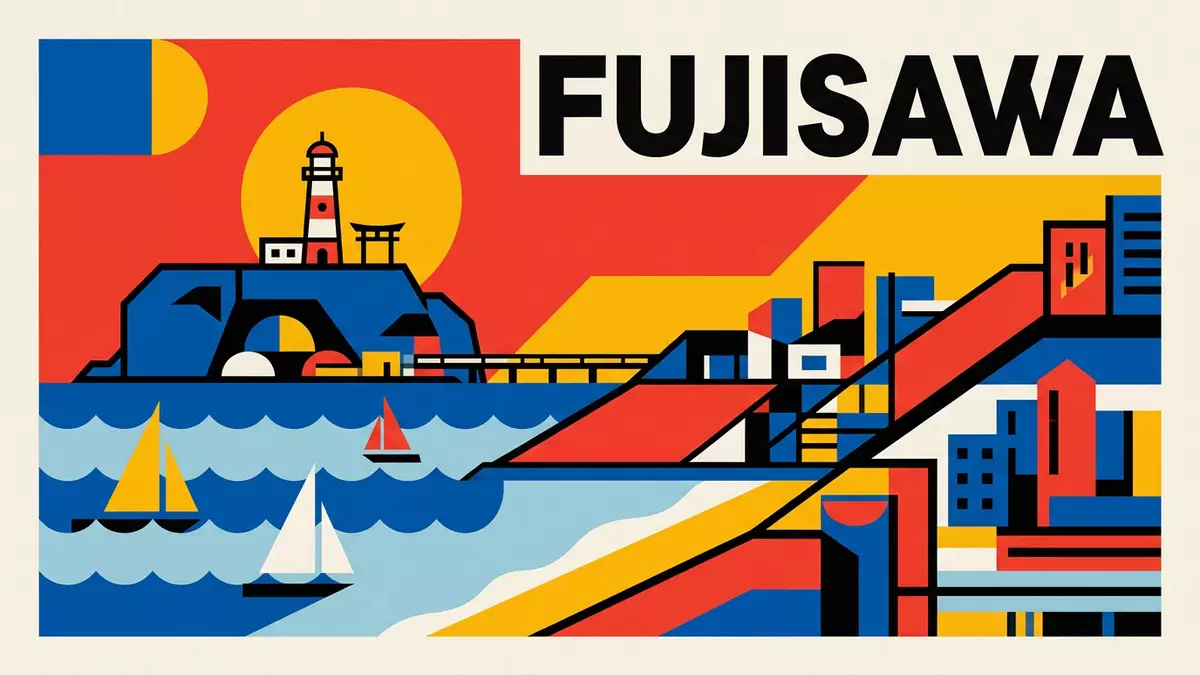
Enoshima: a sea island of shrines, cliffs and views near Fujisawa
Published on 08/06/2026 at 22:21 | Editorial responsibility: Rafael Müller, Editor-in-Chief AD HOC NEWS
Enoshima is a compact island just off the coast of Fujisawa in Japan, reached by a pedestrian causeway that steps out into Sagami Bay. Rising above its rocky shoreline, the island carries Shinto shrines, a Buddhist temple, gardens and a lookout tower, all wrapped in forest and linked by stairways and paths. For many visitors from Western Europe, Enoshima offers a combination of coastal scenery and layered religious architecture in a single, easily explored place.
Island topography, coastal views and sea caves
The physical form of Enoshima shapes almost every experience on the island. The mainland causeway leads into a low-lying harbour area, with small boats and waterside buildings facing the bay. From there, paths and stairways climb the hillside, passing under torii gates and along narrow streets lined with shops and cafes that serve visitors heading towards the shrines. The ascent reveals how Enoshima rises from the sea as a wooded hill of volcanic rock, with its upper slopes giving views across the water towards Mount Fuji on clear days.
On the seaward side of the island, waves break directly onto the rocks, where flat shelves of stone form natural promenades at low tide. A path along this coast reaches the Enoshima Iwaya caves, where the sea has carved openings into the cliffs. Inside, the rock surfaces and low ceilings create a marked contrast with the busy shrine approaches above, and the sound of water from offshore is never far away. Visiting both the hilltop and the caves gives a sense of the island as a single mass shaped by erosion, stairs and religious structures rather than a simple beach destination.
Enoshima Shrine, Benzaiten and religious architecture
Enoshima Shrine is the central religious complex on the island, dedicated to Benzaiten, a deity associated with water, music and fortune whose cult in Japan draws on Buddhist and earlier Indian traditions. The shrine buildings stand at different levels on the slope, connected by stone steps and paths. Some elements are associated with the Kamakura period, when nearby Kamakura served as the seat of the shogunate, and Enoshima formed part of a wider coastal landscape of temples and shrines. Timber structures with tiled roofs, carved details and painted surfaces create a sequence of gates, halls and courtyards that visitors pass through on the way uphill.
One part of Enoshima Shrine houses images of Benzaiten, and the island has long been linked to her legend, which tells of the pacification of a sea dragon in Sagami Bay. The religious architecture mixes Shinto and Buddhist elements, reflecting the historical overlap between the two traditions before the separation policies of the nineteenth century. Lanterns, offering boxes and small subsidiary shrines appear along the route, while lookout points between the buildings reveal patches of sea and coastline through the trees. The combination of worship spaces and views makes the shrine complex a central anchor of any visit.
Samuel Cocking Garden and the Enoshima Sea Candle
On the upper part of the island lies the Samuel Cocking Garden, named after a British merchant who built a villa and botanical garden on Enoshima in the nineteenth century. The present garden draws on that history while functioning as a modern public space with paths, planting beds and seasonal flowers, including displays of tulips and other species suited to the climate of the Kanagawa coast. Glasshouses, lawns and viewing terraces give this area a different character from the more enclosed shrine precincts below, and the garden’s location near the summit means the air feels more open and exposed than on the forested slopes.
Rising above the garden is the Enoshima Sea Candle, a modern observation tower that has become one of the island’s most recognisable features. The structure, with its slender frame and viewing decks, provides panoramic views over Sagami Bay, the Shonan coastline and, in good visibility, the distant form of Mount Fuji. Reaching the upper level of the Sea Candle by internal stairs or a lift adds a vertical dimension to the visit, extending the climb that began on the causeway and continued past the shrines. As daylight shifts, the interplay of tower, garden and surrounding trees shows Enoshima as both a historic religious site and a contemporary coastal lookout.
Visiting Enoshima: what travellers from Western Europe should know
- Enoshima is reached from Fujisawa by local rail to the coastal stations and by the pedestrian causeway that links the mainland shore to the island.
- Admission arrangements and opening hours are set by the site's operator and change with the season; the official website is the only binding source.
- Sea light and coastal views are strongest on clear days, and the atmosphere on the rocks and in the gardens changes across the seasons, from winter clarity to summer haze.
- The island involves steep flights of stairs, sloping paths and uneven rock surfaces near the sea caves, so footwear suited to walking and climbing is advisable; restrictions may apply on site.
- On the island and around Fujisawa, Japanese is the main language, and payments in shops and cafes cover cash and electronic methods; visitors who show basic courtesy at shrines, such as not entering inner areas uninvited, are respected.
- Entry requirements depend on your nationality. UK travellers should check the FCDO travel advice at gov.uk/foreign-travel-advice; Irish travellers the Department of Foreign Affairs at ireland.ie; EU and EEA citizens their own national foreign ministry.
Searching for Enoshima on social platforms
These links open searches for Enoshima on each platform.Frequently asked questions about Enoshima
Where is Enoshima and how is it connected to Fujisawa?
Enoshima is a small island in Sagami Bay, just off the coast of Fujisawa in Kanagawa Prefecture, linked to the mainland by a pedestrian causeway and served by coastal rail.
What can visitors expect during a visit to Enoshima?
Visitors encounter shrine complexes dedicated to Benzaiten, hillside paths and steps, sea caves in the cliffs, gardens such as the Samuel Cocking Garden and panoramic views from the Enoshima Sea Candle.
What makes Enoshima distinctive among Japan’s coastal destinations?
Enoshima combines an accessible island reached on foot, historical religious architecture from periods including Kamakura, a nineteenth-century garden history tied to Samuel Cocking and a modern observation tower overlooking Sagami Bay and, in clear weather, Mount Fuji.