
Ercolano’s Roman streets suspended between city and sea
Published on 08/18/2026 at 14:41 | Editorial responsibility: Rafael Müller, Editor-in-Chief AD HOC NEWS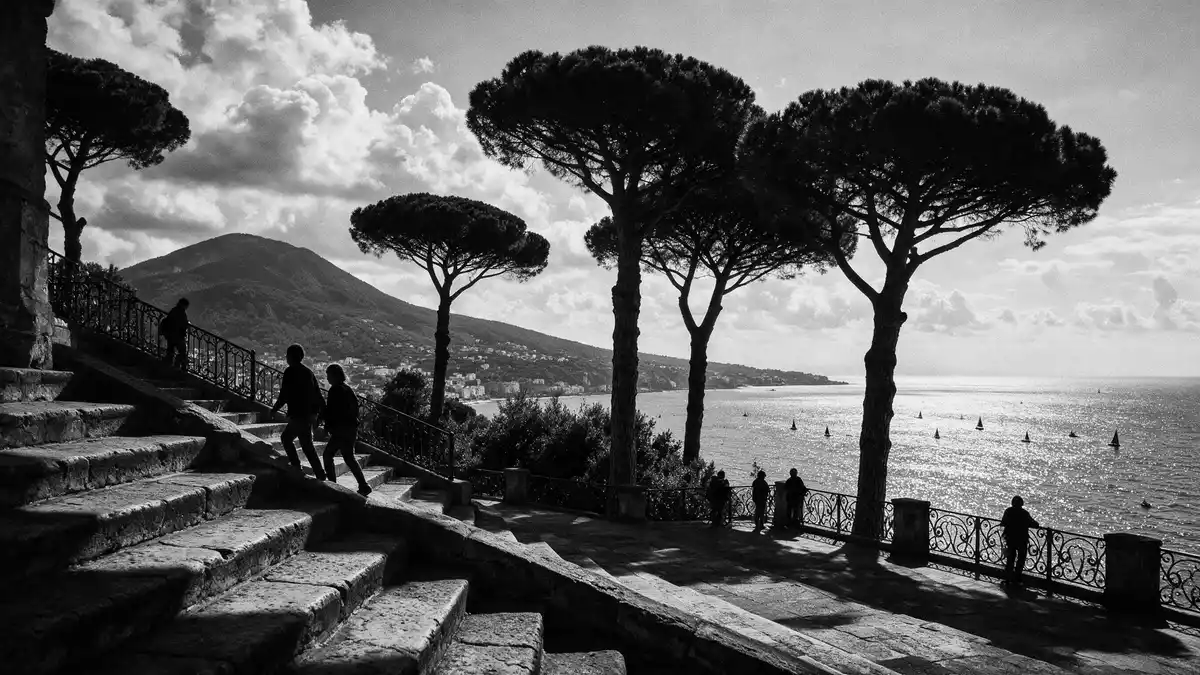
Ercolano in southern Italy offers a rare view of an ancient Roman town preserved beneath a modern coastal city, its streets still running towards the line of the sea. Among the buried settlements around Mount Vesuvius, it is known for the depth of its burial in volcanic deposits from the eruption of 79 AD and for the way the archaeological park lies below the houses and avenues of contemporary Ercolano.
From Roman harbour town to buried quarter
The ancient town at Ercolano lay on the Bay of Naples and formed part of the wider Roman landscape around Vesuvius in the first century AD.The ancient Roman town belongs to the same UNESCO World Heritage listing as Pompeii and the villas at Torre Annunziata, under the title of the Archaeological Areas of Pompeii, Herculaneum and Torre Annunziata.Archaeological Areas of Pompeii The modern comune of Ercolano in Campania occupies the slopes between Vesuvius and the sea, so the archaeological area sits within an urban district rather than in open countryside.The modern comune of Ercolano
In 79 AD a major eruption of Mount Vesuvius buried the Roman town under thick deposits of hot material that reached the shoreline and extended over the harbour zone.Buried under a massive pyroclastic flow The site remained covered until excavations in the eighteenth century brought parts of the Roman fabric back into view beneath what had become a different settlement.Explorations in the eighteenth century The modern archaeological park forms part of the Parco Archeologico di Ercolano, which is administered by the Italian Ministry of Culture from a base on Corso Resina in Ercolano.Parco archeologico di Ercolano
A town buried in layers beneath Corso Resina
The physical layout of the archaeological area shows how the Roman streets run beneath the present-day city, with Corso Resina forming a clear boundary between excavated and still-buried quarters.The decumanus maximus marks the boundary The main Roman east–west street, the decumanus maximus, stands at the transition between the exposed area and the part of the town that continues under the modern road, while the decumanus inferior runs through the centre of the excavated zone.The decumanus inferior in the centre From the upper edge of the park visitors see the roofs and upper storeys of Roman houses below, framed by contemporary apartment blocks and villas above.
One striking aspect of Ercolano is the preservation of upper floors and timber elements in several buildings, a result of the way the eruption deposits covered the town.The site of Ercolano is particularly important The excavated streets include houses, public buildings, and a seafront district where masonry structures stand above a former shoreline now enclosed by later deposits.Ancient domus and monuments The contrast between the straight Roman street grid and the overhead viaducts and roads of modern Ercolano gives the park the character of a sunken neighbourhood glimpsed through terraces and balustrades.
Walking the streets of the Parco Archeologico di Ercolano
The Parco Archeologico di Ercolano provides a route into the excavated town from an entrance on Corso Resina, where the administrative offices of the park stand in a line of nineteenth and twentieth-century buildings.Corso Resina in Ercolano Once inside the archaeological area, visitors move along the preserved Roman streets, passing houses with decorated interiors, public halls and bath complexes that survive within the excavated blocks.The site of Ercolano is important for understanding The townscape retains features such as arcades, thresholds and courtyards, laid out in stone and other durable materials that endured beneath the volcanic layers.
Ercolano’s archaeological park is integrated into a broader cultural landscape that includes Pompeii and the villas of Torre Annunziata, and all three form part of the same UNESCO inscription.UNESCO World Heritage Site From the streets of the excavated town, Mount Vesuvius rises inland as a reminder of the volcano that reshaped this coast, while towards the seaward side the line of the ancient waterfront lies beneath later deposits at the edge of the park.The archaeological area and shoreline The park’s status as a cultural institution under the Ministry of Culture makes it a central reference point for the study of daily life and architecture in a Roman town.
Visiting Ercolano: what travellers from Western Europe should know
- Ercolano lies south-east of Naples in Campania, on the railway line served by the station named Ercolano Scavi on the Circumvesuviana network between Naples and Sorrento.
- The archaeological area occupies a hollow below the surrounding streets, and reaching the Roman level involves descending walkways and stairways from Corso Resina and other access points.
- The park entrance stands on Corso Resina in the modern town, with the archaeological quarters spreading below and a view inland towards the slopes of Mount Vesuvius.
- The official language is Italian and the currency is the euro.
Searching for Ercolano on social platforms
These links open searches for Ercolano on each platform.
Frequently asked questions about Ercolano
Where is Ercolano and its archaeological park?
Ercolano stands in Campania south-east of Naples, between Mount Vesuvius and the Bay of Naples, with the Parco Archeologico di Ercolano embedded in the modern town.
What can visitors expect when exploring Ercolano?
Visitors move along preserved Roman streets below present-day roads, passing houses, public buildings and a former waterfront district preserved beneath layers of volcanic material.
What makes Ercolano distinctive among Vesuvian sites?
Ercolano is distinctive for its setting beneath a living town and for the preservation of upper storeys and structural details, offering a sunken Roman quarter framed by contemporary streets.


