
Eryri’s mountain landscape from Llanberis to the coast
Published on 09/23/2026 at 08:24 | Editorial responsibility: Rafael Müller, Editor-in-Chief AD HOC NEWS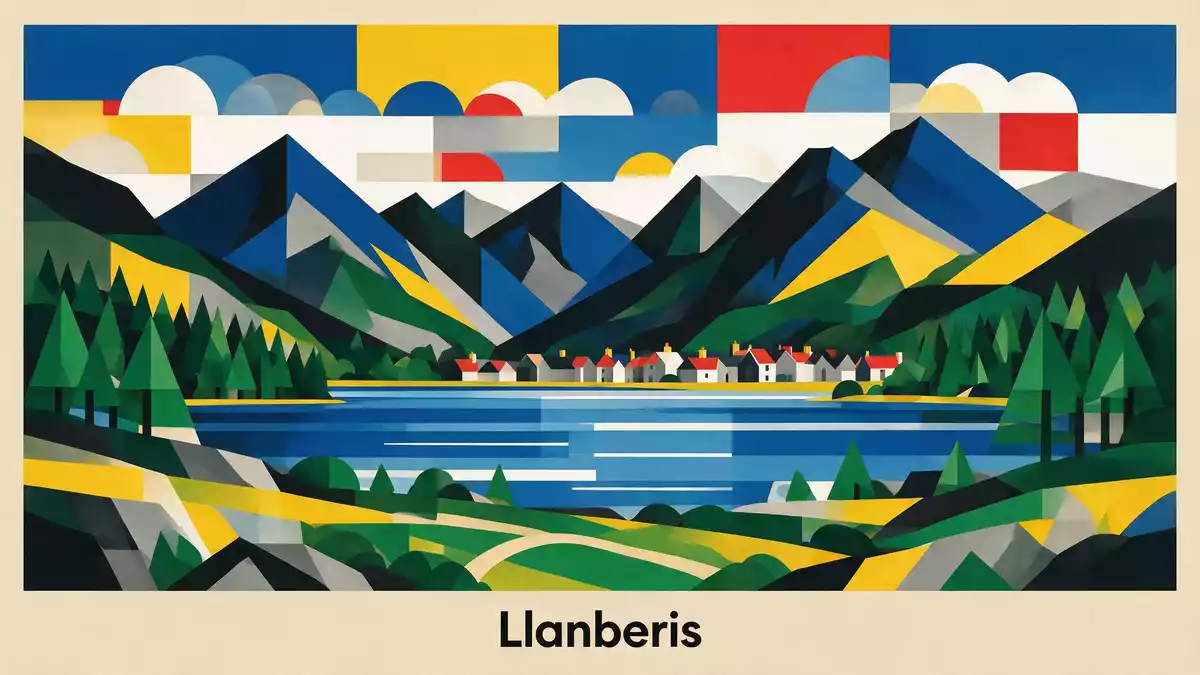
Eryri is a national park of steep mountain ridges, glacial lakes, slate landscapes and coastal estuaries. Llanberis lies beside Llyn Padarn beneath the Yr Wyddfa massif, placing high mountain scenery and industrial heritage within the same valley.
From Llanberis to Yr Wyddfa
Eryri occupies north-west Wales and covers about 2,130 km². Its protected landscape includes upland plateaux, rocky passes, wooded valleys, lakes, rivers, farms and a coastline extending along the western edge.
Yr Wyddfa, also known as Snowdon, rises to 1,085 m (3,560 ft) and is the highest mountain in Wales. Its summit belongs to a landscape of ridges, gullies and high ground shaped by volcanic activity and glaciation.
Llanberis provides a clear view of this relationship between settlement and mountain. The village sits near Llyn Padarn, while the Snowdon Mountain Railway climbs from Llanberis towards the upper slopes of Yr Wyddfa. The national park designation dates to 18 October 1951.
Ridges, lakes and living landscapes
Nine named mountain ranges lie within Eryri. They include the Carneddau, Glyderau, Moelwynion, Rhinogydd, Dyfi Hills, Moel Hebog range, Cadair Idris range and Aran range, alongside the range associated with Snowdon.
The uplands contain peaks above 3,000 feet, exposed rock formations and mountain plants such as Lili’r Wyddfa, the Snowdon lily. Purple saxifrage grows in the high mountainous environment, while the Carneddau are associated with wild ponies and red-billed choughs.
Lower ground changes the character of the park. Broadleaf, conifer and mixed woodland occupy valleys and slopes, with Celtic rainforest habitats found in areas close to the sea. Peatlands cover part of the uplands and contain deep stores of carbon within waterlogged soils.
Eryri also reaches the coast. Estuaries including the Dyfi, Mawddach and Dwyryd connect inland valleys with beaches, dunes and shore habitats. The landscapes of Eryri include coastal wildlife such as dolphins, seals and porpoises.
Slate, Welsh history and protected country
The scenery carries a strong industrial history. Slate quarrying altered hillsides around Llanberis and other parts of north-west Wales, leaving terraces, spoil slopes, cuttings and abandoned workings among the natural mountain forms.
Llanberis is associated with the Dinorwig slate quarry, whose workings occupy the slopes above the village. The National Slate Museum stands in the former quarry landscape and records the craft, labour and machinery connected with Welsh slate.
Historical sites across Eryri include prehistoric monuments, Roman remains, medieval castles and settlements linked with Welsh princes. The region’s heritage also includes the Welsh language, agricultural communities and buildings shaped from locally quarried stone and slate.
The name Eryri belongs to the Welsh identity of the region, while Snowdonia remains the established English name. The national park designation created a formal protected landscape in 1951, joining natural features with cultural heritage and working countryside.
Visiting Eryri: what travellers from Western Europe should know
- Llanberis lies in north-west Wales beside Llyn Padarn. Rail connections reach the wider area through Bangor, while the Snowdon Mountain Railway begins in Llanberis.
- Mountain routes around Yr Wyddfa cross steep gradients, rocky ground and exposed ridges. Conditions can change quickly in high terrain.
- The park includes lakes, slate quarries, woodland, peatland, estuaries and coastline, so landscapes vary sharply between valleys and uplands.
- The official language is Welsh and English, and the currency is the pound sterling.
Searching for Eryri on social platforms
These links open searches for Eryri on each platform.
Frequently asked questions about Eryri
Where is Eryri?
Eryri is in north-west Wales, within the United Kingdom. Llanberis lies in the northern part of the park beside Llyn Padarn and near Yr Wyddfa.
What can visitors expect in Eryri?
The park combines mountain routes, lakes, woodland, slate quarries, historical sites, villages and coastal landscapes. Terrain ranges from valley paths to steep, rocky high ground.
What makes Eryri distinctive?
Its landscape combines high mountains, glacial valleys, Welsh slate heritage and a coastline within one protected region. Eryri also joins natural habitats with Welsh language and cultural history.


