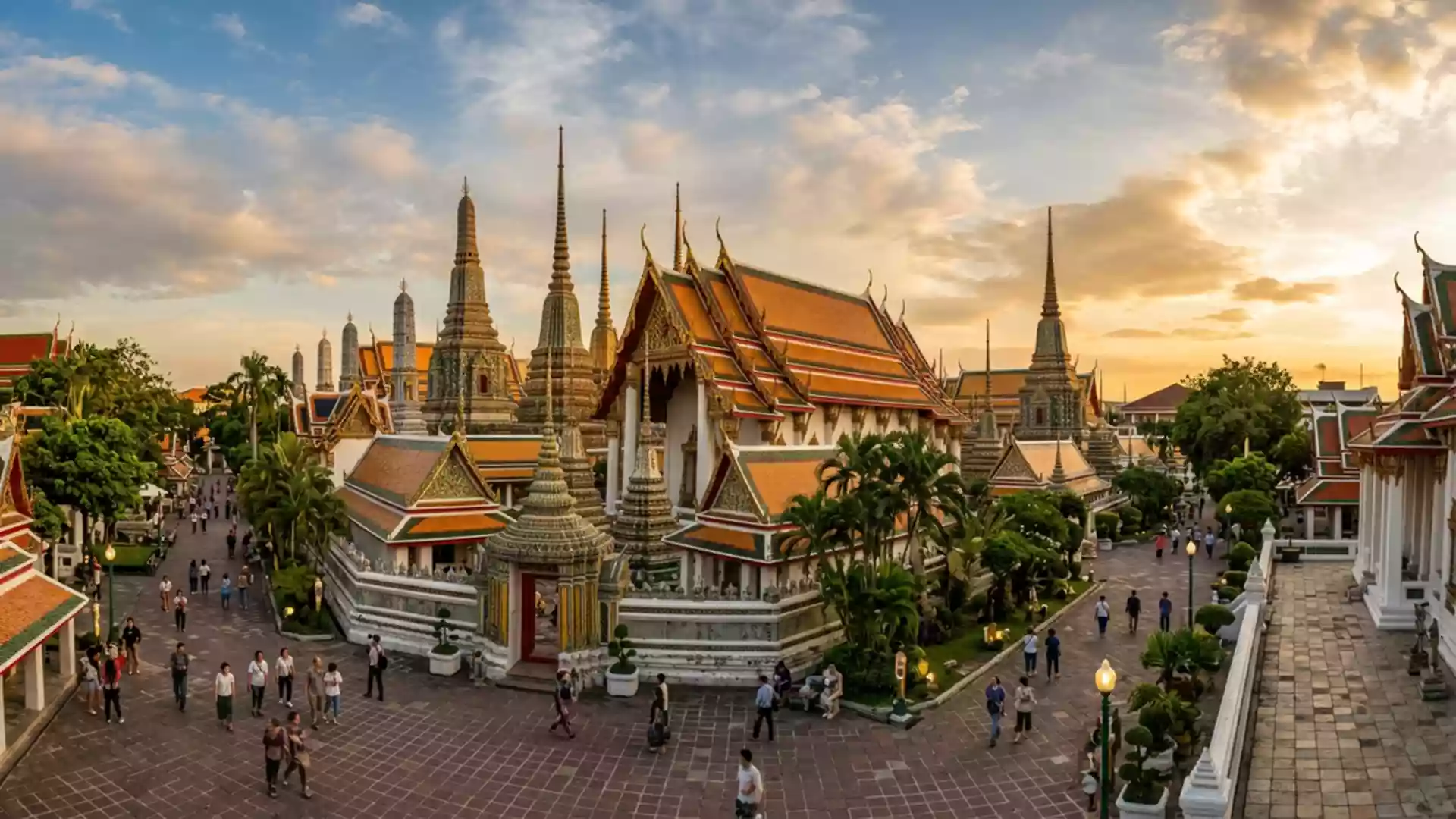
Expert urges well reopening at Wat Pho on 12 November
Published on 11/14/2026 at 09:05 | Editorial responsibility: Rafael Müller, Editor-in-Chief AD HOC NEWSConservation warning and temple history
- National Artist Wanida Phuengsunthorn raised the well issue at Wat Pho on 12 November 2026.
- The monitoring well beside the Rama IV Pagoda is covered and no longer records groundwater as designed.
- Rama I ordered Wat Pho's restoration in 1788, with the renewed complex celebrated in 1801.
- UNESCO records 1,431 Wat Pho inscriptions made between 1831 and 1841.
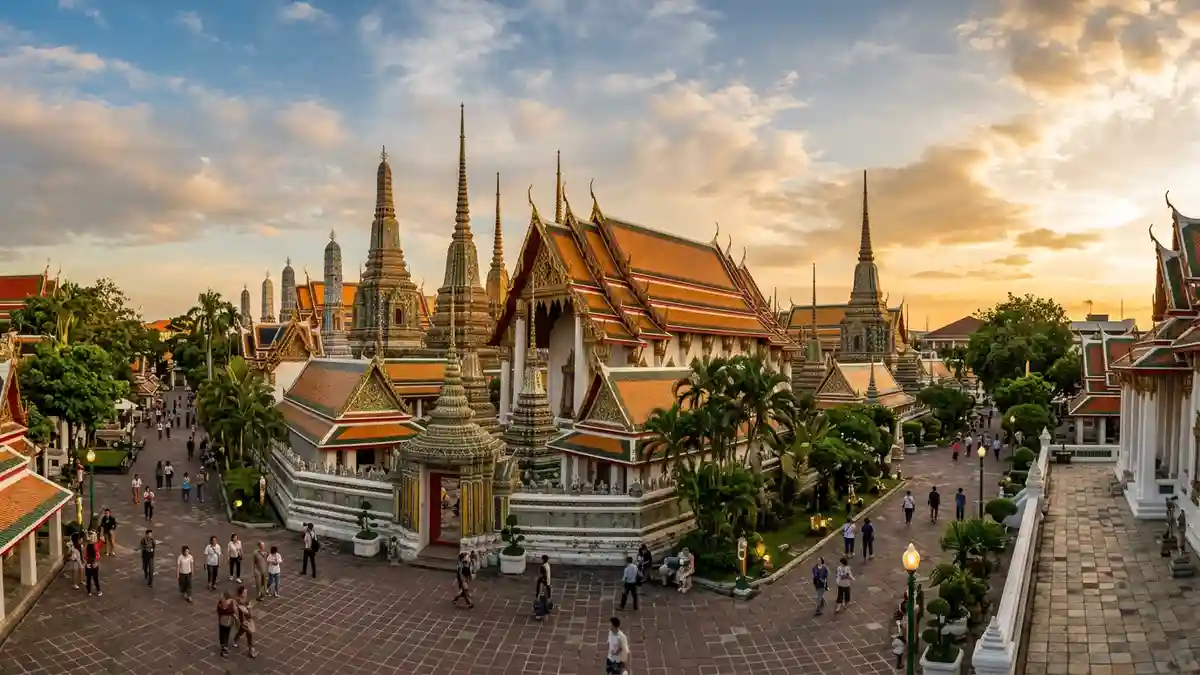
A 12 November report placed Wat Pho (Wat Phra Chetuphon Wimon Mangkhalaram Rajwaramahawihan) in Bangkok at the centre of a conservation warning about an underground monitoring well. The proposal concerns a structure beside the Rama IV Pagoda and its relationship with the temple’s historic foundations.
Wat Pho well proposal follows 12 November warning
National Artist Wanida Phuengsunthorn said on 12 November 2026 that the rectangular well beside the Rama IV Pagoda was built to observe groundwater, rather than to store rainwater or supply the temple. Her comments were reported by Naewna’s conservation report, which identified the site as Wat Phra Chetuphon Wimon Mangkhalaram in Bangkok.
The well originally had an open cast-iron grate so that the water level could be seen. The report says later work added a solid concrete floor and a cover, preventing surrounding groundwater from entering as it had before. The result is a structure that resembles a storage well but can no longer show the groundwater level in the original way.
Phuengsunthorn proposed reopening and adapting the well so that it could again support continuous observation. The report records a conservation proposal, not a completed restoration or a new visitor facility. It also does not announce a closure, a changed entrance or a special access arrangement at the temple.
Groundwater connects the well with Wat Pho foundations
The conservation concern relates to stacked logs beneath historic structures. The report says a survey carried out about 50 years ago examined the foundations of the great pagodas and found logs arranged in layers below ground. Keeping those logs moist is important because drying could contribute to decay and weaken the structures.
Wat Pho stands close to the Chao Phraya River, where naturally moist ground has helped preserve the buried timber, according to the report. That makes the monitoring well more than an isolated architectural detail: its proposed restoration would connect a visible feature beside the Rama IV Pagoda with the hidden foundation system beneath the temple.
The temple’s own official history of Wat Pho says King Rama I ordered the restoration of the older monastery in 1788. The first major phase lasted seven years, five months and 28 days, and the renewed complex was celebrated in 1801. A later major restoration under King Rama III lasted 16 years and seven months.
Rama I and Rama III shaped the historic complex
The history helps explain why groundwater protection is relevant to more than one monument. The compound developed through successive royal restoration campaigns, while its buildings, pagodas and decorative work form a connected historic landscape rather than a single isolated hall.
UNESCO’s record of the Wat Pho epigraphic archives describes 1,431 stone inscriptions made between 1831 and 1841. The record places the temple south of and close to Bangkok’s Grand Palace and identifies the complex and its inscriptions as national heritage. The inscriptions add an educational dimension to the site, while the well report draws attention to the engineering below it.
Visiting Wat Pho: what travellers from Western Europe should know
- The conservation report was published on 14 November 2026 after comments made at Wat Pho on 12 November 2026. The proposal concerns the groundwater observation well beside the Rama IV Pagoda.
- The report describes a covered and modified well, but it does not announce a temple closure, a restricted main entrance or a reopened visitor area. Travellers should not treat the proposal as a completed access change.
- Wat Pho is on Sanam Chai Road beside the Grand Palace in Bangkok, according to the Bangkok city history document listed in the search results. The temple lies in the historic riverside area near the Chao Phraya River.
- Thai is the official language of Thailand and the national currency is the baht.
- Entry requirements depend on your nationality; UK travellers can check the FCDO travel advice at gov.uk/foreign-travel-advice, Irish travellers the Department of Foreign Affairs at ireland.ie.
Searching for Wat Pho on social platforms
These links open searches for Wat Pho on each platform.
Frequently asked questions about Wat Pho
What changed at Wat Pho?
A concrete floor and cover were added to a groundwater observation well beside the Rama IV Pagoda, preventing it from working as originally described in the 12 November 2026 report.
What is Wat Pho?
Wat Pho is a first-grade royal monastery in Bangkok, restored under Rama I from 1788 and expanded during the reign of Rama III.
Where is Wat Pho and how do you get there?
The temple is on Sanam Chai Road beside the Grand Palace in Bangkok, close to the Chao Phraya River.