
Fenghuang Gucheng: riverside old town of wood, stone and water
Published on 08/15/2026 at 14:09 | Editorial responsibility: Rafael Müller, Editor-in-Chief AD HOC NEWS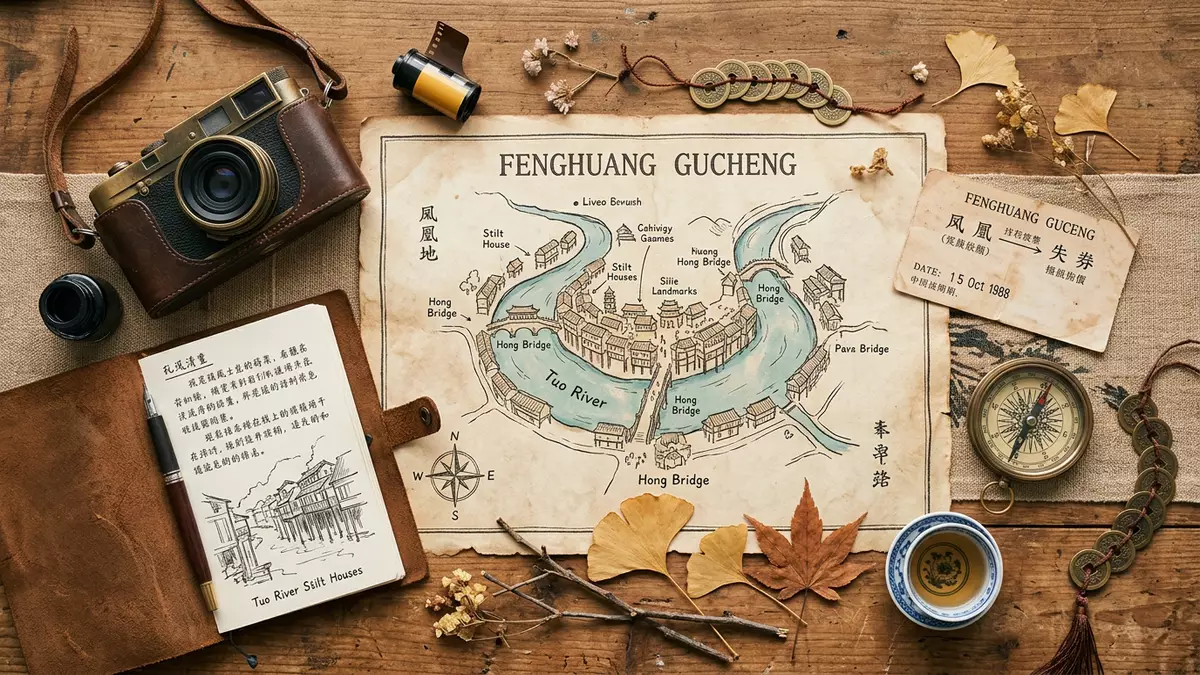
Fenghuang Gucheng in Fenghuang, western Hunan in China, is a historic riverside town where wooden houses, stone alleys and the Tuojiang River form a tightly knit landscape of architecture and water. Built as an ancient settlement in the Qing dynasty during the reign of Emperor Kangxi in the early eighteenth century, the old town’s fabric still reflects Ming and Qing period styles. The Chinese name Fenghuang Gucheng translates directly as “Phoenix Ancient Town”, linking the place with the mythological phoenix that lends the county its name.
Wooden riverside houses above the Tuojiang River
The most striking scene in Fenghuang Gucheng is the band of timber houses lining the Tuojiang River, their upper floors projecting over the water on a forest of wooden supports. These riverside dwellings, known locally as diaojiaolou, are built mainly of wood and stone and form stacked rows along the riverbank, with balconies and galleries overlooking the water.Built mainly of wood and stone At river level, stone steps and narrow landings link the houses to the water and to simple mooring points for boats.
Across the river, Fenghuang Gucheng is crossed by traditional bridges that tie the two banks together and frame views of the diaojiaolou rows and the town beyond.Bridges, towers and streets in the ancient town One of the best known structures is the Rainbow Bridge, a covered bridge with enclosed walkways that carries pedestrians over the water while forming an architectural focal point in its own right. From its interior, openings look out towards the stilted houses, the river traffic and the distant hills that enclose the valley.
Ming and Qing architecture in a compact town plan
Fenghuang Gucheng is formally recognised as a national historical and cultural town, and its status reflects how much of its Ming and Qing period architecture survives within a compact plan.National historical and cultural town in Hunan Residences, temples and shrines stand side by side along streets and lanes laid out close to the river, often in two or three storeys with tiled roofs stepping with the slope. Many buildings date from the Qing dynasty, and elements of earlier Ming styles remain visible in details and proportions.
Architecturally, the town combines Han Chinese building traditions with features associated with local ethnic groups such as the Miao and Tujia, whose communities form a large part of the population in Fenghuang County.Ming and Qing styles with ethnic elements Timber mortise-and-tenon joinery, carved wooden window frames and decorated roof ridges appear throughout the old town, while courtyards and ancestral halls recall the social structures of the period in which they were built. The town’s streets and alleys form a network that rises away from the river into the surrounding slopes, with flights of steps connecting levels and small squares opening between clusters of houses.
A historic town in western Hunan’s river landscape
Fenghuang Gucheng lies in Fenghuang County in western Hunan Province, under the administration of the Xiangxi Tujia and Miao Autonomous Prefecture.Fenghuang County in Hunan Province The town occupies a bend in the Tuojiang River, which flows through a valley of low mountains and wooded slopes before joining larger river systems further east. Hills rise above the old town, and in places short stretches of surviving city wall and gate towers trace the line of earlier fortifications along the slopes.
Fenghuang Gucheng was established during the reign of Emperor Kangxi in the Qing dynasty, around 1704, when the area served as a garrison centre and trading point in this borderland region of western Hunan.Established around 1704 during the Kangxi reign In the twentieth century the town gained further recognition through figures such as the writer Shen Congwen, who was born in Fenghuang and drew on its landscapes and society in his work. The wider area’s cultural value is reflected in the inclusion of Fenghuang Ancient City on the UNESCO World Heritage Tentative List, which highlights its riverside layout and preserved historic fabric.UNESCO World Heritage Tentative List entry
Visiting Fenghuang Gucheng: what travellers from Western Europe should know
- Fenghuang Gucheng is in Fenghuang County in western Hunan; it is reached overland from regional hubs such as Changsha and Zhangjiajie by rail or road connections.
- The old town is built on uneven ground along the Tuojiang River, with many stone steps, steep alleys and riverside walkways that require steady footing.
- Fenghuang Gucheng’s historic district is adjacent to riverbanks and low hills, so short climbs lead from the waterfront up to gate towers and remnants of the old city walls.
- The official language is Chinese and the currency is the yuan (CNY).
Searching for Fenghuang Gucheng on social platforms
These links open searches for Fenghuang Gucheng on each platform.
Frequently asked questions about Fenghuang Gucheng
Where is Fenghuang Gucheng located?
Fenghuang Gucheng is the historic core of Fenghuang in Fenghuang County, western Hunan Province in central China, along the Tuojiang River in a mountainous valley.
What can visitors expect on a visit to Fenghuang Gucheng?
A visit centres on walking stone alleys and riverside paths between wooden stilted houses, traditional bridges, ancestral halls and temples, with short climbs up to gate towers and sections of old city wall.
What makes Fenghuang Gucheng distinctive among Chinese old towns?
Its combination of diaojiaolou houses above the river, Ming and Qing architecture in a compact plan, mixed Han and minority influences and a dramatic river-and-hill setting give Fenghuang Gucheng a character closely tied to western Hunan’s landscape.


