

Forbidden City closes Wuying Hall on 19 October
Published on 10/18/2026 at 03:31 | Editorial responsibility: Rafael Müller, Editor-in-Chief AD HOC NEWS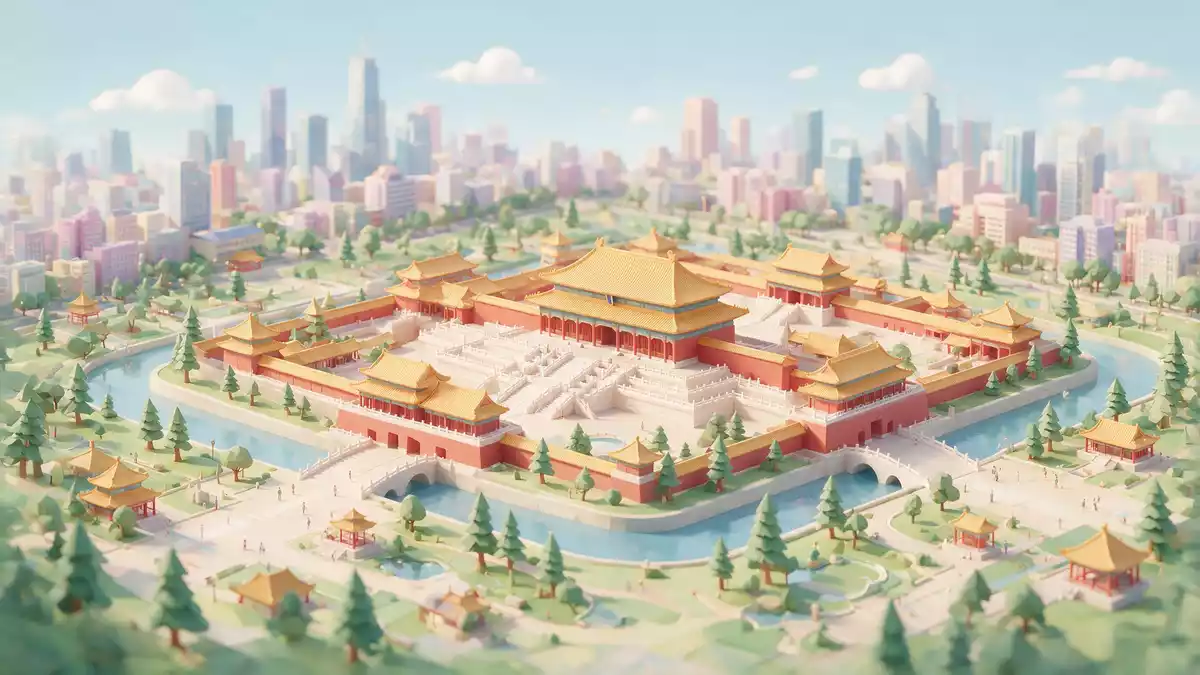
At the Forbidden City in Beijing, the Palace Museum will close Wuying Hall from 19 October 2026 under a conservation and display-upgrade programme. The announcement was issued on 12 October 2026, giving visitors in China a specific access change to consider during October and November travel.
Wuying Hall closure begins at the Forbidden City on 19 October
The Palace Museum says that Wuying Hall will stop receiving visitors from 19 October 2026. Its notice attributes the change to work on historic buildings, the care of collections and upgrades to exhibition displays, but it does not state an end date.
The closure is therefore a change to the visitor experience rather than a closure of the whole palace complex. The Palace Museum notice for 19 October is the operator's current public announcement. Travellers planning a visit after that date should expect Wuying Hall to be unavailable and should check the museum's notices for later updates.
The Forbidden City setting puts the closure inside a World Heritage palace
The Forbidden City is in the centre of Beijing and forms the Beijing part of the Imperial Palaces of the Ming and Qing Dynasties in Beijing and Shenyang. UNESCO says the palace complex was constructed between 1406 and 1420 under the Ming emperor Zhu Di, and it witnessed the enthronement of 14 Ming and 10 Qing emperors during the following 505 years.
The site was inscribed on the World Heritage List in 1987. Its plan includes a central axis, symmetrical layouts, an outer court at the front and an inner court behind it, with landscaped courtyards within the wider complex. That architectural arrangement means the Wuying Hall closure concerns one named part of a much larger historic ensemble, not the end of access to the entire Forbidden City. The UNESCO World Heritage record describes the palace's history, layout and conservation status.
Visiting Forbidden City: what travellers from Western Europe should know
- Wuying Hall closes from 19 October 2026. The Palace Museum announcement does not give a reopening date.
- The closure affects Wuying Hall, while the announcement does not say that the whole Forbidden City will close. Current notices should be checked before visiting.
- The Forbidden City is in central Beijing, and Wuying Hall is a named part of the palace complex affected by the 19 October 2026 access change.
- China's official language is Mandarin Chinese and its national currency is the renminbi.
- Entry requirements depend on your nationality; UK travellers can check the FCDO travel advice at gov.uk/foreign-travel-advice, Irish travellers the Department of Foreign Affairs at ireland.ie.
Searching for Forbidden City on social platforms
These links open searches for Forbidden City on each platform.
Frequently asked questions about Forbidden City
What has changed at the Forbidden City?
Wuying Hall will stop receiving visitors from 19 October 2026 for historic-building conservation, collection care and display upgrades. The Palace Museum has not stated a reopening date.
Where is the Forbidden City and how do you get there?
The Forbidden City is in central Beijing. The available notice confirms the site and the affected hall but does not provide transport directions.
What is the Forbidden City?
It is the Beijing imperial palace complex within the UNESCO-listed Imperial Palaces of the Ming and Qing Dynasties. UNESCO records construction between 1406 and 1420 and inscription on the World Heritage List in 1987.


