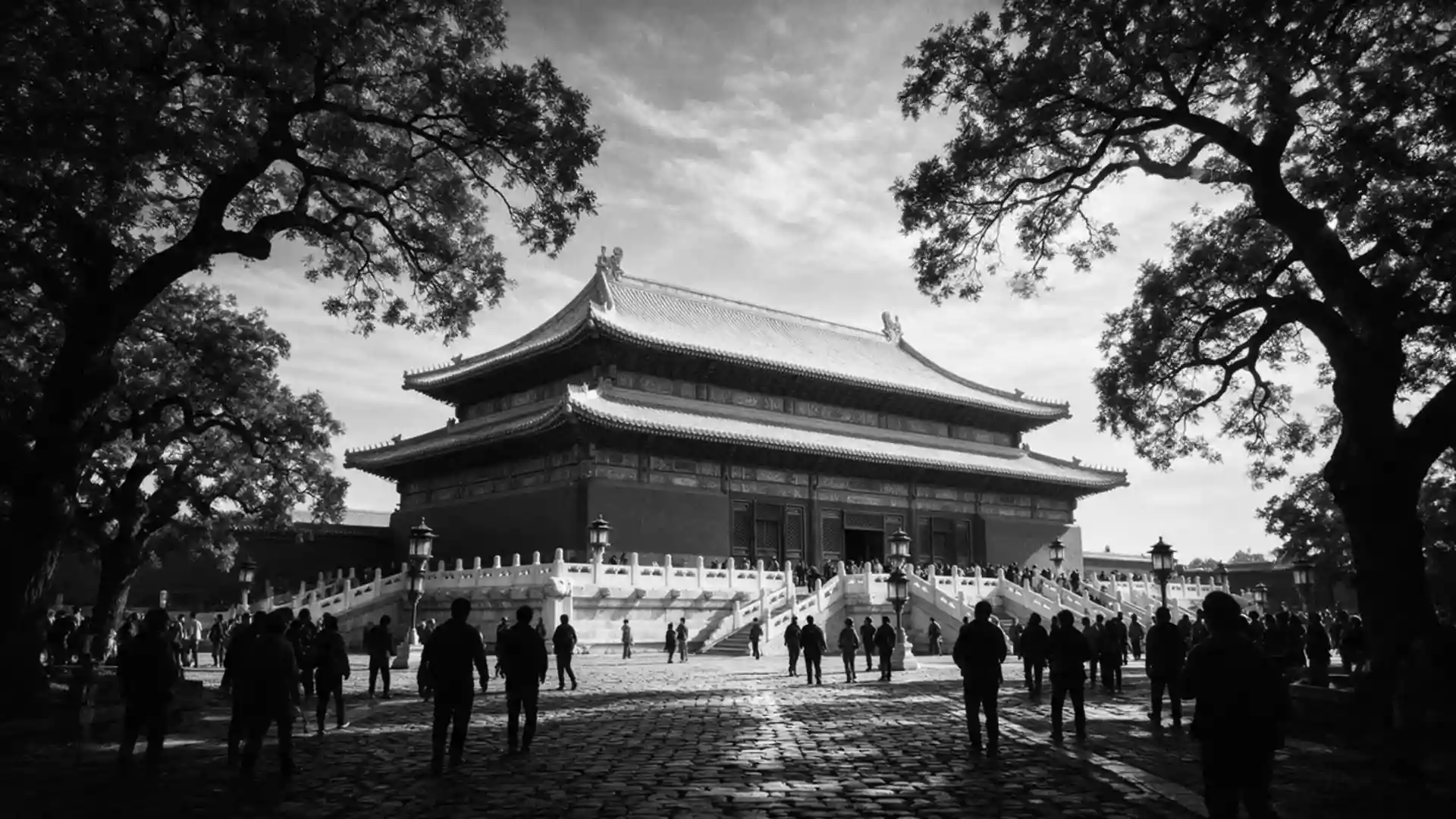
Forbidden City closes Yanxi Palace on 4 November 2026
Published on 11/14/2026 at 19:14 | Editorial responsibility: Rafael Müller, Editor-in-Chief AD HOC NEWSConservation and access update
- The Palace Museum closed Yanxi Palace on 4 November 2026 under its historic-building protection plan.
- The closure has no announced reopening date, while other areas of the complex remain accessible.
- UNESCO says the Forbidden City was built between 1406 and 1420 and entered the World Heritage List in 1987.
- Visitors enter through Meridian Gate and leave through either Gate of Divine Prowess or East Prosperity Gate.
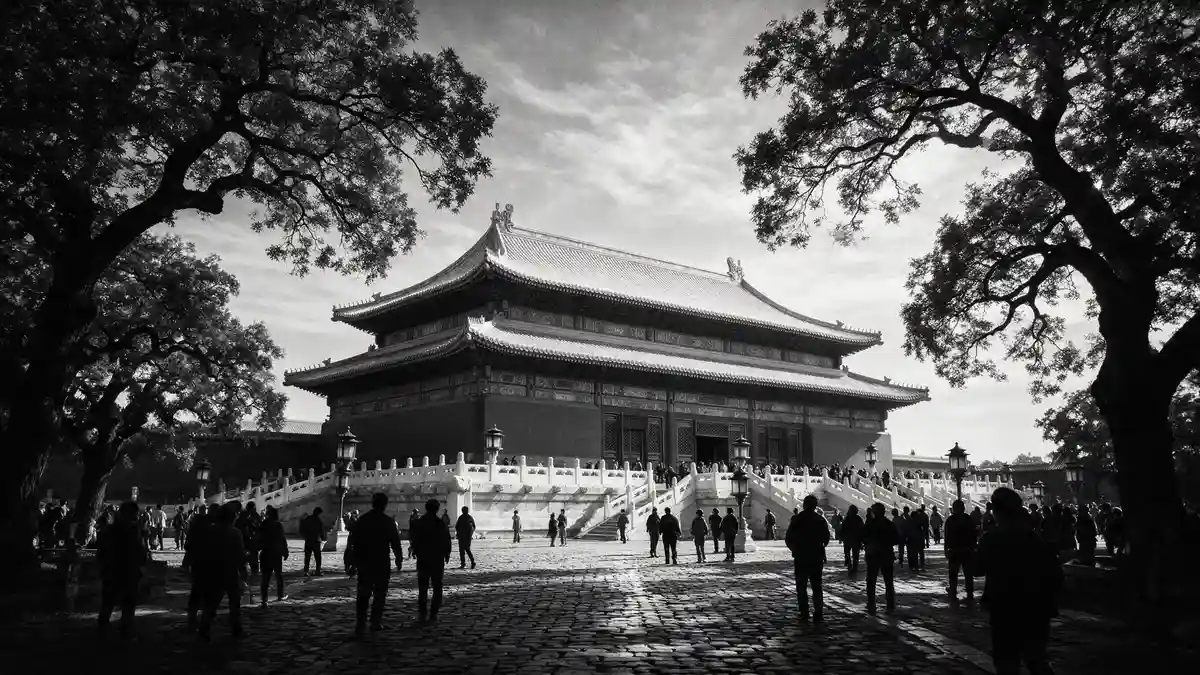
The Forbidden City in Beijing closed Yanxi Palace on 4 November 2026 under a protection programme for historic buildings. The Palace Museum, which administers the complex, has not announced when the palace will reopen.
The closure affects one named section rather than the entire imperial complex. The official notice gives travellers a precise change to their route through one of China's most significant heritage sites.
Yanxi Palace closure changes the November route
The Palace Museum announced on 4 November 2026 that Yanxi Palace had stopped admitting visitors. Its notice attributes the decision to the museum's historic-building protection plan and says that a reopening time will be announced separately.
The announcement does not describe a ceremony, exhibition or replacement attraction. It therefore gives visitors one clear practical message: Yanxi Palace should not be included in a planned visit until a later museum notice confirms access. The rest of the Forbidden City is not identified as closed by this announcement.
The closure follows an earlier conservation survey. The museum had announced that Yanxi Palace would be unavailable from 1 September to 31 October 2026 and would reopen on 1 November, before the separate closure announced on 4 November. The Palace Museum announcement records both the November change and the absence of a new reopening date.
Historic palace architecture remains the reason for the change
Yanxi Palace sits within the inner residential areas of the former imperial compound. Its renewed closure illustrates how conservation decisions can alter a route through a site whose buildings are still managed as a connected historic ensemble.
UNESCO describes the Forbidden City as an imperial palace built between 1406 and 1420 by the Ming emperor Zhu Di. It was the royal residence of Ming and Qing emperors and witnessed the enthronement of 14 Ming and 10 Qing rulers over the following 505 years.
The complex is part of the Imperial Palaces of the Ming and Qing Dynasties in Beijing and Shenyang, inscribed on the World Heritage List in 1987. UNESCO describes the Beijing palace as a central model of ancient Chinese palace planning, with a symmetrical layout, a main axis, an outer court to the south and an inner court to the north. Those spatial divisions give the closure a direct connection to the way visitors experience the site rather than making it a purely administrative update.
Beijing's Palace Museum keeps a one-way visitor route
The Palace Museum's visitor guidance states that public movement through the complex runs from south to north. Meridian Gate is the visitor entrance, while visitors leave through Gate of Divine Prowess or East Prosperity Gate. Yanxi Palace's closure therefore removes a named stop from the interior route, not the principal entrance to the Forbidden City.
The museum's official visitor page also lists other temporary restrictions and advises visitors to follow current announcements. The UNESCO entry records nearly 10,000 rooms across the Forbidden City, although not all spaces are open to the public. Conservation work is consequently part of the continuing management of a very large historic complex.
Visiting Forbidden City: what travellers from Western Europe should know
- Yanxi Palace has been closed from 4 November 2026, and the Palace Museum has announced no reopening date.
- The closure applies to Yanxi Palace; visitors should not assume that it is part of the route during a November or December 2026 visit.
- Entry is through Meridian Gate, the southern gate, and the official route leaves through Gate of Divine Prowess or East Prosperity Gate.
- The Forbidden City is in central Beijing, and the museum identifies Tiananmen East and Tiananmen West as nearby public transport stops served by Line 1.
Searching for Forbidden City on social platforms
These links open searches for Forbidden City on each platform.
Frequently asked questions about Forbidden City
What has changed at the Forbidden City?
Yanxi Palace closed to visitors on 4 November 2026 for historic-building protection work. The Palace Museum has not given a reopening date.
Where is the Forbidden City and how do you get there?
The complex is in central Beijing. The museum identifies Tiananmen East and Tiananmen West, served by Line 1, among the nearby public transport stops.
What is the Forbidden City?
It is the former imperial palace in Beijing, built between 1406 and 1420 and inscribed as part of a World Heritage property in 1987.