
George Town’s shophouses and streets of many faiths
Published on 09/23/2026 at 01:06 | Editorial responsibility: Rafael Müller, Editor-in-Chief AD HOC NEWS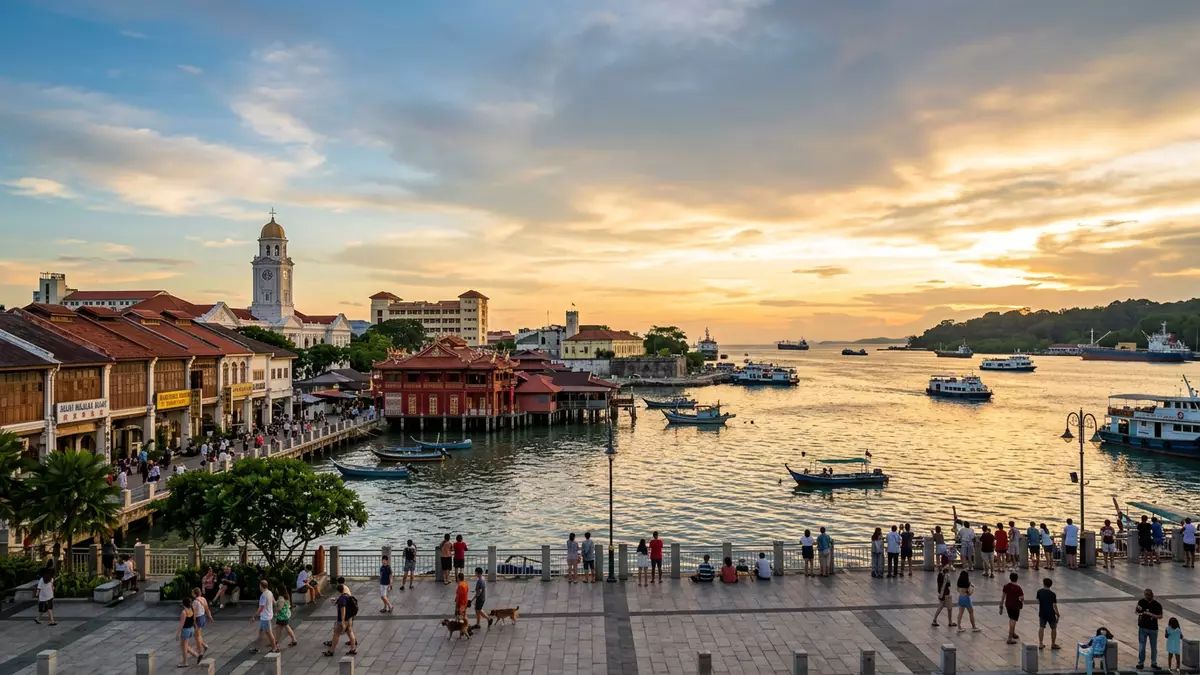
George Town is a city where residential shophouses, religious buildings and waterfront settlements form a continuous historic landscape. Founded in 1786 by Francis Light, the Penang capital carries British, Chinese, Indian, Malay and European influences through streets that remain part of daily life.
George Town’s historic cityscape in brick, timber and stucco
George Town lies on Penang Island in north-western Malaysia, beside the Straits of Malacca. Its historic core is part of the serial World Heritage property Melaka and George Town, Historic Cities of the Straits of Malacca, inscribed in 2008 under cultural criteria (ii), (iii) and (iv). George Town’s World Heritage history reflects more than five centuries of trading and cultural exchange between Asia and Europe.
The city’s built form records its history through linked shop and home frontages, arcaded walkways, courtyards and narrow streets. Traditional shophouses combine commercial rooms at street level with domestic space behind or above them. Their façades use plaster, timber, ceramic details and decorative openings, while the covered five-foot ways create a recognisable edge between buildings and pavement.
British-era civic architecture appears beside Chinese clan houses, mosques, churches, Hindu temples and Taoist shrines. This mixture is not arranged in a museum district separate from ordinary life. Shops, workshops, food businesses, homes and places of worship occupy the same historic urban fabric.
From a 1786 free port to a multicultural heritage city
Francis Light established George Town in 1786 as a free port connected with British interests in South-East Asia. The settlement was named for King George III, and its position on Penang Island brought merchants and communities from China, India, Arab countries and the wider Malay world.
Trade shaped the city’s population, languages, religious buildings and commercial streets. Chinese associations created clan houses and waterfront settlements, while Indian Muslim, Hindu, Malay, Armenian and European communities left buildings and traditions within the town. The result is a cultural landscape made from architecture, cuisine, craft, religious practice and family businesses.
George Town’s economic role changed after its free-port status was revoked in 1969. Port activity moved towards Seberang Perai on mainland Penang, while the city developed stronger links with services, culture and tourism. Its historic centre entered the World Heritage List with Melaka in 2008, recognising the architectural and cultural townscape of the Straits of Malacca. The city’s 1786 foundation remains central to its identity.
Street of Harmony, clan jetties and living traditions
Lebuh Pitt, known as the Street of Harmony, gathers major places of worship from different traditions within one historic corridor. Kapitan Keling Mosque, Sri Maha Mariamman Temple, Goddess of Mercy Temple and St George’s Church represent Islamic, Hindu, Chinese and Christian communities.
Each building has its own architectural language. Mosque domes and minarets, temple ornament, Chinese religious decoration and Anglican forms sit within the same streetscape. The buildings are not interchangeable landmarks. Their differing materials, colours, symbols and layouts show how George Town grew through several communities rather than a single architectural programme.
The Clan Jetties extend this cultural landscape towards the water. Timber houses stand above the sea on stilts, connected by narrow wooden walkways. The settlements are associated with Chinese clan communities and retain a residential character. the Clan Jetties add a maritime dimension to the brick, plaster and timber streets inland.
Other named landmarks include Fort Cornwallis, Penang Town Hall, Penang City Hall, the Queen Victoria Memorial Clock Tower, Cheong Fatt Tze Mansion and the Pinang Peranakan Mansion. Clan houses such as Leong San Tong Khoo Kongsi and Seh Tek Tong Cheah Kongsi connect architecture with family history, ritual and association life.
Visiting George Town: what travellers from Western Europe should know
- The historic core occupies George Town on Penang Island, in the State of Penang. It can be explored on foot, by bicycle or by trishaw.
- The Clan Jetties use narrow timber walkways above the sea. Solid footwear and care on wooden surfaces suit the settlement’s built terrain.
- The Street of Harmony links Kapitan Keling Mosque, Sri Maha Mariamman Temple, Goddess of Mercy Temple and St George’s Church.
- The official language is Malay and the currency is the Malaysian ringgit.
- Entry requirements depend on your nationality; UK travellers can check the FCDO travel advice at gov.uk/foreign-travel-advice, Irish travellers the Department of Foreign Affairs at ireland.ie.
Searching for George Town on social platforms
These links open searches for George Town on each platform.Frequently asked questions about George Town
Where is George Town?
George Town is the capital of Penang, a Malaysian state whose main island lies beside the Straits of Malacca.
What can visitors expect in the historic centre?
Visitors encounter shophouses, civic buildings, clan houses, places of worship, food businesses, museums and timber settlements above the sea.
What makes George Town distinctive?
Its historic townscape combines British-era planning with Chinese, Indian, Malay, Islamic, Christian and other cultural influences within a living city.


