
Gosudarstvennyi Ermitazh and the palatial museum on the Neva
Published on 09/09/2026 at 10:41 | Editorial responsibility: Rafael Müller, Editor-in-Chief AD HOC NEWS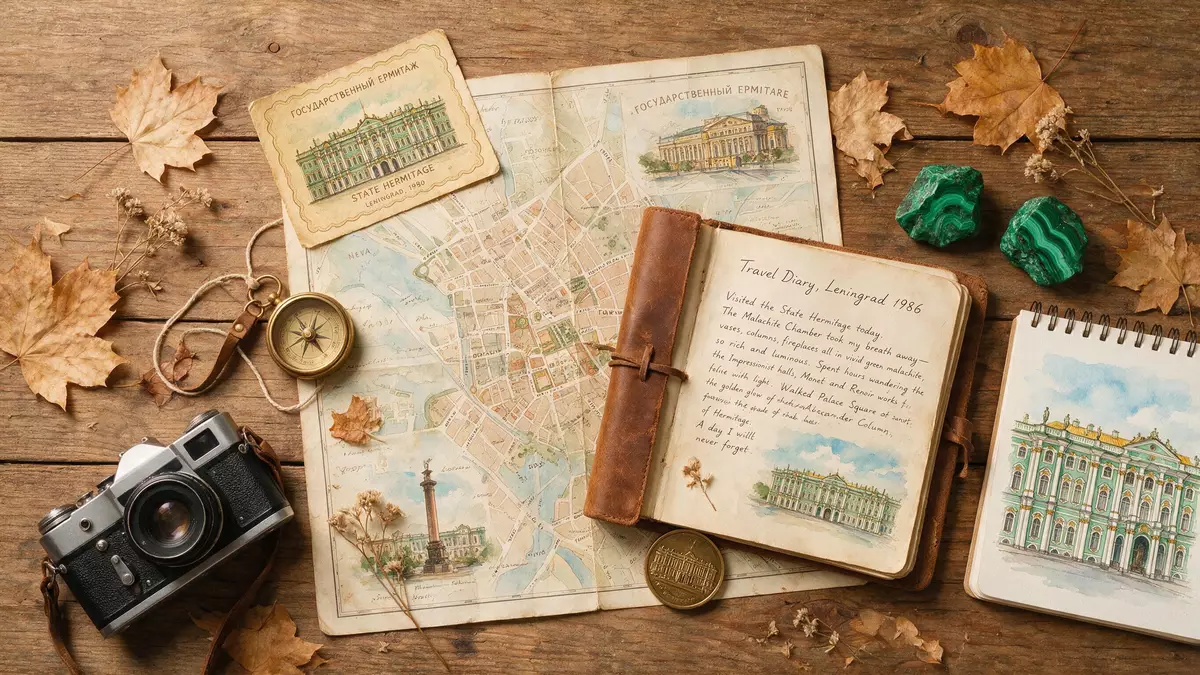
Gosudarstvennyi Ermitazh, known internationally as the State Hermitage Museum, stretches along the Neva River in Sankt Petersburg inside a chain of imperial palaces that once served as the residence of the Russian emperors.State Hermitage Museum Founded in 1764 under Empress Catherine the Great as a court collection of Western European paintings, it evolved into a vast museum where galleries, staircases and ceremonial halls occupy the same complex as the former Winter Palace.founded in 1764
The Winter Palace turned museum
The architectural core of Gosudarstvennyi Ermitazh is the Winter Palace, a grand Baroque residence built between 1754 and 1762 for Empress Elizabeth Petrovna to designs by the Italian architect Bartolomeo Rastrelli.Baroque Winter Palace Its celadon and white riverfront facade forms one edge of Palace Square, with ranks of columns, pilasters and statuary giving a sense of theatrical scale that belongs as much to a royal residence as to an art museum.
Inside, the palace holds hundreds of rooms whose decor ranges from gilded ceremonial halls to more intimate spaces, all woven into the museum route so that visitors encounter architecture and decorative arts alongside paintings and sculpture.more than 460 rooms The transformation of the Winter Palace from imperial residence into museum has turned its staircases, throne rooms and galleries into exhibits in their own right, revealing how court life and artistic display once occupied the same building.
A chain of Hermitage buildings along the Neva
Gosudarstvennyi Ermitazh is not confined to a single structure but occupies a linked sequence of historic buildings along Palace Embankment beside the Neva River.Palace Embankment complex The Small Hermitage, built in the later eighteenth century next to the Winter Palace, began as Catherine the Great’s private gallery and gave the entire ensemble its name, while the Old Hermitage extended the museum spaces along the river in the same period.Small and Old Hermitage
On the landward side stands the New Hermitage, designed by the German architect Leo von Klenze in the nineteenth century as Russia’s first purpose-built public museum building, recognisable by its portico supported by granite Atlantes figures.New Hermitage opened in 1852 Together with the Hermitage Theatre and neighbouring structures on Palace Square, these buildings create an ensemble where Baroque, neoclassical and Empire-style facades line the river and square in a continuous front, with museum galleries threaded through their interiors.
Art collections inside an imperial setting
Catherine the Great’s decision in 1764 to acquire a substantial group of European paintings marked the beginning of the collection that grew into Gosudarstvennyi Ermitazh.Catherine’s paintings Over time, the museum expanded to hold millions of objects ranging from ancient Near Eastern artefacts and Greek and Roman sculpture to mediaeval icons, Renaissance canvases and twentieth-century works by the European avant-garde.art museum in St Petersburg
One part of the collection is housed in the General Staff Building on the opposite side of Palace Square, a sweeping neoclassical crescent designed by Carlo Rossi and completed in 1829.General Staff Building Its east wing now contains galleries dedicated to nineteenth- and twentieth-century art, so that visitors cross from the Baroque palace to a more restrained imperial facade before entering rooms filled with impressionist and modern paintings.
Visiting Gosudarstvennyi Ermitazh: what travellers from Western Europe should know
- Gosudarstvennyi Ermitazh stands on Palace Embankment beside the Neva River in central Sankt Petersburg, with its main entrance facing Palace Square and the General Staff Building opposite.
- The museum complex occupies several interconnected palaces and auxiliary buildings; moving between wings involves long corridors, broad staircases and changes of level within historic architecture.
- Sankt Petersburg lies on low ground near the mouth of the Neva, and the embankment outside the Hermitage offers a level promenade with views towards Vasilyevsky Island and the river traffic.
- The official language is Russian and the currency is the rouble; English-language labelling appears in many galleries, but wider signage in the city predominantly uses Cyrillic script.
- Entry requirements depend on your nationality; UK travellers can check the FCDO travel advice at gov.uk/foreign-travel-advice, Irish travellers the Department of Foreign Affairs at ireland.ie.
Searching for Gosudarstvennyi Ermitazh on social platforms
These links open searches for Gosudarstvennyi Ermitazh on each platform.
Frequently asked questions about Gosudarstvennyi Ermitazh
Where is Gosudarstvennyi Ermitazh located?
Gosudarstvennyi Ermitazh stands on Palace Embankment beside the Neva River in the historic centre of Sankt Petersburg, with its main complex in and around the former Winter Palace.
What can visitors expect inside the museum?
Visitors move through palace interiors that now function as galleries, encountering decorative halls, grand staircases and rooms filled with art ranging from ancient artefacts to modern paintings.
What makes Gosudarstvennyi Ermitazh distinctive among museums?
Its defining character lies in the combination of a vast art collection with an ensemble of imperial palaces, so that the architecture and interiors form part of the museum experience.


