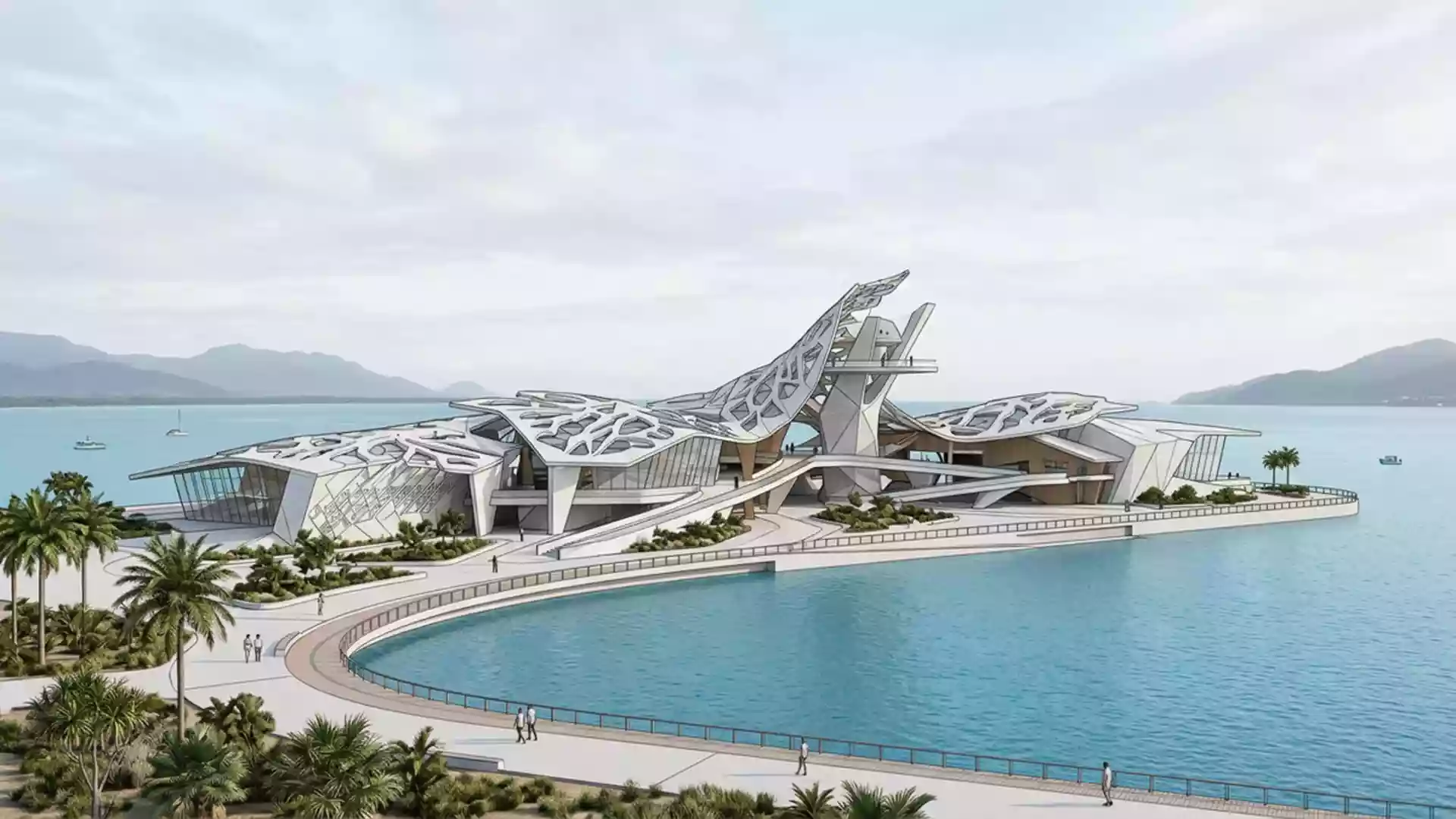
Great Barrier Reef: a living coral corridor off Cairns
Published on 08/23/2026 at 14:29 | Editorial responsibility: Rafael Müller, Editor-in-Chief AD HOC NEWS
Off the coast of Queensland in north-eastern Australia, the Great Barrier Reef forms a vast chain of coral structures running parallel to the mainland. Recognised as a World Heritage area since 1981, it spans hundreds of thousands of square kilometres and stretches for more than 2,000 km along the Coral Sea. From Cairns, visitors step out from rainforest-backed shores to a marine landscape where shallow coral gardens, deeper channels and low islands appear in sequence.
A reef system on the scale of a continent
The Great Barrier Reef is the world’s largest coral reef system, extending for more than 2,000 km along the north-eastern coast of Australia and covering an area of roughly 348,000 km².world’s largest coral reef system It lies off Queensland, with most of the reef forming a band offshore from coastal centres such as Cairns and Townsville and reaching towards the Torres Strait in the north.off Queensland
Rather than a single continuous barrier, the Great Barrier Reef is made up of thousands of individual coral reefs and hundreds of islands set on the edge of the continental shelf.thousands of individual coral reefs These structures stand in the shallow waters of the shelf, with deeper lagoons and channels separating them and linking the reef environment to the open Pacific beyond.
Layers of coral, sand and sea between Cairns and the outer reefs
From the coast near Cairns, the seascape towards the Great Barrier Reef unfolds in distinct bands. Close to the mainland lie estuaries and seagrass meadows, followed by inshore coral formations and sandy cays on submerged platforms further offshore.estuarine and seagrass environments Beyond these, outer reefs rise from deeper water, forming walls, terraces and shallow lagoons where clear ocean water passes over the coral.
The World Heritage Area reaches from just south of the Tropic of Capricorn to the seas off Cape York Peninsula, with the reef lying between tens and hundreds of kilometres offshore depending on latitude.extends for some 2,300 km Around Cairns, visitors encounter this structure as a series of fixed platforms and moored pontoons on reef tops, small coral cays and larger continental islands where rainforest and fringing coral occur side by side.
A dense tropical ecosystem built from coral
The Great Barrier Reef is built primarily from the skeletons of hard corals, with living polyps forming a thin active layer over limestone accumulated over thousands of years.hard coral structures This coral framework supports a wide range of other organisms, including sponges, soft corals, giant clams and algae that encrust the reef surface.
The marine life is correspondingly rich. Fish of many shapes and sizes occupy different parts of the reef, from shallow coral heads to deeper channels at the edge of the shelf.over 5,000 species in lagoon ecosystems Marine turtles, rays and various shark species move through the system, while seabirds use the vegetated islands and sand cays as nesting and resting places.
Experiencing the reef from a tropical gateway city
Cairns functions as one of the main jumping-off points for exploring this section of the Great Barrier Reef, with marine operations based in the city’s port and along the nearby coast. Boat routes lead to outer-reef platforms, island national parks and sheltered inshore sites, each offering different combinations of coral formations, sand cays and reef slopes.
At the reef itself, access usually centres on fixed pontoons or beaches on islands and cays, where swimming areas, snorkel entry points and dive platforms are set beside shallow coral gardens. Glass-bottom or semi-submersible vessels allow views of coral and fish without entering the water, while marked snorkel trails give orientation over the patchwork of coral heads and sandy channels surrounding the structures.
Visiting Great Barrier Reef: what travellers from Western Europe should know
- The Great Barrier Reef lies off the coast of Queensland in north-eastern Australia, with Cairns serving as one of the key coastal gateways for reef excursions.
- Access from Cairns is by boat, using the city’s harbour or nearby marinas as departure points for outer-reef platforms, coral cays and island national parks.
- On many outer reefs, access for swimming and snorkelling involves metal stairways, ladders and sometimes short floating platforms between the pontoon and the coral shelf.
- Reef visits typically involve exposure to strong tropical sun on open decks and beaches, with limited shade once away from the vessel or island buildings.
- The official language is English and the currency is the Australian dollar. Entry requirements depend on your nationality; UK travellers can check the FCDO travel advice at gov.uk/foreign-travel-advice, Irish travellers the Department of Foreign Affairs at ireland.ie.
Searching for Great Barrier Reef on social platforms
These links open searches for Great Barrier Reef on each platform.
Frequently asked questions about Great Barrier Reef
Where is the Great Barrier Reef in relation to Cairns?
The Great Barrier Reef lies offshore in the Coral Sea, with Cairns on the adjacent Queensland coast serving as a major access point to nearby reefs and islands.
What can visitors expect when they reach the reef?
Visitors encounter shallow coral gardens, sandy patches and deeper channels, with platforms or beaches providing entry points for swimming, snorkelling, diving and boat-based viewing.
What makes this section of the reef distinctive?
Off Cairns, the reef combines outer-shelf coral formations with island national parks and rainforest-backed mainland scenery, creating a sequence from coastal ranges to offshore reef tops.