
Grotta Azzurra and Capri’s blue-lit sea chamber
Published on 09/24/2026 at 11:23 | Editorial responsibility: Rafael Müller, Editor-in-Chief AD HOC NEWS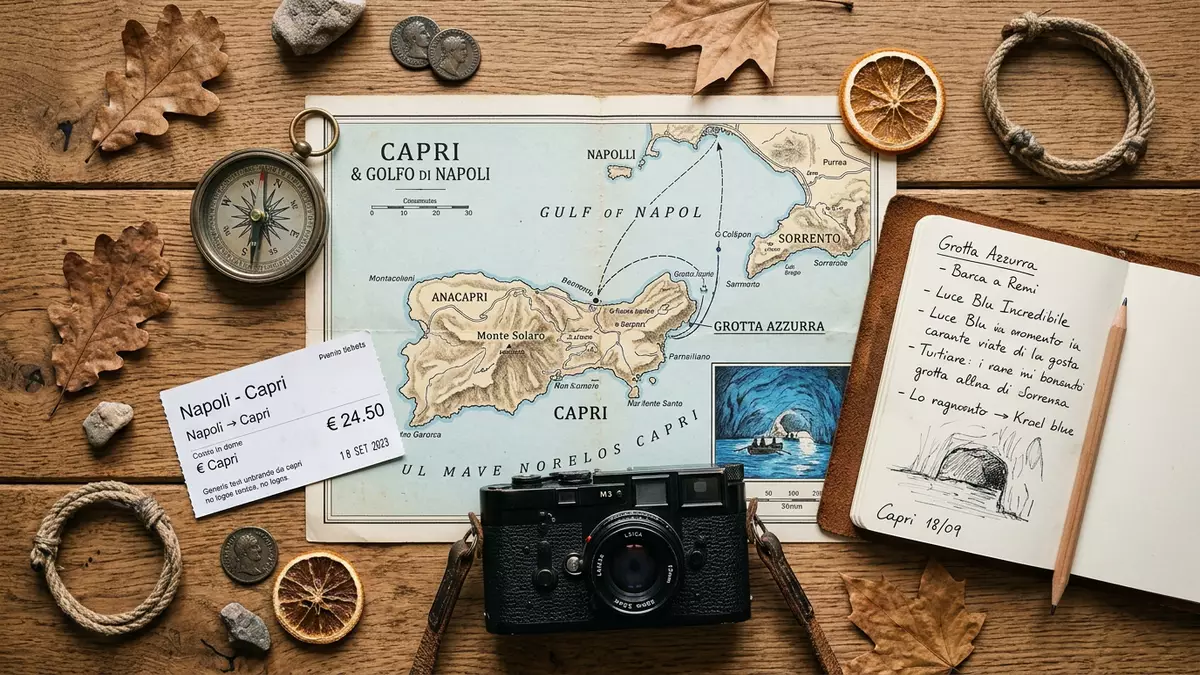
Grotta Azzurra is a sea cave on the north-western coast of Capri, within the municipality of Anacapri. Its defining feature is visible from the water: daylight enters through the sea below the entrance, while the chamber receives a deep blue glow.
The cave measures about 60 metres long and 25 metres wide. A low opening leads from the sea into the flooded chamber, where small rowing boats pass beneath the rock before moving across the blue water.
Grotta Azzurra: a sea cave shaped by blue light
The name Grotta Azzurra refers to the colour inside the cavern. Direct sunlight does not fill the chamber through the entrance alone. Light also reaches the water through a submerged opening beneath the visible passage.
The water filters the warmer parts of the light, leaving blue tones prominent across the flooded space. The effect is an optical feature of the cave’s openings, seawater and limestone, not coloured rock or artificial illumination.
The entrance is narrow and low, measuring about 2 metres across and roughly 1 metre high. Entry therefore takes place in small rowing boats, with passengers lying back as the boat passes beneath the rock.
Inside, the cave expands into a larger chamber with water below and a rocky ceiling above. The seabed is sandy, while the surrounding rock belongs to Capri’s limestone coastal landscape.
From Roman nymphaeum to Grand Tour landmark
Grotta Azzurra was known in Roman antiquity. During the reign of Emperor Tiberius, the cavern served as a marine nymphaeum, a water sanctuary associated with sea nymphs.
Roman remains and statues found in the cave connect it with that period. The nearby imperial presence on Capri included Villa Jovis, the large residence associated with Tiberius on the island’s eastern heights.
The cave was also known as Grotta di Gradola. For centuries, it belonged to local stories about a mysterious place at the edge of the sea, before its rediscovery in 1826.
The German writer August Kopisch and Ernst Fries reached the cavern with local companions on 18 April 1826. Kopisch’s descriptions helped bring Grotta Azzurra into the cultural landscape of the European Grand Tour.
The cave’s history therefore has two clearly visible layers. Roman use survives through archaeological traces and literary references, while the nineteenth-century rediscovery survives through travel writing, painting and the continuing name Grotta Azzurra.
Capri’s low entrance and flooded interior
Grotta Azzurra is approached from the sea or from the Anacapri side of Capri. From Marina Grande, boats travel along the island’s coast towards the cave. From Anacapri, roads and a descending route lead towards the shoreline.
The final access point is defined by rock, water and the low entrance. The approach is not a walk into a dry cave. It is a transfer from a larger boat or shore route into a small rowing boat at sea level.
Once inside, the boat remains on the water throughout the visit. The chamber’s dimensions make the contrast clear: the entrance is compressed, while the interior opens into a broad flooded cavity.
The cave measures approximately 60 metres in length and 25 metres in width, although published measurements also give smaller figures for particular sections of the chamber. The consistent feature is the large interior beyond the narrow mouth.
The blue appearance belongs to the relationship between the cave’s openings and the water. Sunlight passes through the submerged entrance, and the water filters the light before it reaches the interior surfaces.
This arrangement gives the chamber its recognisable colour without requiring a painted surface or electrical lighting. Grotta Azzurra is therefore both a geological space and an optical phenomenon.
Capri’s coast contains several caves, but Grotta Azzurra has a particularly strong historical identity. Its Roman association, low sea entrance and blue-lit interior appear together in the place itself.
The cave’s rediscovery in 1826 added a modern cultural chapter to an older Roman site. The names of August Kopisch and Ernst Fries remain connected with that moment, while Tiberius anchors the earlier period.
Visiting Grotta Azzurra: what travellers from Western Europe should know
- Grotta Azzurra lies on Capri’s north-western coast, in Anacapri. It can be reached by boat from Marina Grande or by land from Anacapri before continuing towards the shore.
- The final passage uses a small rowing boat. Passengers lie back because the entrance is about 1 metre high and roughly 2 metres wide.
- The visit takes place entirely on the water inside the cave. There is no dry interior route through the chamber.
- The official language is Italian and the currency is the euro.
- Sea conditions determine whether the low entrance can be approached safely. Conditions on the coast change with the seasons; local boat operators provide information.
Searching for Grotta Azzurra on social platforms
These links open searches for Grotta Azzurra on each platform.
Frequently asked questions about Grotta Azzurra
Where is Grotta Azzurra?
Grotta Azzurra is on the north-western coast of Capri, in the municipality of Anacapri. The cave opens directly onto the sea.
What happens during a visit?
Visitors transfer into a small rowing boat and lie back while the boat passes beneath the low entrance. The boat then moves across the flooded interior.
Why is the cave blue?
Daylight enters through a submerged opening beneath the entrance. Seawater filters the light, creating the blue appearance inside the limestone chamber.


