
Gugong and the ordered scale of imperial Beijing
Published on 08/24/2026 at 22:59 | Editorial responsibility: Rafael Müller, Editor-in-Chief AD HOC NEWS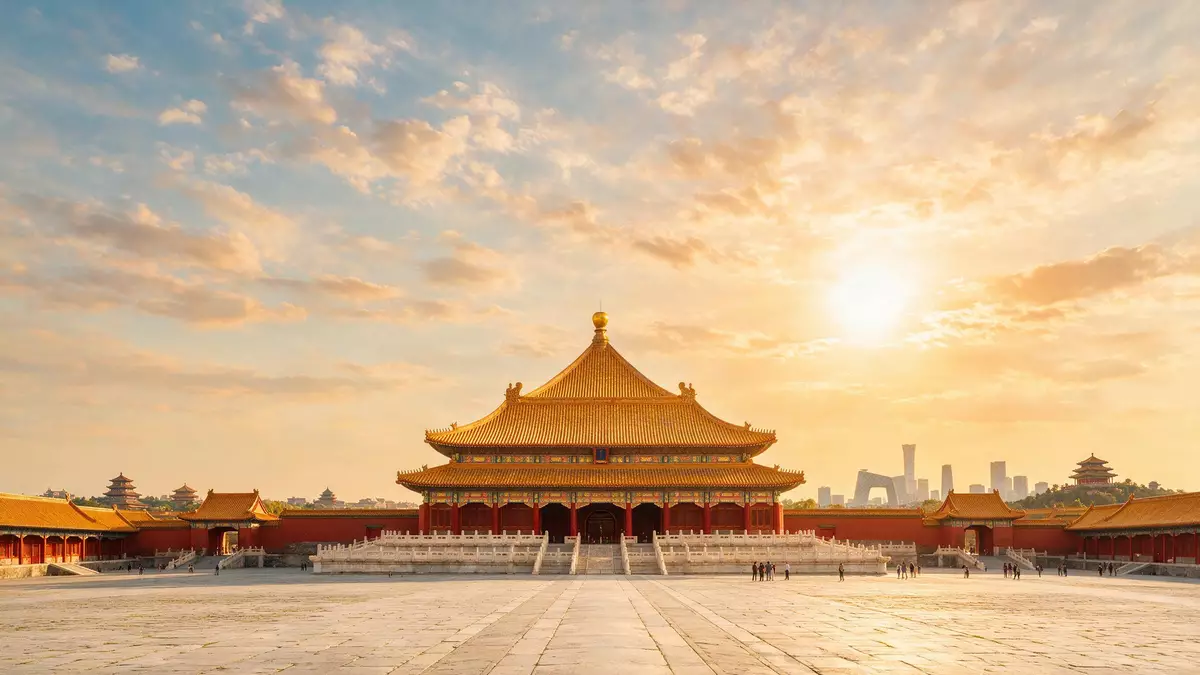
Gugong is the Chinese name for the Forbidden City in Peking, the former imperial palace complex at the centre of the city. Its walls, golden roofs and layered courtyards still present a carefully ordered piece of Ming dynasty power.
Gugong and the Ming imperial plan
The complex was commissioned by the Yongle emperor of the Ming dynasty and built between 1406 and 1420. It is a major survival of imperial China and a UNESCO World Heritage site with an imperial history tied to the reigns of the Ming and Qing dynasties.
The site extends across a large walled compound of halls, gates and courtyards. The principal buildings follow a strict axis, and the roofs, terraces and enclosed courts create a strong sense of sequence through the palace grounds.
Walls, roofs and ceremonial courtyards
Gugong is known for its timber halls, red walls and glazed roof tiles. The whole ensemble forms a dense urban palace rather than a single monument, and that remains visible in the way buildings crowd around open courts.
The walled complex occupies 72 hectares and contains a great many rooms, halls and subsidiary structures. Its geometry is formal rather than picturesque, with repeated courtyards and heavy gatehouses marking each change in level and status.
From imperial residence to Palace Museum
The palace ceased to serve as the court residence of the emperors and became the Palace Museum in 1925. That change left the outer appearance of the complex intact while shifting its use from dynastic residence to public museum.
The museum function sits alongside the older architecture, so visitors encounter the ceremonial organisation of a Ming and Qing palace inside a civic cultural institution. The combination of the Ming and Qing dynasties and the later museum role gives Gugong its lasting character.
Visiting Gugong: what travellers from Western Europe should know
- Gugong stands in central Peking, beside Tian’anmen Square and within the historic city core.
- The palace is entered through gates and courtyards, and much of the route is organised on a formal axis.
- The complex is large, with long walls, raised terraces and a sequence of halls that makes the plan easy to lose sight of at ground level.
- English is not an official language in China. The official language is Chinese and the currency is the Chinese yuan.
- Entry requirements depend on your nationality; UK travellers can check the FCDO travel advice at gov.uk/foreign-travel-advice, Irish travellers the Department of Foreign Affairs at ireland.ie.
Searching for Gugong on social platforms
These links open searches for Gugong on each platform.
Frequently asked questions about Gugong
Where is Gugong?
Gugong is the Forbidden City in central Peking, within the historic imperial heart of the city. It stands close to Tian’anmen Square and the broader ceremonial centre.
What does a visit involve?
The complex consists of gates, courts, terraces and halls arranged on a formal axis. The scale of the palace means that the architecture is read as a sequence rather than as a single facade.
What makes Gugong distinctive?
Its distinction lies in the combination of Ming dynasty planning, imperial materials and the later Palace Museum function. The result is a palace complex that still reads as a courtly city of walls and roofs.


