
Habana Vieja, Havana’s stone grid of plazas and fortifications
Published on 08/25/2026 at 06:13 | Editorial responsibility: Rafael Müller, Editor-in-Chief AD HOC NEWS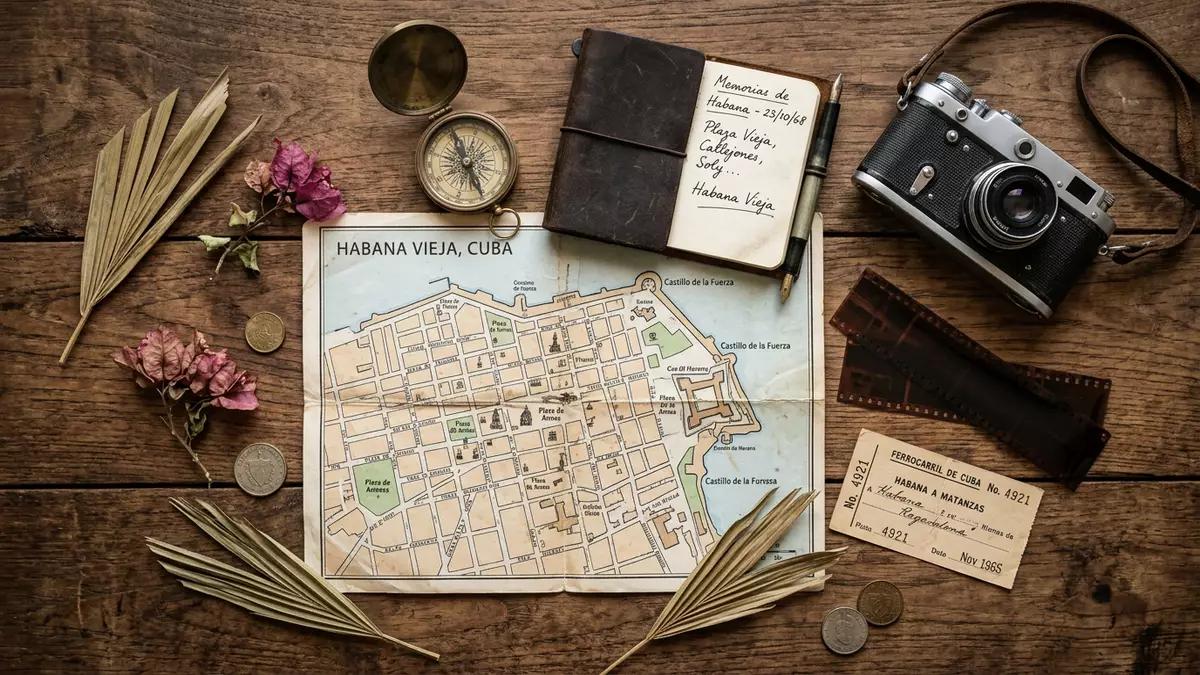
Habana Vieja, Old Havana, is the historic centre of Havanna on the edge of Havana Bay, a compact district where Spanish colonial town planning, Caribbean light and centuries of stonework meet in dense streets and open plazas. Founded by the Spanish crown in 1519 and inscribed as a UNESCO World Heritage Site in 1982, it preserves a tight urban grid of plazas, fortifications and low-rise houses that still define the oldest part of Cuba’s capital.
Plazas as the framework of Habana Vieja
At the core of Habana Vieja lies a network of plazas that structure the district and reveal its layered history in stone and stucco. The urban centre was established in 1519, when Spanish colonisers fixed Havana’s location on the island’s north-western coast and began laying out streets and squares around the harbour.Established in 1519 Plaza de Armas, considered the oldest of these squares, became the colonial seat of power in the second half of the sixteenth century, surrounded by official residences and later by the governor’s palace.Plaza de Armas
Close by, Plaza de la Catedral is lined with Cuban baroque architecture, centred on the Cathedral of the Virgin Mary, whose facade and adjoining houses illustrate the eighteenth-century religious and civic life of the city.Plaza de la Catedral Plaza Vieja, another key square, is framed by eighteenth-century buildings whose arcades and balconies mark the district’s commercial past and ongoing residential character.Plaza Vieja Together with smaller plazas such as Plaza de San Francisco and Plaza del Cristo, these spaces break the dense street grid into open, stone-paved rooms, where the district’s mixture of religious, governmental and mercantile functions is still legible in the surrounding architecture.
Fortifications and the maritime edge
Habana Vieja developed as a port city facing the Gulf of Mexico, and its relationship with the sea is most visible along the harbour edge, where fortifications and military structures still mark the shoreline. The district forms the historic heart of Havana, whose bay provided shelter for fleets shipping silver, sugar and other goods between the New World and Europe.historic heart of Havana The Castillo de la Real Fuerza, completed in the late sixteenth century, stands near Plaza de Armas as one of the earliest stone fortresses in the Americas, its thick walls and angular bastions reflecting Spanish defensive engineering against pirate attacks.Castillo de la Real Fuerza
Across the water, additional forts such as San Carlos de la Cabaña and Castillo de los Tres Reyes del Morro form part of the wider fortification system that secured the entrance to Havana Bay, enclosing the harbour in a ring of stone ramparts and batteries.Old Havana and its fortification system These works underpin the UNESCO inscription of “Old Havana and its Fortification System”, which recognises the district as an outstanding example of a historic port city whose urban fabric and defences together express its strategic role in Caribbean trade.UNESCO World Heritage Site in 1982 Walking along the waterfront, the contrast between low-rise houses in Habana Vieja and the heavy masonry of the forts shows how military and domestic architecture coexist within the same visual field.
Streets, houses and architectural character
Away from the harbour, Habana Vieja presents a remarkably coherent streetscape of baroque churches, neoclassical palaces and long rows of town houses, many with internal courtyards. The old city covers a compact area where the street layout, set out in the sixteenth century, retains its grid structure, with narrow routes such as Calle Obispo and Calle Mercaderes connecting plazas and smaller alleys.Calle Obispo and Calle Mercaderes Many buildings are low-rise, with thick masonry walls, interior courtyards, balconies and arcades that create shaded, semi-enclosed spaces between street and home.houses with arcades and courtyards
UNESCO and heritage surveys describe Habana Vieja as containing hundreds of historic buildings dating from the sixteenth to nineteenth centuries, forming a dense ensemble of private houses and public monuments in baroque and neoclassical styles.Baroque and neoclassical monuments Within this fabric stand notable structures such as the Palacio de los Capitanes Generales on Plaza de Armas, now housing the Museo de la Ciudad, and numerous churches, convents and civic buildings whose stone facades and ironwork speak to different phases of Spanish rule.hundreds of notable buildings The overall impression is of an urban district where the materials, proportions and details of colonial architecture have survived in unusual concentration, despite later changes elsewhere in Havanna.
Visiting Habana Vieja: what travellers from Western Europe should know
- Habana Vieja occupies the eastern side of central Havanna along Havana Bay, forming the historic core of the city’s waterfront district. It is reached over land by streets leading from newer neighbourhoods and lies close to the main harbour.
- The district’s streets include cobbled sections, uneven paving and occasional narrow passages, with some historic buildings accessed by staircases instead of lifts. Walking between plazas can involve short stretches on stone surfaces.
- Habana Vieja is in Cuba, where the official language is Spanish and the currency is the Cuban peso.
- Entry requirements depend on your nationality; UK travellers can check the FCDO travel advice at gov.uk/foreign-travel-advice, Irish travellers the Department of Foreign Affairs at ireland.ie.
Searching for Habana Vieja on social platforms
These links open searches for Habana Vieja on each platform.
Frequently asked questions about Habana Vieja
Where is Habana Vieja within Havanna?
Habana Vieja occupies the historic core of Havanna along the eastern edge of Havana Bay, forming the oldest part of Cuba’s capital city.
What should visitors expect when walking through Habana Vieja?
Visitors encounter a compact grid of narrow streets, cobbled plazas, colonial houses with courtyards and historic forts along the waterfront, all within a relatively small urban area.
What makes Habana Vieja distinctive among historic districts?
Habana Vieja stands out for its concentration of baroque and neoclassical architecture, its preserved fortification system and its early sixteenth-century street plan, all recognised in its UNESCO World Heritage status.


