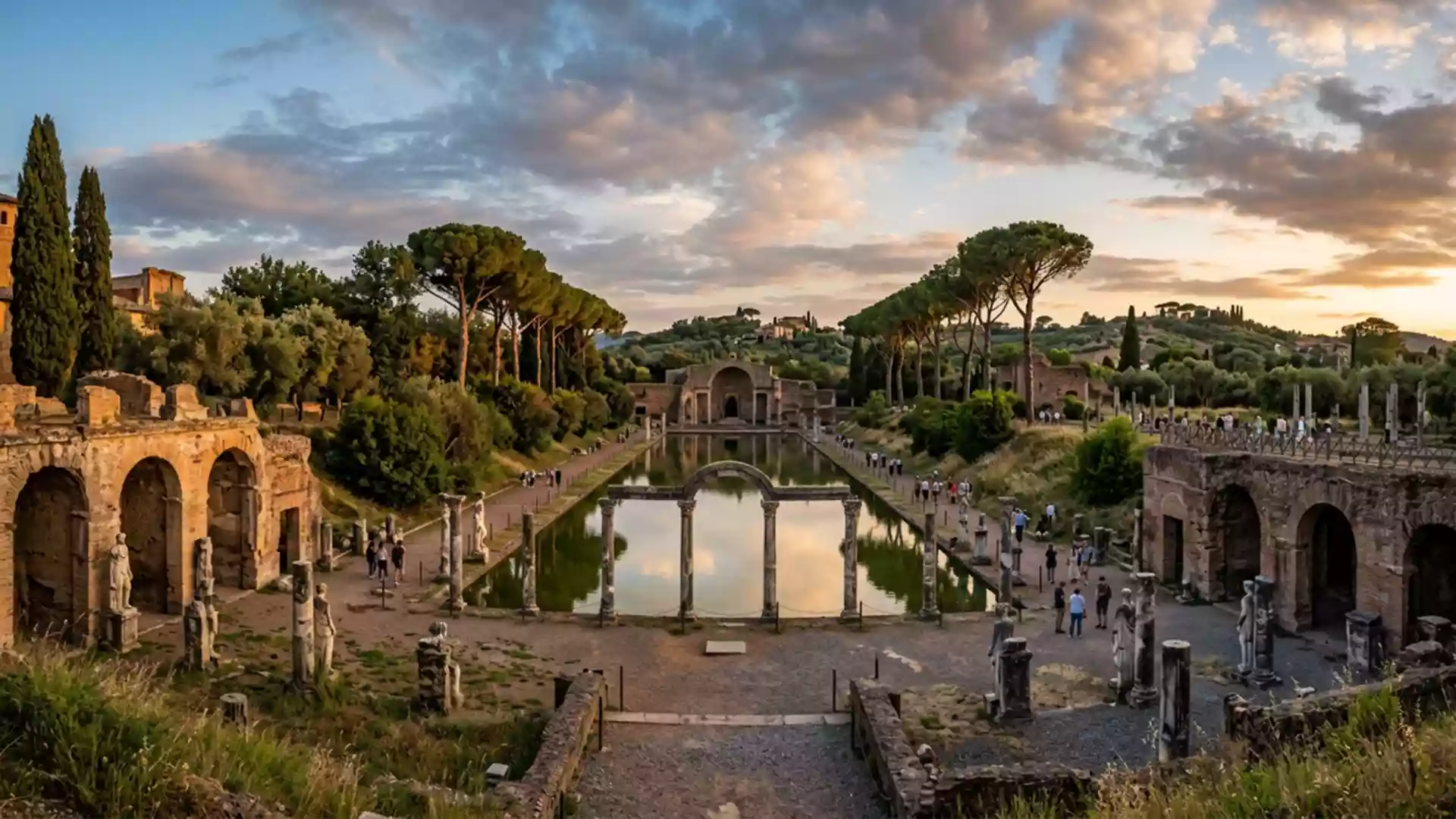
Hadrian’s Villa study is presented on 26 November
Published on 11/14/2026 at 20:01 | Editorial responsibility: Rafael Müller, Editor-in-Chief AD HOC NEWSResearch and Roman architecture
- Luca Cipriani and Filippo Fantini present their study in Tivoli on 26 November 2026.
- The free presentation examines the Piazza d’Oro vestibule and the octagonal hall of the Small Baths.
- Hadrian’s Villa was built between 118 and 138 AD and became a UNESCO World Heritage Site in 1999.
- The Antiquarium of the Sanctuary of Hercules Victor is the event venue in Tivoli.
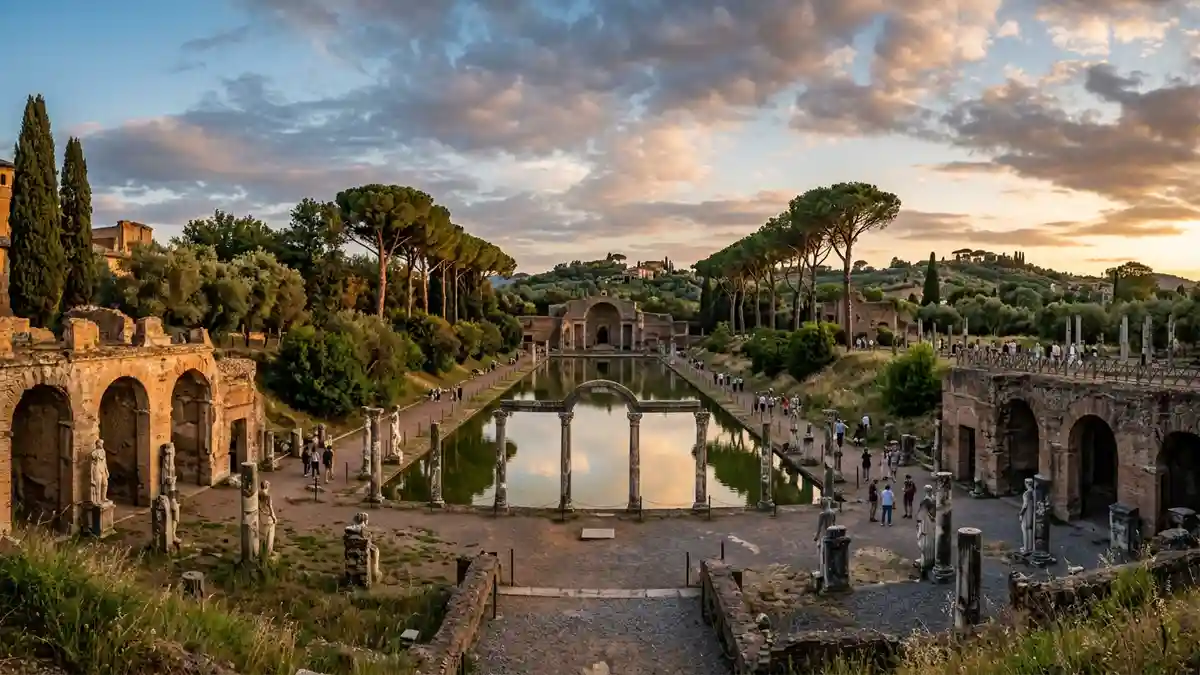
Hadrian’s Villa (Villa Adriana) is the subject of a research presentation in Tivoli on 26 November 2026. The event examines two major structures within the ancient complex, while taking place at the Antiquarium of the Sanctuary of Hercules Victor.
The presentation gives visitors a current cultural reason to connect a visit to the archaeological site with new research on its architecture.
A November presentation examines two Hadrianic structures
The official presentation of the scientific volume Un metodo di analisi delle cupole adrianee takes place on 26 November 2026. Luca Cipriani and Filippo Fantini are the authors named in the programme, which is organised by the Villa Adriana and Villa d’Este institute.
The programme runs at the Antiquarium of the Sanctuary of Hercules Victor in Tivoli from 10.30am to 1pm, as stated in the organiser’s 26 November programme. The presentation is open to the public without an admission charge, and the notice names cultural institutions, researchers and local residents among its intended audience.
The volume focuses on the vestibule of Piazza d’Oro and the octagonal hall of the Small Baths. Its approach combines geometric analysis with modern survey data to consider how ancient theory and practical building methods met in imperial construction.
Hadrian’s Villa links imperial architecture and research
The two structures discussed in the volume belong to the monumental complex of Hadrian’s Villa. The subject therefore reaches beyond a general lecture on Roman buildings: it concerns specific spaces that visitors encounter within the archaeological site.
Hadrian’s Villa was built between 118 and 138 AD for the Emperor Hadrian near ancient Tibur, the settlement now known as Tivoli. The complex included residential buildings, baths, nymphaea, pavilions and gardens, connected by paths and an underground network.
The site was added to the UNESCO World Heritage List in 1999. Around 99 acres are currently open to visitors, while the full ancient villa covered at least 296 acres, according to the official site description.
The November presentation gives those figures a practical context. The broad archaeological area contains the buildings whose geometry and construction are being reconsidered by the authors, making the event relevant both to visitors exploring the ruins and to readers interested in Roman engineering.
Research on Hadrian’s Villa reaches a Tivoli audience
The programme also includes contributions by Cairoli F. Giuliani, Giangiacomo Martines and Alicia Roca, as listed by the organiser. Roca’s specialist contribution includes translations from texts attributed to Heron, while the book is published by Edizioni Quasar.
The complete publication is available through Open Access. This allows the research discussed in Tivoli to be consulted beyond the event itself, while the presentation provides a local setting for work focused on the nearby archaeological complex.
Visiting Hadrian’s Villa: what travellers from Western Europe should know
- The presentation takes place on 26 November 2026 at the Antiquarium of the Sanctuary of Hercules Victor in Tivoli.
- Admission to the presentation is free, and the organiser’s programme identifies it as open to the public.
- Hadrian’s Villa is at Largo Marguerite Yourcenar, 1, in the Villa Adriana area of Tivoli. The official directions identify access from Rome via the A24 motorway and Tivoli exit, while public transport connections include Metro B to Ponte Mammolo followed by a Co.Tra.L. bus.
- The archaeological site is mainly outdoors, with paths and gradients. The custodian recommends suitable clothing and footwear for the terrain.
- Italy’s official language is Italian and its currency is the euro.
Searching for Hadrian’s Villa on social platforms
These links open searches for Hadrian’s Villa on each platform.
Frequently asked questions about Hadrian’s Villa
When does the research presentation take place at Hadrian’s Villa?
The presentation takes place on 26 November 2026 at the Antiquarium of the Sanctuary of Hercules Victor in Tivoli. It concerns two structures within Hadrian’s Villa.
What is Hadrian’s Villa?
It is an ancient imperial residential complex near Tivoli, built between 118 and 138 AD for Emperor Hadrian. UNESCO added it to the World Heritage List in 1999.
Where is Hadrian’s Villa and how do you get there?
The archaeological site is at Largo Marguerite Yourcenar, 1, in Tivoli. The official directions list the A24 motorway, Metro B to Ponte Mammolo and local buses among the available connections.