
HaKotel HaMa'aravi and the layered stones of Jerusalem
Published on 09/01/2026 at 20:51 | Editorial responsibility: Rafael Müller, Editor-in-Chief AD HOC NEWS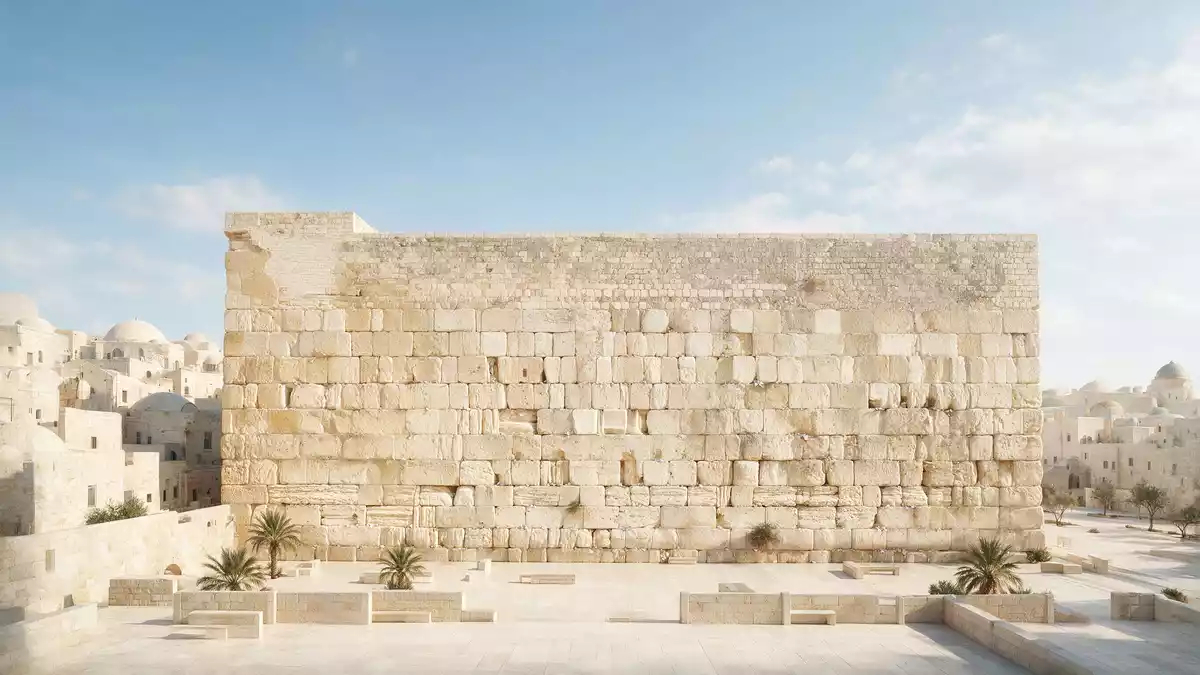
HaKotel HaMa'aravi, known in English as the Western Wall, is the western retaining wall of the Temple Mount in Jerusalem, where ancient limestone blocks support a raised sacred platform and face an open plaza used for prayer. The wall’s origins lie in the expansive building programme of Herod the Great in the late first century BCE, when the Temple Mount was enlarged and encased in massive masonry.
HaKotel HaMa'aravi on the western flank of the Temple Mount
HaKotel HaMa'aravi stands inside the walls of the Old City of Jerusalem, along the western side of the Temple Mount above stone-paved alleys that lead into the open plaza. In Jewish religious usage, the name Western Wall often refers to the exposed section used for prayer, yet the structure in its full extent is part of a longer stone barrier that runs along the western edge of the mount and acts as a retaining wall for the elevated platform.retaining wall on the western side The hill it supports has long been regarded in Judaism as a focal point of holiness because it carried the First and Second Temples, destroyed in antiquity, while the wall itself remained in place.
The visible section familiar from photographs occupies only part of the total length of the western side, where a broader wall continues to run beneath later buildings and walkways.monumental ancient retaining wall From the plaza the masonry presents a vertical face of stone blocks rising above the paving, with additional courses extending below ground level and further stretches of wall concealed behind the urban fabric of the Old City.
Herodian construction and layered stonework
The western retaining wall that includes HaKotel HaMa'aravi formed part of Herod the Great’s enlargement of the Temple Mount in the late first century BCE, when the natural hill was surrounded by four massive walls and the space between them and the rock was filled to create a broad, level platform.four massive walls were built Herod’s builders set huge limestone blocks one upon another without mortar, their faces dressed with indented margins in a style that remains visible in the lowest courses of the Western Wall.seven lowest courses made of enormous limestone blocks
Above the Herodian courses the wall records further phases of construction in smaller stonework laid during later periods of Jerusalem’s history. Layers from the Byzantine era sit above the Second Temple masonry,four layers of smaller, plainly dressed stones from the Byzantine periods with additional stonework added after the Muslim conquest in the seventh century and uppermost courses dating from the nineteenth century, associated with the British philanthropist Sir Moses Montefiore.topmost layer was added in the 19th century The result is a visible cross-section of masonry that spans more than two millennia of building on the Temple Mount.
Prayer plaza and the exposed wall face
In the open plaza in front of HaKotel HaMa'aravi, the exposed stretch of masonry presents a continuous face of limestone blocks rising above the paving, with the total height of the wall extending further below ground than the visible courses suggest.measures about 50 metres long and about 20 metres high; the wall, however, extends much deeper into the earth The accessible section used for prayer is a modest proportion of the wall’s full length, which continues beneath the Old City and under buildings and streets, while tunnels and underground passages elsewhere along the western flank reveal further stones and vaults.
The plaza surface lies below the highest courses, leaving several rows of stone above eye level and others buried beneath the paving.visible height of the Wall today Visitors standing in the open space face the masonry directly, with the Temple Mount platform rising immediately beyond the wall and the outlines of the Old City’s quarters close at hand, including the Jewish Quarter to the south and the Muslim Quarter nearby.south of the Muslim Quarter and close to the Jewish Quarter
Visiting HaKotel HaMa'aravi: what travellers from Western Europe should know
- HaKotel HaMa'aravi stands within the Old City of Jerusalem on the western flank of the Temple Mount, reached on foot through historic streets and gates such as those leading into the Jewish Quarter.
- The plaza in front of the wall is paved and level, but the surrounding Old City streets include uneven stone surfaces and short flights of steps between alleys and small squares.
- Jerusalem lies in hilly terrain, and the Old City sits on elevated ground above surrounding valleys, so approaches involve gentle gradients on foot rather than flat ground.
- The official languages in Israel are Hebrew and Arabic, and the currency is the Israeli shekel.
- Entry requirements depend on your nationality; UK travellers can check the FCDO travel advice at gov.uk/foreign-travel-advice, Irish travellers the Department of Foreign Affairs at ireland.ie.
Searching for HaKotel HaMa'aravi on social platforms
These links open searches for HaKotel HaMa'aravi on each platform.Frequently asked questions about HaKotel HaMa'aravi
Where is HaKotel HaMa'aravi located in Jerusalem?
HaKotel HaMa'aravi stands within the Old City of Jerusalem on the western side of the Temple Mount, close to the Jewish Quarter and reached via historic streets.
What should visitors expect when they arrive at the Western Wall?
Visitors encounter an open paved plaza directly facing the exposed courses of the Western Wall, with stone-paved alleys, short stairways and historic buildings surrounding the space.
What makes HaKotel HaMa'aravi distinctive among Jerusalem’s sacred sites?
The Western Wall combines a visible cross-section of masonry from Herod’s late first century BCE expansion of the Temple Mount with later stone layers, all supporting the elevated platform where the ancient Temples once stood.


