Hanging Houses host anniversary art programme on 20 November
Published on 10/24/2026 at 19:12 | Editorial responsibility: Rafael Müller, Editor-in-Chief AD HOC NEWSAnniversary and new artwork
- Fundacion Juan March presents the Cuenca programme at the Hanging Houses on 20 November 2026.
- Fernando Zobel opened the Museo de Arte Abstracto Espanol in the buildings in 1966.
- The foundation has managed the museum collection since 1980, when Zobel donated it.
The Hanging Houses (Casas Colgadas) in Cuenca will host the Museo de Arte Abstracto Español’s 60th-anniversary programme on 20 November 2026. The event includes the first edition of El polizón en el museo, a project presented by the Fundación Juan March and Frenesí Fine Arts.
Hanging Houses host anniversary programme on 20 November
The Fundación Juan March’s autumn programme places the anniversary activities inside the museum at the Hanging Houses. The organisation says the Friday 20 November programme will commemorate the creation and opening of the Museo de Arte Abstracto Español in Cuenca.
El polizón en el museo will add a contemporary work to the museum temporarily, creating a link between the collection, the building and a new generation of artists. The first invited artist is Miguel Marina, a painter born in Madrid in 1989. The project’s title refers to the idea of a stowaway joining a journey without altering its route.
The programme gives the site a concrete cultural date within the current travel window. Visitors in Cuenca on 20 November will find an anniversary presentation connected directly with the museum’s rooms, rather than a city event that merely uses the landmark as a backdrop. The autumn programme for Cuenca identifies both the anniversary and El polizón en el museo at the venue.
Hanging Houses connect a medieval setting with 1966 art
The museum opened in 1966 after Fernando Zóbel secured part of the restored buildings for a collection of Spanish abstract art. The setting combines historic architecture with a museum founded around contemporary work, making the November project a direct continuation of the site’s original cultural use.
Gustavo Torner, an artist from Cuenca, helped Zóbel establish the museum, while Gerardo Rueda was among the artists involved in its early development. The Fundación Juan March has managed and expanded the collection since Zóbel donated it in 1980. Its autumn publication describes the museum as founded by Zóbel in the Hanging Houses and records the foundation’s continuing role.
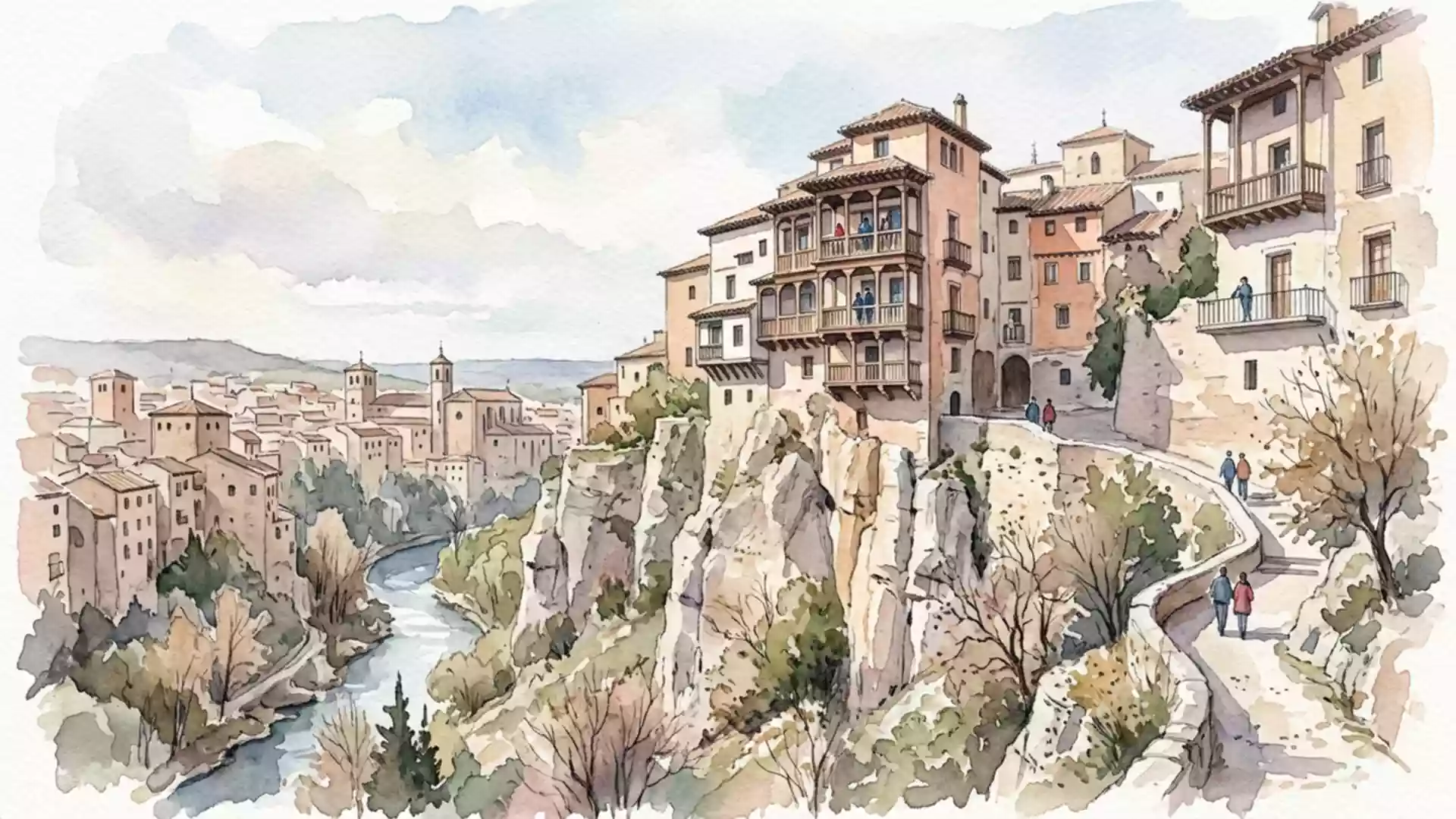
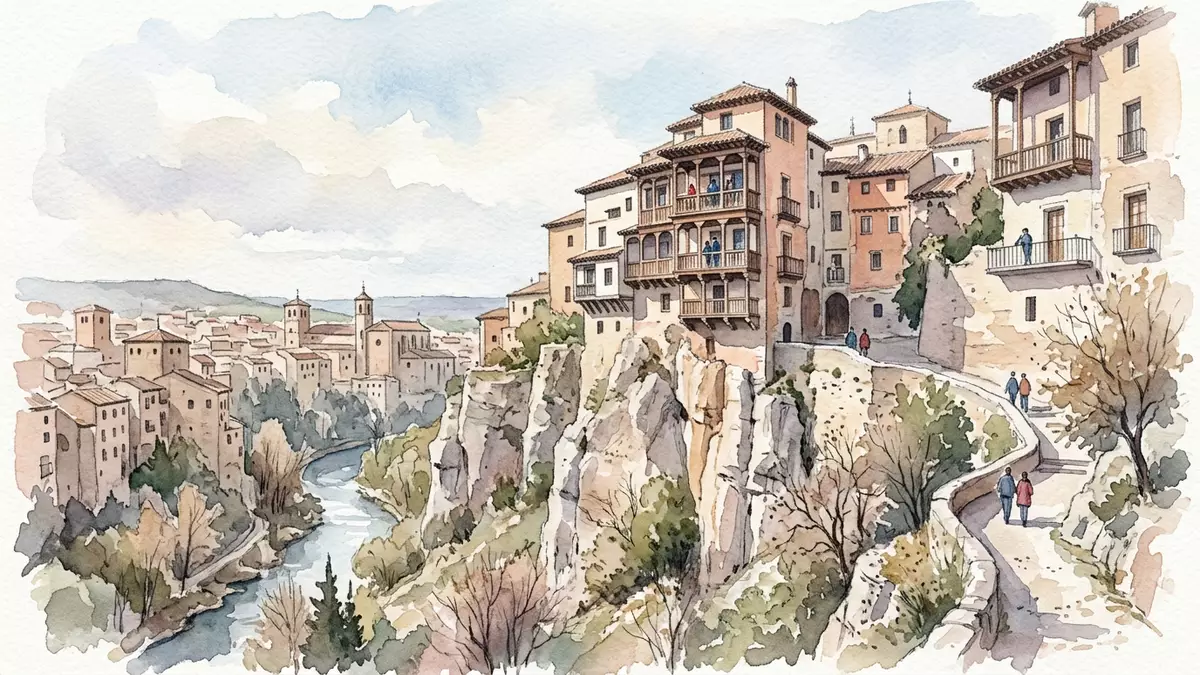
The buildings stand on the edge of the Huécar gorge, with projecting structures and wooden balconies above the ravine. A history of the Cuenca museum describes the Hanging Houses as a fifteenth-century setting and explains how their restored spaces became galleries in 1966. The relationship between the site and the anniversary is therefore architectural as well as institutional.
What El polizón en el museo changes for the visit
The new project is designed to place one contemporary work temporarily among the museum’s collection. It does not announce a closure or a replacement of the permanent display. Its significance for travellers is that a visit to the museum during the 20 November anniversary programme will include a newly introduced artistic intervention within the historic buildings.
Cuenca’s landmark is also part of the city’s wider historic fabric. The museum’s rooms occupy only part of the buildings, while the projecting facades and balconies remain the defining external view across the Huécar gorge. The anniversary programme consequently brings a current art event into one of Spain’s most recognisable historic settings without separating the event from the place.
Visiting Hanging Houses: what travellers from Western Europe should know
- The anniversary programme and El polizón en el museo take place at the Museo de Arte Abstracto Español in the Hanging Houses on 20 November 2026.
- The programme concerns a temporary contemporary work by Miguel Marina and does not announce a closure of the museum or the landmark.
- Cuenca lies east of Madrid, and the city is connected with the capital by high-speed rail. The museum is in the historic upper city at the Huécar gorge.
- The approach includes a footbridge and views over a steep gorge, while the buildings themselves contain several levels and historic interior spaces.
- Spanish is the official language used locally, and Spain’s national currency is the euro.
Searching for Hanging Houses on social platforms
These links open searches for Hanging Houses on each platform.
Frequently asked questions about Hanging Houses
When does El polizón en el museo take place at Hanging Houses?
The anniversary programme takes place on 20 November 2026 at the Museo de Arte Abstracto Español in Cuenca.
What is El polizón en el museo at Hanging Houses?
It is a Fundación Juan March and Frenesí Fine Arts project that temporarily places a contemporary work among the museum’s collection. Miguel Marina is the first selected artist.
Where are Hanging Houses and how do you get there?
The landmark is in Cuenca’s historic upper city above the Huécar gorge. Cuenca is east of Madrid and has high-speed rail connections with the capital.