
Haw Kham in Luang Prabang: a palace that became a museum
Published on 09/24/2026 at 05:49 | Editorial responsibility: Rafael Müller, Editor-in-Chief AD HOC NEWS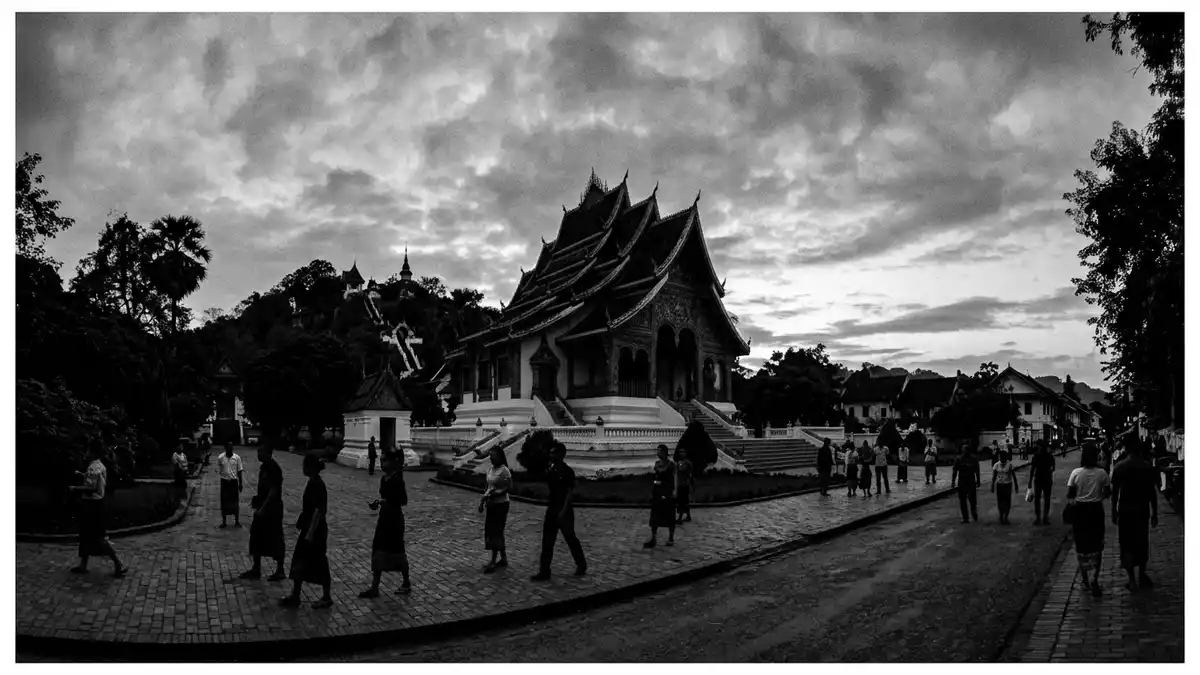
Haw Kham is a former royal palace in Luang Prabang, where a low golden-roofed building combines Lao architectural forms with French Beaux-Arts symmetry. Built in 1904 for King Sisavang Vong, it now houses the National Museum of Luang Prabang.
Haw Kham’s Lao roofs and French lines
The palace occupies the historic peninsula of Luang Prabang, between the Mekong and the Nam Khan, with Mount Phousi close by. Its long, single-storey frontage presents a measured composition of roof tiers, decorated surfaces and formal entrances.
The building belongs to the early twentieth century, when Luang Prabang was within the French colonial sphere. Its architecture combines Lao roof traditions and ornamental details with European planning and façade symmetry. The result is a royal residence that records both local design and the political setting of its period. Lao and French architecture
A royal residence for Sisavang Vong
Haw Kham was constructed for Sisavang Vong, who ruled the Kingdom of Luang Prabang and later became king of Laos. The palace served as the royal household’s residence and ceremonial setting during the twentieth century.
Inside, the former palace contains a throne hall, royal apartments and rooms connected with court life. Furnishings, regalia and religious objects form part of the collections associated with the building. The rooms retain the relationship between public ceremony and private residence that shaped palace architecture. King Sisavang Vong
From royal palace to national museum
The monarchy of Laos ended in 1975, and Haw Kham changed from a royal residence into a museum. Its present function preserves rooms, objects and symbols connected with the Lao monarchy and Luang Prabang’s religious history.
The museum setting gives the palace a double identity. The building remains an example of Lao-French architecture, while its contents document court ritual, royal domestic life and the cultural history of the city. The surrounding historic district adds monasteries, timber houses and riverfront streets to the same architectural setting. the former Royal Palace
Visiting Haw Kham: what travellers from Western Europe should know
- Haw Kham stands on the Luang Prabang peninsula, along the historic streets near Mount Phousi and the Mekong riverfront.
- The complex is reached on foot through the old town, where monasteries, traditional houses and narrow streets surround the palace grounds.
- The visit moves through former ceremonial and residential interiors, including the throne hall and royal apartments.
- The official language is Lao and the currency is the Lao kip.
- Entry requirements depend on your nationality; UK travellers can check the FCDO travel advice at gov.uk/foreign-travel-advice, Irish travellers the Department of Foreign Affairs at ireland.ie.
Searching for Haw Kham on social platforms
These links open searches for Haw Kham on each platform.Frequently asked questions about Haw Kham
Where is Haw Kham?
Haw Kham is in Luang Prabang, Laos, on the city’s historic peninsula near the Mekong, the Nam Khan and Mount Phousi.
What can visitors expect inside?
The former palace contains ceremonial and residential rooms, including a throne hall, royal apartments, furnishings and objects associated with Lao court life.
What makes Haw Kham distinctive?
Its distinctive character comes from the combination of Lao roof and decorative traditions with French Beaux-Arts planning in a royal building completed in 1904.


