
Heiwa Koen and the landscape of Nagasaki’s memory
Published on 08/24/2026 at 21:59 | Editorial responsibility: Rafael Müller, Editor-in-Chief AD HOC NEWS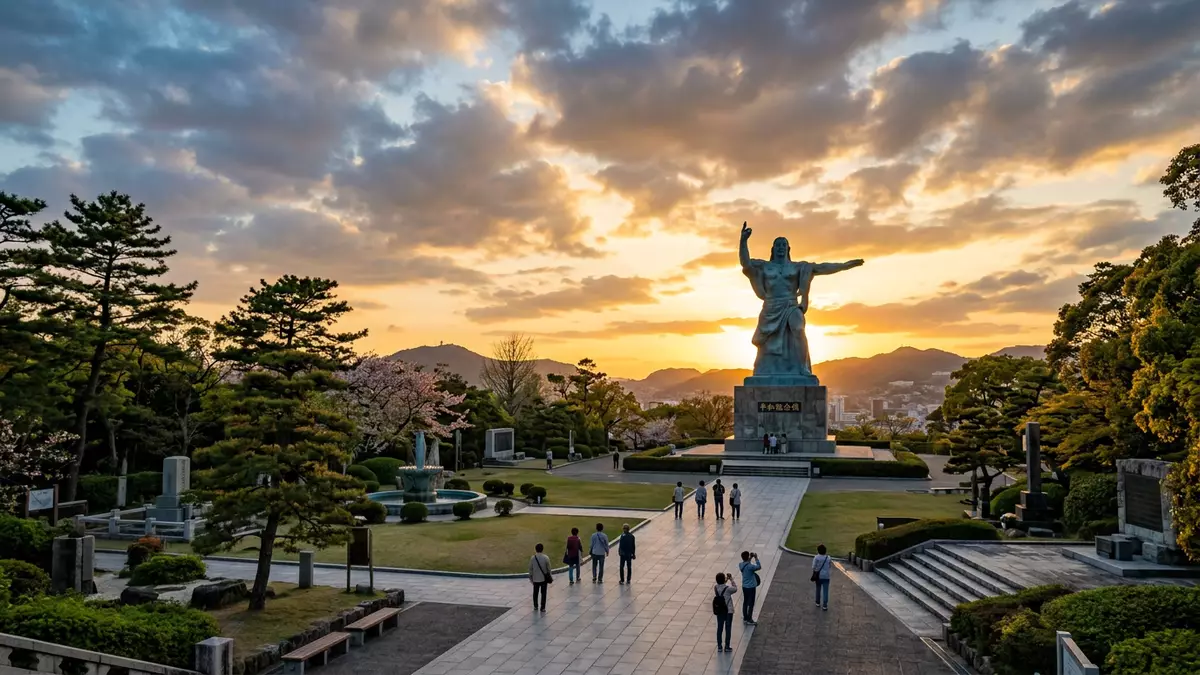
Heiwa Koen in Nagasaki is a memorial landscape on a low hill north of the atomic-bomb hypocentre. Its strongest feature is the contrast between open greenery and the hard markers of 9 August 1945, including the black monolith in Hypocentre Park.
Heiwa Koen and the ground of memory
The park is part of the wider Nagasaki Peace Park complex, which also includes a museum and memorial spaces. Japan Guide identifies the park as Heiwa K?en and places it several kilometres north of the city centre in UrakamiJapan Guide.
The site is tied to the atomic bombing of Nagasaki on 9 August 1945, and the park’s layout keeps that date visible through monuments rather than decorative landscaping. The open hilltop, the memorial elements and the surviving traces of destruction give the place a restrained, formal character.
The Peace Statue and the Fountain of Peace
On the memorial side of the park stands the Peace Statue, a bronze figure by Seibou Kitamura. Discover Nagasaki gives its height as 9.7 metres and describes the raised arm and closed eyes as part of its commemorative languagePeace Statue.
Nearby, the Fountain of Peace adds water to the composition, while the park’s monuments create a sequence of pauses across the hill. The arrangement links sculpture, water and open ground without crowding the site into a single focal point.
The hypocentre park and the surviving traces
In Hypocentre Park, a simple black marker records the explosion’s centre. Japan Guide notes that the area also exposes a layer of soil where broken roof tiles, bricks and pieces of glass remain from the blastlayer of soil.
That part of the park is the most direct link between the present landscape and the damaged city beneath it. The remains in the ground make the park different from a standard memorial garden, because the earth itself carries part of the record.
Visiting Heiwa Koen: what travellers from Western Europe should know
- The park lies in Matsuyama-cho, north of Nagasaki’s city centre. Tram line 1 or 3 reaches the Peace Park stop, and local buses use nearby stops with the Heiwa Koen name.
- The site includes a low hill, steps and memorial surfaces under open sky. The hypocentre area also contains exposed ground with surviving debris.
- The surrounding district includes Urakami Cathedral, the Nagasaki Atomic Bomb Museum and the wider Peace Park complex. These places sit close enough to read as one historical landscape.
- The official language is Japanese and the currency is the yen. The park name appears in both English and Japanese forms on local materials.
Searching for Heiwa Koen on social platforms
These links open searches for Heiwa Koen on each platform.
Frequently asked questions about Heiwa Koen
Where is Heiwa Koen?
Heiwa Koen is in Nagasaki, in the Matsuyama-cho area north of the city centre. It belongs to the Peace Park landscape in Urakami.
What does a visit involve?
The park combines monuments, open ground and exposed traces of the hypocentre. The main elements are spread across a low hill and nearby memorial spaces.
What makes Heiwa Koen distinctive?
The park joins a formal memorial setting with physical evidence of the blast. The black marker, the Peace Statue and the ground layer give it a clear identity.


