

Historic Centre of Morelia sees repairs on 16 October
Published on 10/18/2026 at 07:45 | Editorial responsibility: Rafael Müller, Editor-in-Chief AD HOC NEWS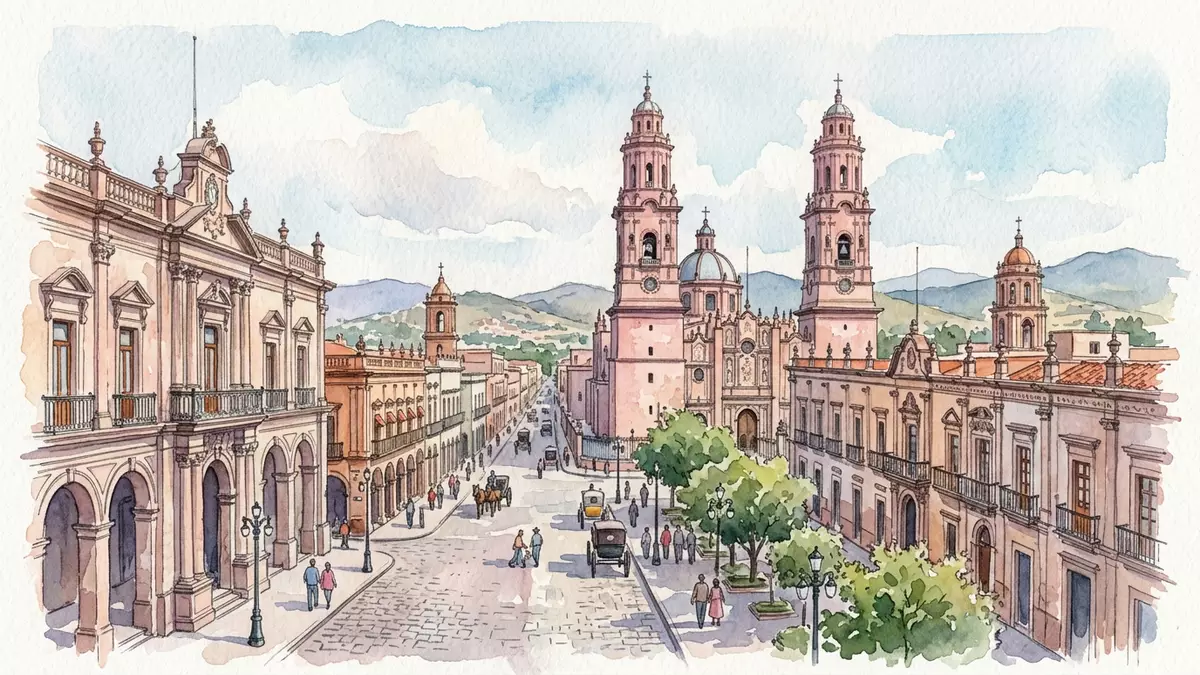
A maintenance operation at the Historic Centre of Morelia (Centro Histórico de Morelia) in Morelia was announced on 16 October 2026, with work focused on visitor movement and historic public spaces. The municipal heritage office repaired a drain near Plaza Benito Juárez and Cerrada de San Agustín, while staff also cleaned urban sculptures on Calle Bernal Jiménez.
Repairs near Plaza Benito Juárez were announced on 16 October
The announcement by the Morelia municipal government concerned a drain beside the pedestrian route between Plaza Benito Juárez and Cerrada de San Agustín. The work was carried out by the Gerencia del Centro Histórico, the municipal office responsible for conservation activity in the historic core.
The city said the repair was intended to support pedestrian passage and help prevent waterlogging during the rainy season. In a separate intervention, staff removed graffiti from urban sculptures on Calle Bernal Jiménez, with the stated aim of recovering the appearance of the pieces.
The municipal announcement also described continuing attention to monuments, facades, pavements, street furniture and urban decoration. A municipal maintenance report names both the drain repair and the sculpture cleaning.
Sixteenth-century planning frames the October maintenance
Morelia was built in the sixteenth century on a hill site, and its streets retain their original layout. The UNESCO World Heritage Centre describes an urban plan that combines Spanish Renaissance ideas with Mesoamerican experience.
The historic area contains more than 200 historic buildings made largely from the region's characteristic pink stone. Their architecture brings together medieval, Renaissance, Baroque, Neoclassical and eclectic elements. The UNESCO description of Morelia records the site's World Heritage status and architectural significance.
The October work connects everyday access with that wider heritage setting: a drain beside a pedestrian route and cleaned sculptures are small-scale interventions within a planned historic town whose streets, squares and buildings remain part of the visitor experience.
Visiting Historic Centre of Morelia: what travellers from Western Europe should know
- The relevant municipal maintenance announcement is dated 16 October 2026 and concerns the route between Plaza Benito Juárez and Cerrada de San Agustín.
- The reported work was a drain repair, while graffiti was removed from urban sculptures on Calle Bernal Jiménez. The announcement does not state a general closure of the historic centre.
- The locations are in central Morelia and can be identified by the named plaza, pedestrian route, cerrada and street in the municipal notice.
- The streets follow the slopes of the hill site, according to UNESCO, so visits involve an urban setting with changing gradients rather than a level modern complex.
- Spanish is the official language used by the municipal and heritage authorities, and Mexico's national currency is the Mexican peso.
- Entry requirements depend on your nationality; UK travellers can check the FCDO travel advice at gov.uk/foreign-travel-advice, Irish travellers the Department of Foreign Affairs at ireland.ie.
Searching for Historic Centre of Morelia on social platforms
These links open searches for Historic Centre of Morelia on each platform.
Frequently asked questions about Historic Centre of Morelia
What changed at Historic Centre of Morelia?
A drain near Plaza Benito Juárez and Cerrada de San Agustín was repaired, and graffiti was removed from urban sculptures on Calle Bernal Jiménez. The municipal announcement was issued on 16 October 2026.
Where is Historic Centre of Morelia and how do you get there?
It is in central Morelia, Mexico. The reported maintenance points are identified by Plaza Benito Juárez, Cerrada de San Agustín and Calle Bernal Jiménez.
What is Historic Centre of Morelia?
It is a sixteenth-century historic urban area whose streets retain their original layout and whose pink-stone buildings combine several architectural styles. UNESCO lists it as a World Heritage site.


