
Huangshan and its granite peaks above Anhui
Published on 09/23/2026 at 20:59 | Editorial responsibility: Rafael Müller, Editor-in-Chief AD HOC NEWS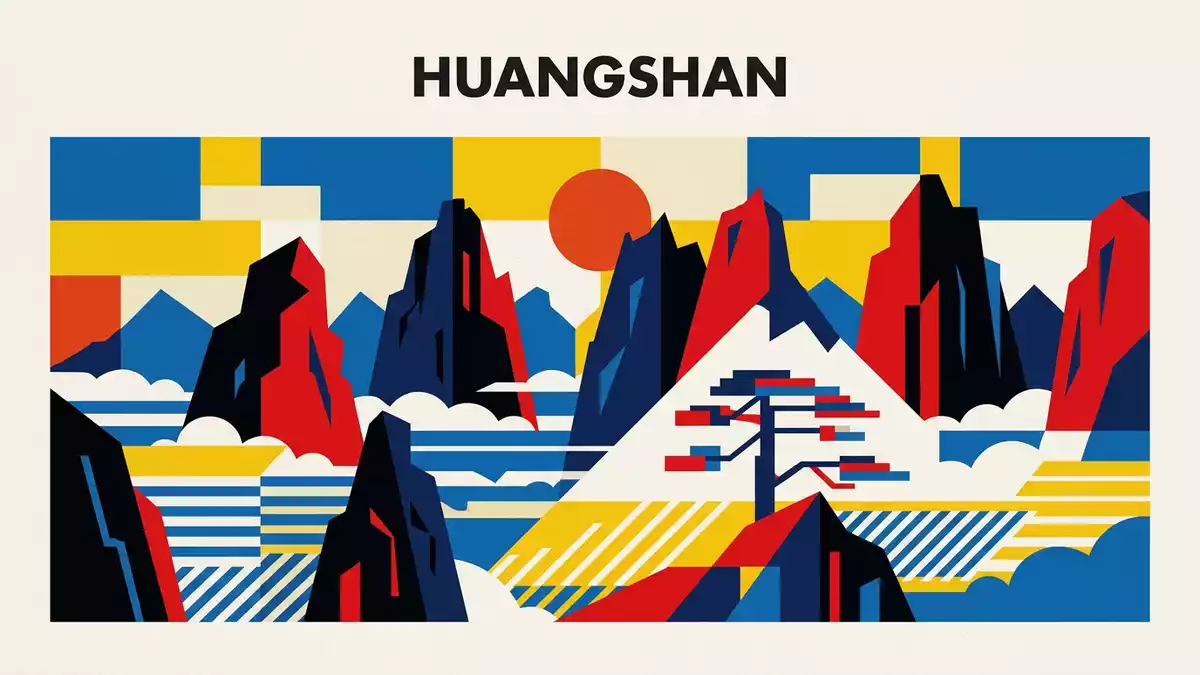
Huangshan is a mountain landscape in southern Anhui Province, China, where granite peaks rise above wooded slopes and cloud-filled valleys. Lianhua Peak reaches 1,864 m (6,115 ft), while the wider scenery links rock, pine trees, water and centuries of Chinese artistic tradition.
Granite peaks shaped by deep geological time
Huangshan belongs to a striking granite landscape in eastern China. Its geological story began in the Late Jurassic period, around 140 million years ago, when magma crystallised beneath the Earth’s crust. Later uplift exposed the granite, while erosion and glacial processes shaped the ridges, cliffs and isolated towers visible across the mountain.
The UNESCO Global Geopark covers 17,343 hectares, with elevations ranging from 500 to 1,864 metres. The mountain’s highest point is Lianhua Peak, also called Lotus Peak. Other named summits include Bright Summit and Heavenly Capital Peak, whose steep rock faces form part of Huangshan’s familiar profile. The granite landscape of Huangshan belongs to a geological setting that combines exposed rock, forest and high mountain terrain.
Pines, cliffs and the visual language of Chinese art
Huangshan’s scenery is defined by contrasts between pale granite, dark pine trees and drifting cloud. Pines cling to ledges and grow from narrow cracks, while stone stairways and paths cross ridges, terraces and steep slopes. The mountain is also associated with hot springs, waterfalls, ravines and views across the surrounding Anhui landscape.
These forms became a major subject in Chinese painting, poetry and calligraphy. Artists represented Huangshan’s peaks as vertical compositions of rock, vegetation and mist. The connection between landscape and artistic culture is part of the mountain’s protected heritage, alongside its plant life and habitats for rare species. The World Heritage description records both the scenery and the botanical richness of the site.
Huangshan was inscribed on the UNESCO World Heritage List in 1990 as a cultural and natural property. Its protected area covers 16,060 hectares, with a much larger buffer zone. The landscape is also recognised through UNESCO geopark and biosphere-reserve designations, giving the mountain several connected forms of international protection.
A mountain with names, paths and cultural layers
The mountain was known as Yishan during the Qin dynasty. Its name changed to Huangshan in 747 AD by imperial decree, linking the place with Huang Di, the Yellow Emperor of Chinese tradition. This recorded name gives the landscape a historical identity beyond its geology and scenery.
Stone paths, stairways, pavilions and viewpoints form a built layer across the mountain. They connect forested slopes with exposed summits and high terraces. The result is a landscape where natural formations and human access appear together, without separating the mountain’s cultural history from its physical form.
The main scenic area is associated with several named peaks and long-established routes through granite terrain. Some sections pass beside sheer drops, narrow ledges and large exposed boulders. The paths are part of the place itself, alongside the pines, cliffs and cloud that define Huangshan’s visual character.
Visiting Huangshan: what travellers from Western Europe should know
- Huangshan lies in southern Anhui Province, east China. Huangshan North railway station serves the region, while mountain access continues by road towards the scenic area.
- The landscape is mountainous, with steep stone stairways, granite surfaces, ridges and high viewpoints. Routes involve sustained uphill and downhill walking.
- Lianhua Peak rises to 1,864 m (6,115 ft). Cloud, exposed rock and forest occur together across the higher scenery.
- The surrounding city is also called Huangshan. The official language is Mandarin Chinese and the currency is the renminbi.
- Entry requirements depend on your nationality; UK travellers can check the FCDO travel advice at gov.uk/foreign-travel-advice, Irish travellers the Department of Foreign Affairs at ireland.ie.
Searching for Huangshan on social platforms
These links open searches for Huangshan on each platform.
Frequently asked questions about Huangshan
Where is Huangshan?
Huangshan is in southern Anhui Province in eastern China. The mountain lies within Huangshan City, which shares its name.
What does a visit to Huangshan involve?
A visit involves mountain paths, stone stairways, forested slopes, granite ridges and high viewpoints. Walking conditions vary across the steep terrain.
What makes Huangshan distinctive?
Huangshan combines granite peaks, pine trees, cloud, protected plant life and a long connection with Chinese painting. Lianhua Peak reaches 1,864 m (6,115 ft).


