
Hwange National Park and its changing savanna landscape
Published on 09/23/2026 at 03:30 | Editorial responsibility: Rafael Müller, Editor-in-Chief AD HOC NEWS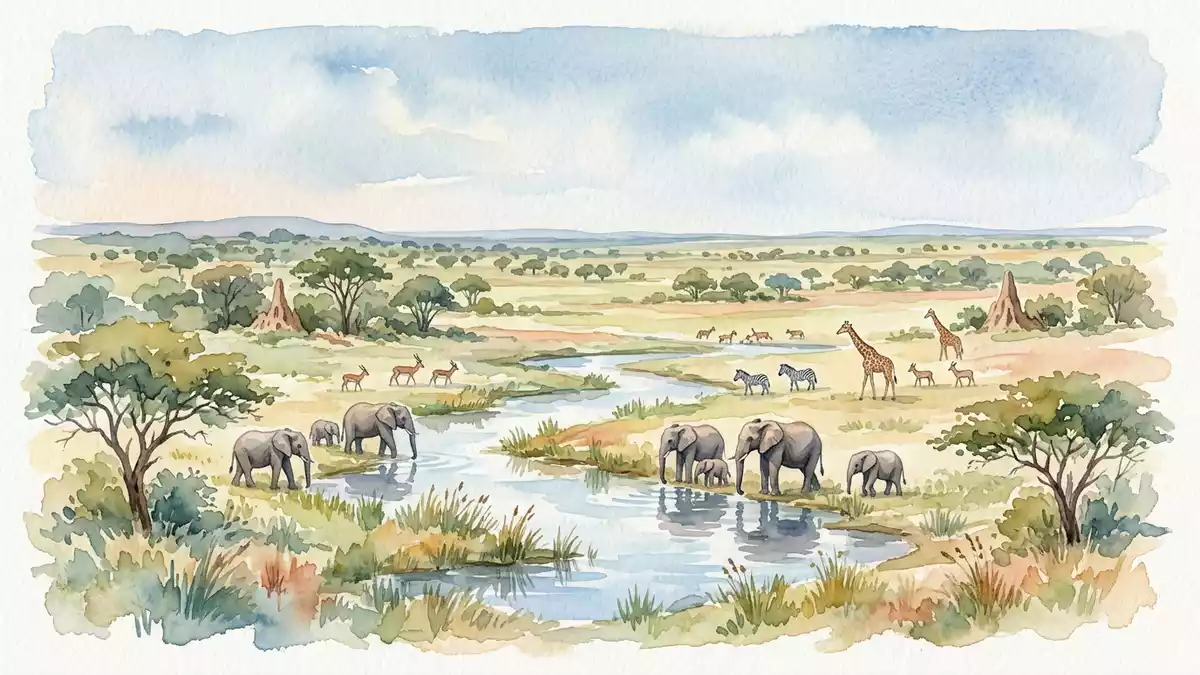
Hwange National Park is a broad landscape of savanna grasslands, teak woodland and mopane trees in north-western Zimbabwe. Its open country supports elephants, lions, leopards, buffaloes, wild dogs and nearly 400 recorded bird species.
Hwange National Park across the Zimbabwean savanna
The park covers about 14,650 square kilometres, making it Zimbabwe’s largest national park. Its terrain extends towards the Botswana frontier, with broad plains, woodland and seasonal water pans forming the visible setting.
Hwange lies between Bulawayo and Victoria Falls. Main Camp, Sinamatella Camp and Robins Camp are the principal named areas associated with the park, while roads connect the camps across the protected landscape.
From Mzilikazi’s hunting grounds to a national park
The name Hwange comes from a local Nhanzwa chief. The area became hunting grounds for the Ndebele warrior-king Mzilikazi during the early nineteenth century.
Wildlife protection began with the establishment of Wankie Game Reserve in 1928, followed by national park status in 1929. The historical name survives in older records, while Hwange National Park is the established name for the protected area.
Elephants, wild dogs and woodland species
Elephants form the park’s most recognisable wildlife presence. Hwange also supports lions, leopards and buffaloes, together with rare antelope species such as roan and sable.
More than 100 mammal species and nearly 400 bird species occur in the park. African wild dogs are another important species, and the combination of grassland, teak and mopane woodland creates varied habitats across the reserve.
Visiting Hwange National Park: what travellers from Western Europe should know
- Hwange National Park lies in north-western Zimbabwe between Bulawayo and Victoria Falls. The Bulawayo–Victoria Falls highway provides road access, with a turn-off at Cross Mabale for Main Camp.
- Victoria Falls International Airport provides the nearest named international air connection. Main Camp and Robins Camp have airstrips for private or charter aircraft.
- The park is a large wilderness area crossed by internal roads. Main Camp, Sinamatella Camp and Robins Camp are separate bases within the protected landscape.
- The official language is English and the currency is the Zimbabwean dollar.
- Entry requirements depend on your nationality; UK travellers can check the FCDO travel advice at gov.uk/foreign-travel-advice, Irish travellers the Department of Foreign Affairs at ireland.ie.
Searching for Hwange National Park on social platforms
These links open searches for Hwange National Park on each platform.
Frequently asked questions about Hwange National Park
Where is Hwange National Park?
Hwange National Park is in north-western Zimbabwe, between Bulawayo and Victoria Falls. The park extends towards the Botswana frontier.
What can visitors expect in the park?
The landscape contains savanna grasslands, teak woodland, mopane trees and seasonal water pans. Wildlife includes elephants, lions, leopards, buffaloes, wild dogs and many bird species.
What makes Hwange distinctive?
Hwange combines a very large protected landscape with extensive elephant habitat and a recorded range of more than 100 mammal species. Its history reaches from Mzilikazi’s nineteenth-century hunting grounds to the protected area established in 1929.


