
Ijen Crater reopens after wildfire closure on 28 September
Published on 09/27/2026 at 09:51 | Editorial responsibility: Rafael Müller, Editor-in-Chief AD HOC NEWS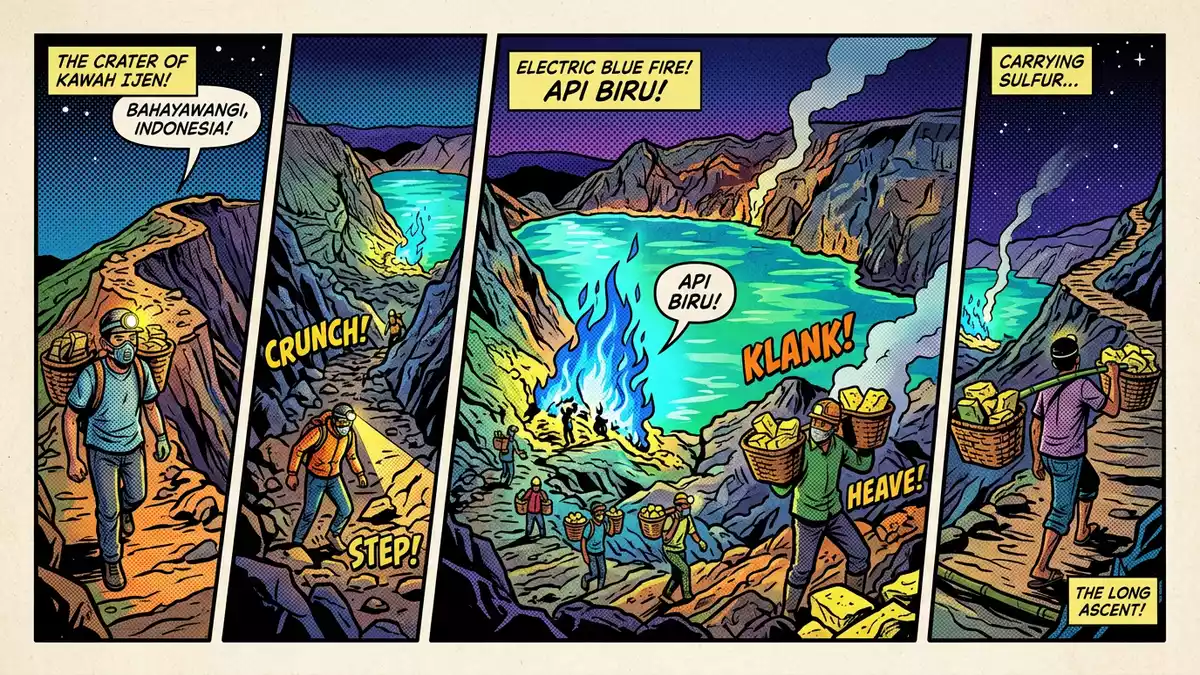
Ijen Crater in Banyuwangi, locally associated with the name Kawah Ijen, is scheduled to reopen on 28 September 2026 after a wildfire closure. The return covers nature tourism, hiking, research and public education in Indonesia.
Ijen Crater reopening follows the 28 September safety review
The East Java Natural Resources Conservation Agency closed the nature park on 4 September 2026 while emergency operations addressed forest and land fires. The reopening date was set out in a circular from the agency after the emergency response ended and the hiking trails underwent a post-fire safety assessment.
Rusdi Santoso, head of the nature park, confirmed the decision to ANTARA. The report says the reopening applies to visitors as well as research and educational activities, making the 28 September return broader than a simple resumption of sightseeing. reopening details from ANTARA
The crater lake links the reopening to Ijen geology
The attraction stands across the Banyuwangi and Bondowoso districts in East Java. Its turquoise crater lake and volcanic setting form part of the Ijen UNESCO Global Geopark, which received UNESCO Global Geopark designation in 2023.
UNESCO describes Ijen as one of the active volcanoes in the Ijen caldera system. The lake is recognised for its extreme acidity, while sulphur gases emerging from the crater can burn blue when they meet oxygen. The blue fire is visible only at night, so the reopening restores access to both a geological site and a specialised night-time phenomenon, subject to the park rules. UNESCO geological profile
Wildfire controls now shape the visitor return
The reopening follows a change from total visitor suspension to managed access. The decision therefore links the date directly to trail safety rather than to the mere end of visible flames. That distinction matters at a volcanic site where visitors may approach steep paths, acidic water and sulphur-bearing gases.
For travellers from Western Europe, the practical change is that a visit can again be planned from 28 September 2026, but the published conditions still require preparation and compliance with local safety instructions.
Visiting Ijen Crater: what travellers from Western Europe should know
- The nature park reopens on 28 September 2026 for nature tourism, hiking, research and public education.
- Access was closed from 4 September 2026 during wildfire response operations; reopening follows a post-fire safety assessment of the hiking trails.
- The site lies between Banyuwangi and Bondowoso in East Java. Visitors should use the official online booking channel identified by the park authorities before travelling.
- The terrain is volcanic and includes hiking trails leading towards an acidic crater lake. Night-time conditions are relevant for anyone seeking the blue-fire phenomenon.
- The official language is Indonesian and the national currency is the Indonesian rupiah.
- Entry requirements depend on your nationality; UK travellers can check the FCDO travel advice at gov.uk/foreign-travel-advice, Irish travellers the Department of Foreign Affairs at ireland.ie.
Searching for Ijen Crater on social platforms
These links open searches for Ijen Crater on each platform.
Frequently asked questions about Ijen Crater
When does the Ijen Crater reopening take place?
The nature park is scheduled to reopen on 28 September 2026 for tourism, hiking, research and public education.
What changed at Ijen Crater after 4 September 2026?
Visitor access was suspended during wildfire response operations and is due to resume after a safety assessment of the hiking trails.
Where is Ijen Crater and how do you get there?
The site is in East Java between Banyuwangi and Bondowoso, within the Ijen UNESCO Global Geopark.


