
Ile de Goree, Dakar’s small island of memory and stone
Published on 08/25/2026 at 06:44 | Editorial responsibility: Rafael Müller, Editor-in-Chief AD HOC NEWS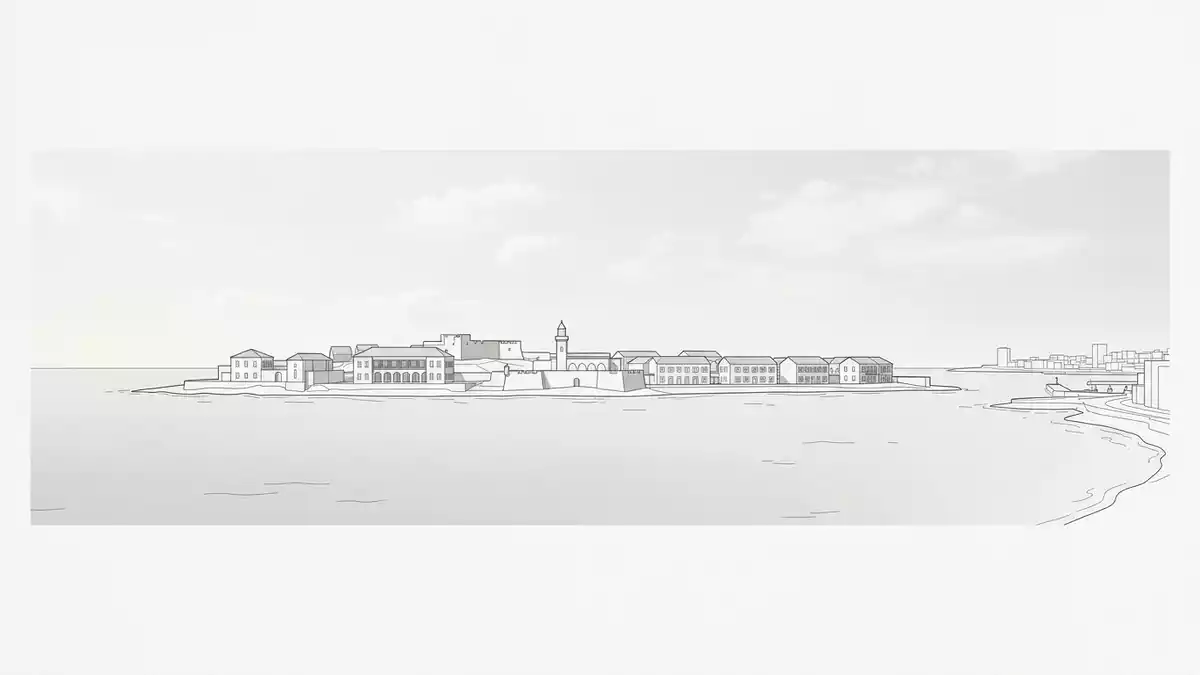
Ile de Goree off Dakar in Senegal is a small Atlantic island where dense streets, stone houses and seafront fortifications hold the memory of centuries of trade and slavery. Recognised as a World Heritage Site since 1978, it stands as one of Dakar’s 19 districts and as a compact place of remembrance within easy reach of the mainland.
An island shaped by empire and the Atlantic
Ile de Goree lies in the bay facing Dakar, separated from the capital by a short stretch of ocean yet intimately tied to its history. European navigators began using the island in the fifteenth century, and it passed through successive Portuguese, Dutch, English and French control over the following centuries, leaving layers of colonial architecture in a confined space.Portuguese, Dutch, English and French control The Dutch name Goede Reede, meaning “good harbour”, is the root of the present name Gorée, reflecting the island’s function as a sheltered anchorage in the Atlantic.Goede Reede, “good harbour”
From the fifteenth to the nineteenth century, Ile de Goree was one of the main centres of the Atlantic slave trade on the West African coast.largest slave-trading centre on the African coast European traders, local intermediaries and enslaved Africans converged here before forced journeys across the ocean to the Americas. The island’s stone warehouses, merchants’ houses and defensive works stand close together along the shoreline, making the contrast between elegant façades and cramped former slave quarters a visible part of the built environment.contrast between slave quarters and houses of slave traders
Maison des Esclaves and the “Door of No Return”
The most pointed symbol of Ile de Goree’s role in the slave trade is the Maison des Esclaves, the House of Slaves, on the eastern side of the island. This eighteenth-century building was constructed around 1776 and functioned as a detention house for enslaved men, women and children awaiting transport across the Atlantic.Maison des Esclaves constructed in 1776 Its plan combines a central courtyard, ground-floor cells and an upper storey reached by a broad external stairway, forming a typical example of the merchant houses associated with the trade.
Facing the sea from the Maison des Esclaves is the “Door of No Return”, a narrow opening in the seaward wall that has become a focal point of remembrance. Through this exit enslaved people were led to boats that would take them toward Atlantic crossings, making the threshold a condensed symbol of rupture from homelands and families.Door of No Return In the twentieth century the building was restored and turned into a museum, with displays and guided visits that present personal stories, objects and the wider history of the transatlantic trade.museum dedicated to telling personal stories
Streets, fortifications and island life
Beyond the Maison des Esclaves, Ile de Goree is small enough that its entire outline can be walked within a short time, yet varied enough to show different phases of its past. A ring of fortifications, including the Fort d’Estrées from the mid-nineteenth century, encircles parts of the shoreline and once guarded the approaches to Dakar’s roadstead.Fort d’Estrées from the 1850s Inside this rim, the streets are lined with houses built in plastered masonry, often with galleries and balconies that overlook narrow lanes or open towards the water.
The island covers around 18 hectares of land and forms one of Dakar’s communes, with a resident population whose daily life interweaves with the presence of visiting groups.18.2-hectare island opposite Dakar Schools, small squares and places of worship sit among buildings linked to the slave trade, reinforcing the sense that history and contemporary community share the same compact ground. The volcanic origin of the island gives parts of the shoreline a rugged, rocky profile, where Atlantic waves break close to stone walls and paths.volcanic origin, small 18-hectare island
Visiting Ile de Goree: what travellers from Western Europe should know
- Ile de Goree lies a short distance offshore from Dakar in Senegal, reached from the city’s harbour by boat services that cross the bay to the island.
- The island itself is compact, and exploring on foot involves walking on stone-paved streets, steps linking different levels and paths along the rocky waterfront.
- Alongside the Maison des Esclaves, other historic buildings such as Fort d’Estrées and former merchants’ houses stand within view of each other, making it easy to combine several sites in a single circuit.
- Senegal’s official language is French and the currency is the West African CFA franc, widely used for everyday transactions in Dakar and on Ile de Goree.
- Entry requirements depend on your nationality; UK travellers can check the FCDO travel advice at gov.uk/foreign-travel-advice, Irish travellers the Department of Foreign Affairs at ireland.ie.
Searching for Ile de Goree on social platforms
These links open searches for Ile de Goree on each platform.
Frequently asked questions about Ile de Goree
Where is Ile de Goree in relation to Dakar?
Ile de Goree is a small island in the Atlantic Ocean opposite Dakar, lying a short distance offshore in the city’s bay and forming one of its districts.
What should visitors expect during a visit?
Visitors encounter stone streets, colonial houses, fortifications and memorial sites such as the Maison des Esclaves, all within walking distance on a compact island.
What makes Ile de Goree distinctive among West African islands?
Ile de Goree combines its role as a major centre of the Atlantic slave trade with a preserved urban fabric of mixed European and African influences, recognised as a World Heritage Site.


