
Inle Lake’s floating world around Nyaungshwe
Published on 09/09/2026 at 22:32 | Editorial responsibility: Rafael Müller, Editor-in-Chief AD HOC NEWS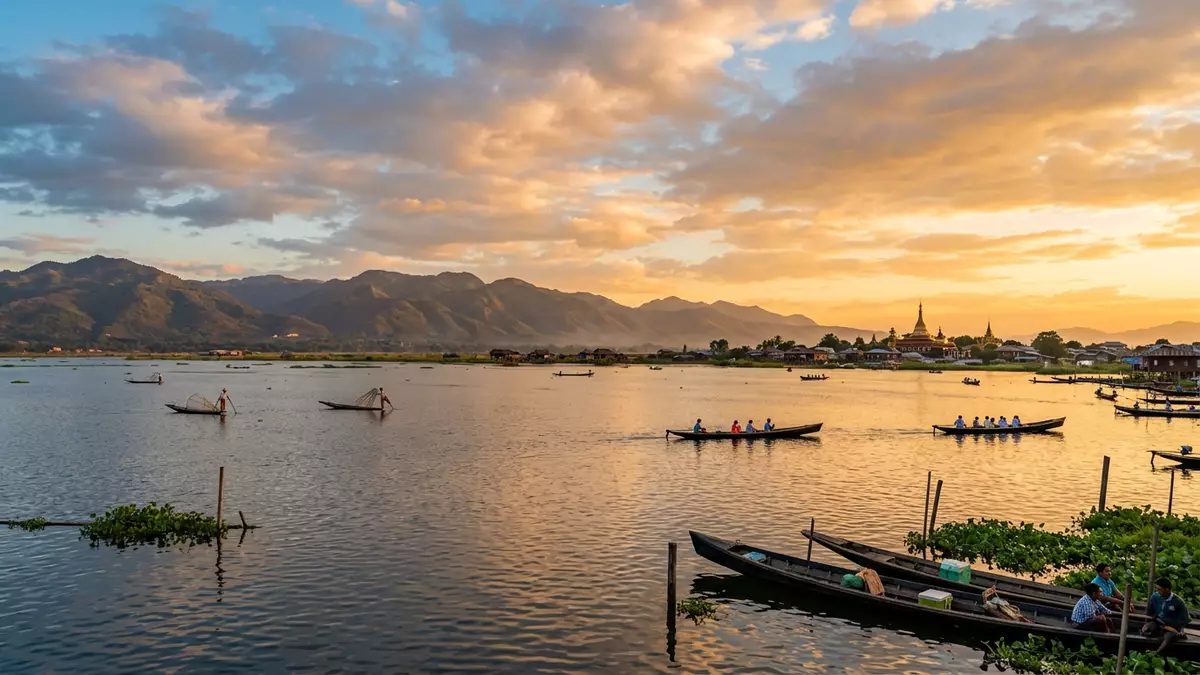
Inle Lake in Myanmar’s Shan State is a highland freshwater lake whose calm surface has become a lived-in landscape of stilt houses, leg-rowing fishermen and floating gardens stretching out from the town of Nyaungshwe. Set in the Shan Hills and elevated around 880 m (2,900 ft) above sea level, it forms the watery heart of Nyaungshwe Township and is recognised as a UNESCO Biosphere Reserve for the way human life and wetland ecology have developed together in this basin.
A highland lake framed by the Shan Hills
Inle Lake lies in the Shan Hills of eastern Myanmar, in Nyaungshwe Township within Shan State, where a shallow basin of water fills a long valley between low mountain ridges.Inle Lake in Shan State The lake’s surface area is around 116 km² (44.9 sq mi), with a length of roughly 22 km (13.7 mi), and it sits at an elevation of about 880 m (2,900 ft), making it one of Myanmar’s higher large lakes.116 km² and 880 m elevation
The water itself is shallow for a lake of this size, with average depths during the dry season of just over 2 m (around 7 ft) and deepest points measured at under 4 m (13 ft), so the open water and reed beds blend into each other across wide reaches of the basin.Dry-season depths The lake is fed by dozens of streams from the surrounding watershed in Nyaungshwe Township, and its margins are fringed with wetlands where floating vegetation mats and constructed gardens form a soft edge between open water and the villages built above it.Nyaungshwe watershed streams
Life on stilts: the Intha villages and floating gardens
Inle Lake is home to the Intha people, an ethnic group whose villages stand on wooden piles above the water and marsh, with bamboo-walled houses and walkways forming entire neighbourhoods raised clear of the lake’s fluctuating levels.Intha stilt houses Between these stilted homes, wooden boats move along narrow channels, passing small monasteries, pagodas and workshops built where firmer ground or older village cores meet the lake.
One of the most distinctive sights is the network of floating gardens, where villagers cultivate vegetables and flowers on buoyant strips of reclaimed wetland woven from water hyacinth roots and reeds.Floating vegetable gardens The gardens are anchored with bamboo poles and form long, low platforms covered in soil, planted with crops such as tomatoes and eggplants, and arranged into lanes that resemble fields floating parallel to the boat channels. Alongside cultivation, handicrafts such as silk weaving and cigar rolling are carried out in lakeside and over-water workshops, supplying goods to markets around the lake and beyond.Silk-weaving workshops
Leg-rowing fishermen and movement across the water
The image that many associate with Inle Lake is that of fishermen balancing on narrow wooden boats and propelling themselves using a distinctive leg-rowing technique developed for these reed-filled waters.Leg-rowing fishermen Standing towards one end of the craft, the fisherman wraps one leg around a long oar and uses it to push and steer, keeping both hands free to manage nets or conical fish traps.
For visitors, movement across the lake largely follows the same boat routes, with long wooden motorboats serving as the primary way to travel from Nyaungshwe’s canal-side jetties out to floating villages, pagodas and garden districts scattered along the lake.Long-tail boats on the lake Boats weave through expanses of open water dotted with stilt houses, then turn into narrower channels flanked by floating gardens, where the line between lake and settlement blurs. Annual religious events, including the Hpaung Daw Oo Festival with its ceremonial boat processions carrying revered Buddha images, make use of this aquatic network as routes for parades and pilgrim journeys between lakeside monasteries.Hpaung Daw Oo boat festival
Visiting Inle Lake: what travellers from Western Europe should know
- Inle Lake lies in Shan State in eastern Myanmar, with Nyaungshwe at the northern end of the lake acting as the main access town linked to canals and jetties on the water.
- The lake sits around 880 m (2,900 ft) above sea level, and visiting villages and gardens on the water generally involves climbing into and out of long wooden boats at simple landing stages.
- The wider Inle Lake region is served by Heho Airport, from which onward travel typically continues by road to Nyaungshwe before switching to boat transport on the lake itself.
- The official language is Burmese and the currency is the Myanmar kyat.
- Entry requirements depend on your nationality; UK travellers can check the FCDO travel advice at gov.uk/foreign-travel-advice, Irish travellers the Department of Foreign Affairs at ireland.ie.
Searching for Inle Lake on social platforms
These links open searches for Inle Lake on each platform.Frequently asked questions about Inle Lake
Where is Inle Lake and how is it connected to Nyaungshwe?
Inle Lake is a freshwater lake in Nyaungshwe Township in Shan State, eastern Myanmar, with Nyaungshwe at its northern end serving as the main gateway town on land.
What can visitors expect to see on a boat trip across Inle Lake?
Boat journeys take in stilt-house villages, floating vegetable gardens, pagodas and monasteries near the water, as well as leg-rowing fishermen working from narrow wooden boats.
What makes Inle Lake distinctive among Myanmar’s lakes?
Inle Lake combines a high-altitude basin, extensive floating gardens and a long-established culture of stilt settlements and leg-rowing fishermen, and it has been designated a UNESCO Biosphere Reserve.


