
Intramuros and the walls of old Manila
Published on 08/15/2026 at 14:04 | Editorial responsibility: Rafael Müller, Editor-in-Chief AD HOC NEWS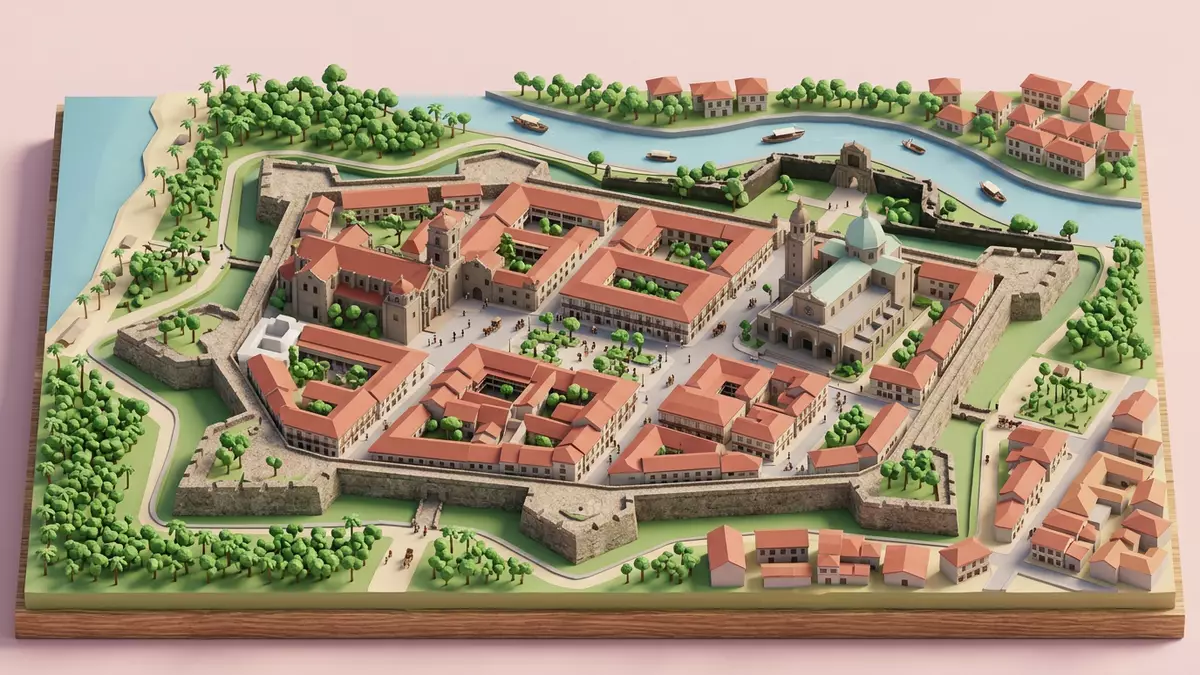
Intramuros is Manila’s walled historic district, a stone enclosure shaped by Spanish colonial planning and the Pasig River. Its walls, plazas and churches give it a strong physical outline, with Miguel López de Legazpi and 1571 among its fixed historical anchors.
Stone walls and a planned colonial city
The district’s best-known feature is its fortification system. The walls define an irregular, enclosed urban core that UNESCO’s tentative listing describes as 0.67 square kilometres; Britannica gives the original walled area as 146 acres, or 59 hectares.0.67 square kilometres146 acres The district was founded shortly after 1571, and its name comes from Spanish for “within the walls”.
Intramuros also keeps the logic of a colonial city laid out around church and state. The UNESCO listing describes a gridiron plan with a central plaza, while Britannica notes the presence of Manila Cathedral, Fort Santiago and San Agustin Church within the original walls.gridiron planManila Cathedral The result is a district whose shape and street pattern still read as a compact historic centre rather than a loose museum quarter.
Fort Santiago and the district’s second life
Fort Santiago sits at the north-western end of Intramuros and remains one of its strongest landmarks. The UNESCO text identifies it as the rebuilt stone fort linked to the fortified settlement, and Britannica places it among the monuments inside the walled city.Fort Santiagoinside the walled city The fort has a citadel character that contrasts with the tighter street grid around it.
San Agustin Church adds another layer to that history. It is one of the UNESCO World Heritage churches of the Philippines and the only major building inside Intramuros that survived the destruction of 1945; that survival gives the district an architectural centre of gravity that is easy to recognise on a walk.UNESCO World Heritage churchessurvived the destruction San Agustin dates from the early seventeenth century and gives the district a visible link to the Spanish period.
Plazas, gates and the human scale inside the walls
Intramuros is not just a wall circuit. It also contains plazas, gate openings and a small-scale street network that keep the district legible on foot. Britannica notes seven gates and small plazas, while the UNESCO listing stresses the relationship between the central square and the surrounding institutions.seven gatescentral square That arrangement gives the district a clear rhythm of walls, openings and enclosed public spaces.
The strongest impression comes from contrast: heavy fortifications outside, civic and religious buildings inside. The site holds that contrast in plain view, without needing embellishment, because the walls and the monuments still work together as one urban composition.
Visiting Intramuros: what travellers from Western Europe should know
- Intramuros lies in Manila, in the Philippines, beside the Pasig River and within the city’s historic core. The district is reached by road, and Fort Santiago, Manila Cathedral and San Agustin Church are the most recognisable reference points.
- The terrain is flat, but the walls and bastions create a contained walking landscape. Some stretches of the district are enclosed by stone fortifications rather than open streets.
- The official language is Filipino and English, and the currency is the Philippine peso.
- Entry requirements depend on your nationality; UK travellers can check the FCDO travel advice at gov.uk/foreign-travel-advice, Irish travellers the Department of Foreign Affairs at ireland.ie.
Searching for Intramuros on social platforms
These links open searches for Intramuros on each platform.
Frequently asked questions about Intramuros
Where is Intramuros?
Intramuros is the historic walled district within Manila, in the Philippines. It stands near the mouth of the Pasig River and forms part of the city’s old centre.
What does a visit involve?
A visit revolves around walls, gates, plazas and churches. The district works as a compact walking area with several major landmarks close together.
What makes Intramuros distinctive?
Its defining feature is the survival of a colonial urban form inside modern Manila. The walls, grid pattern and major churches keep that identity visible.


