
Jameos del Agua turns a lava tube into living architecture
Published on 09/24/2026 at 09:34 | Editorial responsibility: Rafael Müller, Editor-in-Chief AD HOC NEWS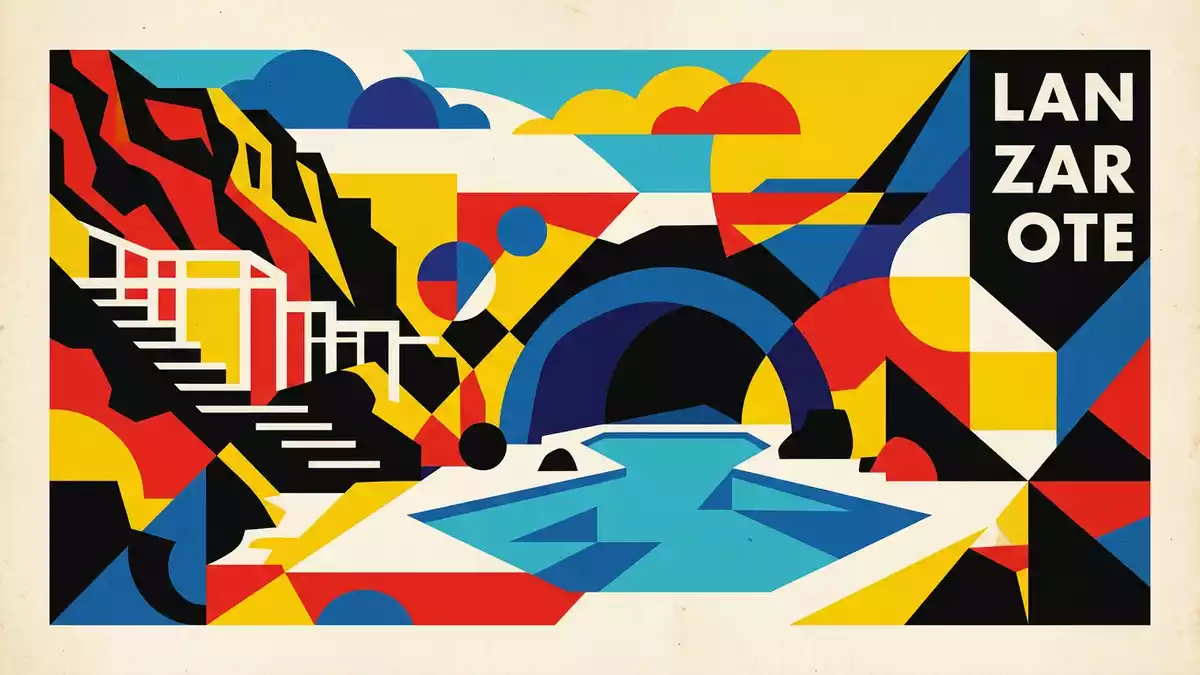
Jameos del Agua is a cultural complex inside La Corona’s volcanic tube on the northern coast of Lanzarote. Dark basalt, seawater, gardens and white architectural forms share one continuous setting, with César Manrique’s work placed among the natural chambers.
The route moves between enclosed lava spaces and roofless openings known as jameos. This meeting of geology and architecture defines the place from the first descent into Jameo Chico to the garden, pool and auditorium farther inside.
La Corona’s lava tube opens into Jameos del Agua
The complex occupies part of the volcanic tube formed by activity from La Corona Volcano. The tube runs through northern Lanzarote and reaches towards the coast, while sections of collapsed roof create the openings called jameos. The term comes from Guanche, the language associated with the island’s earliest inhabitants.
Jameos del Agua belongs to the same volcanic system as Cueva de los Verdes. The tube was formed around 5,000 years ago, when molten rock travelled from the volcano towards the coast and left underground cavities after the eruption. La Corona volcanic tube remains the geological basis of the complex.
Water appears within the darkness as an interior lake connected with the sea. Its surface follows the tides, and the chamber contains the blind crab, Munidopsis polymorpha, a small white crustacean endemic to Lanzarote. The species lives in darkness and forms part of the site’s protected subterranean habitat.
César Manrique’s architecture follows the volcanic chambers
César Manrique began adapting Jameos del Agua in the 1960s. The first Centre of Art, Culture and Tourism associated with his work opened here in 1968, and the intervention reached its general form in 1977. Manrique’s architectural project combines platforms, stairs, gardens, pools and rooms with the existing rock.
Jameo Chico contains the entrance area and a chamber beside the lake. The route continues towards Jameo Grande, where an outdoor garden, palms, cacti and a white pool occupy a larger opening in the tube. Basalt walls remain visible beside rendered surfaces, painted furniture and carefully placed planting.
The complex is also associated with Jesús Soto and craftspeople, technicians and workers from Lanzarote. Local materials and hand-made details appear throughout the setting, including furniture and lamps made from objects connected with fishing. The result is a designed landscape rather than a conventional building with a separate natural backdrop.
The auditorium occupies a volcanic chamber. Its walls and overhead rock belong to the lava tube, while seats follow the sloping ground. The space forms part of the cultural character of Jameos del Agua, where performance, geology and architecture share one room.
Water, gardens and science beneath the open sky
Jameos del Agua changes character from chamber to chamber. The lake sits beneath dark rock, the garden opens to the sky, and the auditorium returns to the enclosed volume of the tube. These spaces are linked by paths and platforms across uneven volcanic surfaces.
The white pool in Jameo Grande is placed beside basalt, palm trees and low planting. Its strong colour contrast belongs to Manrique’s visual language, which uses white surfaces against Lanzarote’s black lava and blue sky. The garden includes palms, fig trees and cacti.
The Casa de los Volcanes Museum forms part of the complex. Its displays examine the La Corona tube, Lanzarote’s volcanic landscape and the wider Chinijo Archipelago Geopark. Rooms also address planetary landscapes that can be compared with volcanic environments beyond Earth.
Jameos del Agua has a formal environmental designation as the Los Jameos Site of Scientific Interest. The status protects the aquatic habitat and the species connected with it. the protected volcanic setting forms part of Lanzarote’s wider network of landscapes and cultural sites.
The contrast between darkness, water, planting and white architecture gives the complex its lasting character. Jameos del Agua is neither a cave left untouched nor a building detached from its setting. It is a route through a lava tube, with architecture occupying the spaces between rock, sea and sky.
Visiting Jameos del Agua: what travellers from Western Europe should know
- Jameos del Agua lies on Lanzarote’s northern coast in the municipality of Haría. The Arrieta–Órzola road provides the road approach, and the complex is reached by car, taxi or organised excursion.
- The route includes volcanic stone, changes in level, stairs and narrow passages. Pushchairs are unsuitable for the cave route, while the uneven surfaces limit access across parts of the complex.
- The lake contains a protected population of blind crabs. Coins, food and other objects must not enter the water, and the lake and pool are not bathing areas.
- The official language is Spanish and the currency is the euro.
Searching for Jameos del Agua on social platforms
These links open searches for Jameos del Agua on each platform.
Frequently asked questions about Jameos del Agua
Where is Jameos del Agua?
Jameos del Agua is on the northern coast of Lanzarote, within the municipality of Haría. It occupies part of the volcanic tube formed by La Corona Volcano.
What can visitors expect inside?
The route passes through lava chambers, an interior lake, an open garden, a pool, cultural spaces and an auditorium. Volcanic rock, seawater, planting and white architecture appear together.
What makes Jameos del Agua distinctive?
Its design by César Manrique is integrated into a natural lava tube. The complex combines a protected subterranean habitat with architecture, gardens, science and performance spaces.


