
Jameos del Agua, where Lanzarote’s lava meets art
Published on 09/09/2026 at 07:17 | Editorial responsibility: Rafael Müller, Editor-in-Chief AD HOC NEWS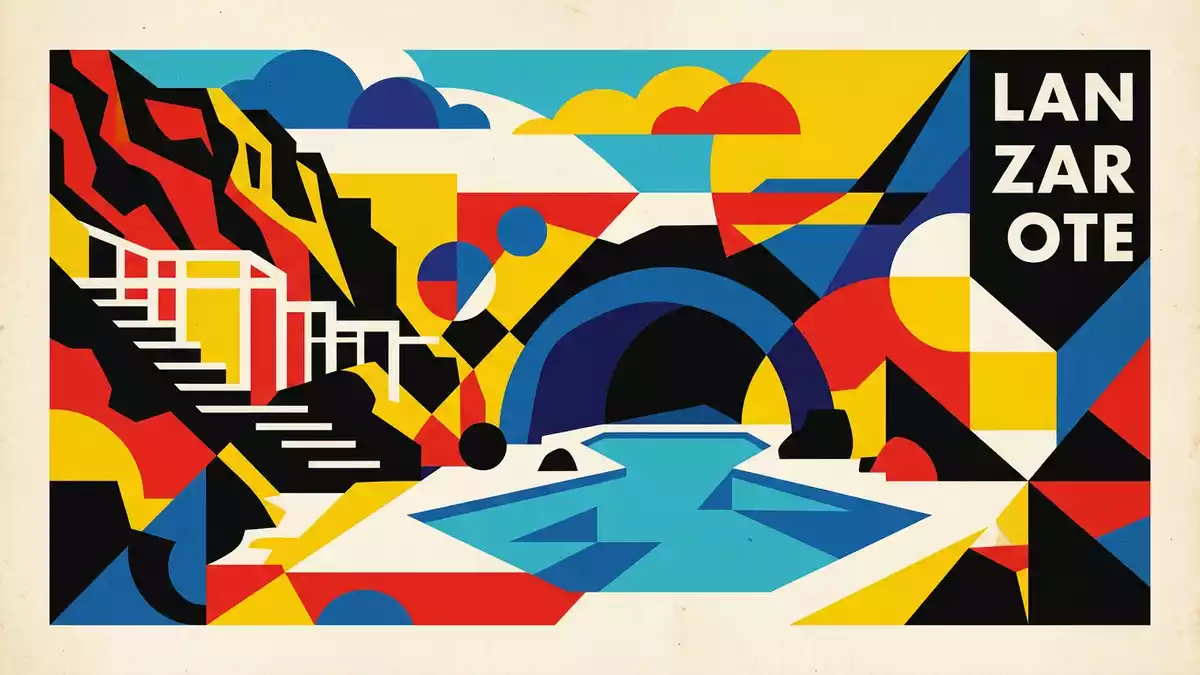
Jameos del Agua on Lanzarote’s north coast is a volcanic cave complex where a natural lava tube, an underground salt lake and carefully shaped architecture come together in a single continuous space. Conceived by Lanzarote-born artist and architect César Manrique in the 1960s, the site transforms part of the tunnel created by the Corona volcano into an art, culture and tourism centre that still keeps the raw rock of the eruption in view.art, culture and tourism centre
A lava tube turned into a layered landscape
Jameos del Agua occupies a section of the lava tube formed by the eruption of Volcán de la Corona in the far north of Lanzarote, a tube that runs beneath the surface towards the Atlantic.lava tunnel formed by the eruption In this stretch, the roof of the tube has collapsed in places, opening cavities where daylight reaches down to the rock and water below. The term “jameo” refers to this type of volcanic opening, and the complex links several of them along the length of the tube as a sequence of distinct spaces.
The first major cavity encountered by visitors, often referred to as Jameo Chico in architectural descriptions, was the earliest part of the project to be adapted in the mid-1960s.earliest part of the project Here, stone terraces, seating and a restaurant follow the curve of the volcanic wall, looking down onto the underground salt lake created where seawater has filtered into the tube from the nearby coast.interior lake created by seawater filtration The water’s surface lies below the level of the main paths, so the lake feels enclosed by rock on nearly every side, with the ceiling of the tube still spanning overhead where it has not fallen.
Salt lake, endemic life and a pool under palm trees
The subterranean salt lake at the heart of Jameos del Agua is not only a striking geological feature but also a small ecosystem in its own right. Its brackish water shelters a population of blind, albino crustaceans known scientifically as Munidopsis polymorpha, a species described as endemic to Lanzarote and closely associated with this particular habitat.blind albino crab species The animals are tiny and pale, and the still water of the lake makes their movement visible to anyone who leans over the balustrades built along the edge.
Beyond the salt lake, the path rises into another large cavity where white-rendered surfaces, volcanic rock and planting form an open-air garden around a bright, turquoise-coloured pool. This area, often referred to as Jameo Grande, was adapted after the initial works at Jameo Chico and developed over the following years as the most expansive external space in the complex.developed over the following years Here, palm trees and other subtropical plants rise directly from the volcanic strata, with the white surfaces emphasising the dark lava and the strong colour of the water without hiding the irregular shapes of the original rock formations.
César Manrique’s first art, culture and tourism centre
In design terms, Jameos del Agua is closely tied to the career of César Manrique, who grew up on Lanzarote and later became one of the central figures in shaping how the island built in its volcanic landscape.one of the essential works in his trajectory Work on the site began in the 1960s, and the complex is described as the first of Lanzarote’s Centres of Art, Culture and Tourism created under his direction, with an initial opening in 1968.first Centre of Art, Culture and Tourism created by César Manrique The project extended over several stages, with later works in the 1980s completing an auditorium in another part of the tube known as Jameo de la Cazuela and adding the Casa de los Volcanes on the upper level.auditorium and Casa de los Volcanes
The Casa de los Volcanes functions as a volcanology centre, using the building above the caves to present scientific material about Lanzarote’s geology and the wider Canary Islands.Casa de los Volcanes volcanology centre Inside the tube itself, the auditorium seats have been fitted into one of the cavities, taking advantage of the enclosed rock walls as a dramatic backdrop for concerts and events. Throughout the complex, the built elements follow the lines of the lava formations rather than imposing straight geometries, so terraces, staircases and platforms appear to grow out of the basalt while still providing clear routes through the site.
Visiting Jameos del Agua: what travellers from Western Europe should know
- Jameos del Agua lies in the municipality of Haría in northern Lanzarote, close to the coastal village of Punta Mujeres and reached along the Arrieta–Órzola road on the island’s north-east side.
- The complex sits within a volcanic tube with uneven rock surfaces, steps and changes of level; visiting involves walking on stone paths and staircases that descend into and climb out of the cavities.
- In the wider area, the Corona volcano rises inland to the west and the Atlantic coast is a short distance to the east, so the approach by road passes both lava fields and low coastal settlements.
- The official language is Spanish and the currency is the euro.
Searching for Jameos del Agua on social platforms
These links open searches for Jameos del Agua on each platform.Frequently asked questions about Jameos del Agua
Where is Jameos del Agua on Lanzarote?
Jameos del Agua is in the municipality of Haría on the north-east coast of Lanzarote, close to Punta Mujeres and along the Arrieta–Órzola road.
What should visitors expect inside the complex?
Visitors move through volcanic caves and open cavities linked by stone paths, encountering an underground salt lake, a garden with a bright pool, an auditorium and a volcanology centre.
What makes Jameos del Agua distinctive among Lanzarote’s sites?
The site combines a natural lava tube and salt lake, an endemic crustacean species and César Manrique’s architecture, creating a continuous route that joins geology, ecology and cultural spaces.


