
Jigoku Meguri and Beppu’s seven geothermal landscapes
Published on 09/23/2026 at 13:45 | Editorial responsibility: Rafael Müller, Editor-in-Chief AD HOC NEWS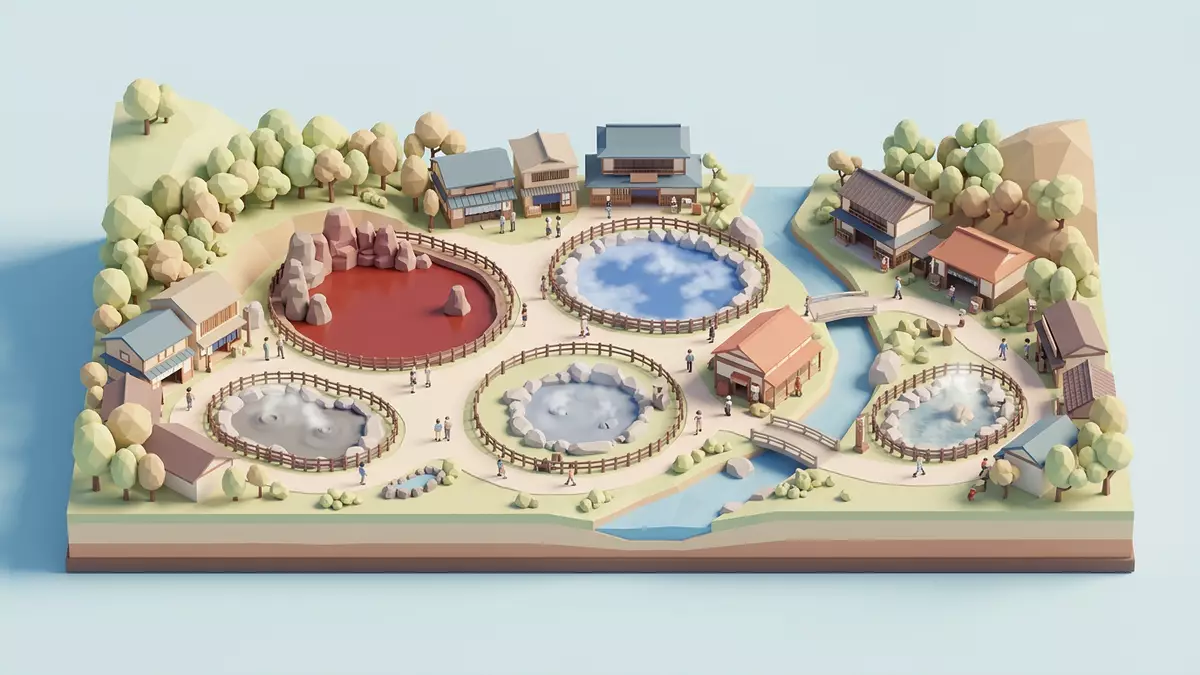
Jigoku Meguri is a circuit of geothermal sites in Beppu, on Japan’s southern island of Kyushu. Its pools, mud, fumaroles and geysers appear in striking colours and forms, from the cobalt water of Umi Jigoku to the red clay of Chinoike Jigoku.
The name means “hell tour”, but these sites are viewed rather than used for bathing. Their visible force comes from Beppu’s volcanic setting, where hot water, steam and gases rise naturally through the ground.
From ancient geothermal zone to Jigoku Meguri
The hot-spring areas of Kannawa and Kamegawa have a recorded history reaching back more than a thousand years. The Bungo Province Chronicle, compiled in 733, refers to a red hot spring in the area under the name Akayusen. The account places Jigoku within the long history of Beppu’s geothermal landscape.
Tourist attractions developed around the Jigoku after the end of the Meiji period in 1912. Aburaya Kumahachi began the first sightseeing bus in 1928, connecting the sites as a recognisable excursion. His name remains closely linked with the development of tourism in Beppu.
Jigoku Meguri contains seven principal sites. Five lie around Kannawa, while Chinoike Jigoku and Tatsumaki Jigoku are in the wider Kamegawa and Shibaseki area. The sites are separate places, each defined by a different visible expression of geothermal activity.
Blue water, red clay and rising steam
Umi Jigoku is a cobalt-blue pool associated with an eruption of Mount Tsurumi about 1,200 years ago. The water reaches 98°C, and the pool has a recorded depth of 200 metres. Its intense colour contrasts with the steam rising from the surface.
Chinoike Jigoku has red boiled clay and red fumarolic ground. Its name means “Blood Pond Hell”, while the older name Akayusen means “red hot spring”. The site is traditionally dated among Japan’s oldest natural Jigoku, and its clay is used in Chinoike Nanko products.
Shiraike Jigoku begins with colourless, transparent water before the spring forms a bluish-white pond. It is a borate salt spring with a temperature of 95°C. The park also contains tropical fish kept in water warmed by the spring.
Oniishi Bozu Jigoku contains grey mud that rises in large and small rounded bubbles. The mud is associated with the Oniishi district and gives the site its name, which refers to shaved monks’ heads.
Geysers, crocodiles and cultural designations
Tatsumaki Jigoku is a geyser and a natural monument designated by Beppu. Hot water and fumarolic gases emerge at intervals from the ground. The spring temperature reaches 105°C, while the visible feature is the sudden eruption of water and steam.
Oniyama Jigoku is also called Wani Jigoku, or “Crocodile Hell”. Crocodiles have been kept at the site since 1923, when the spring’s heat was used for their enclosure. The animals form an unusual part of a landscape otherwise dominated by water, mud and gas.
Kamado Jigoku is associated with Kamado Hachimangu Shrine and the practice of cooking rice with Jigoku steam during a shrine festival. Its spring reaches 90°C and produces high-temperature water alongside fumarolic activity.
Umi Jigoku, Chinoike Jigoku, Tatsumaki Jigoku and Shiraike Jigoku received designation as National Places of Scenic Beauty on 23 July 2009. The status recognises four different combinations of colour, water, clay, steam and geological form. The four designated Jigoku represent the range of the circuit.
Jigoku Meguri also connects geothermal scenery with local food culture. Jigoku mushi is a cooking method that uses hot-spring steam, while eggs and puddings are prepared using heat from the springs. The food tradition belongs to Beppu’s wider onsen culture, but the sites themselves remain viewing landscapes rather than bathing facilities.
Visiting Jigoku Meguri: what travellers from Western Europe should know
- Jigoku Meguri lies in Beppu’s Kannawa and Kamegawa areas, in Oita Prefecture on Kyushu. Buses from Beppu Station serve Kannawa and Umi-Jigokumae, with further services towards Chinoike Jigoku.
- The seven sites are not arranged in one compact enclosure. The Kannawa group can be explored on foot between stops, while Chinoike Jigoku and Tatsumaki Jigoku lie in the wider area.
- The pools and springs reach temperatures close to or above 90°C. The water, mud and steam are viewing features, not bathing water.
- The official language is Japanese and the currency is the Japanese yen.
Searching for Jigoku Meguri on social platforms
These links open searches for Jigoku Meguri on each platform.
Frequently asked questions about Jigoku Meguri
Where is Jigoku Meguri?
Jigoku Meguri is in Beppu, Oita Prefecture, on Kyushu in southern Japan. Its principal sites occupy the Kannawa and Kamegawa areas.
What can visitors expect to see?
The circuit presents boiling pools, steaming ground, hot mud, fumaroles and a geyser. Colours include cobalt blue, bluish white, grey and red.
What makes Jigoku Meguri distinctive?
Each site displays a different geothermal form. Four sites also hold National Place of Scenic Beauty designations, linking natural colour and volcanic activity with cultural recognition.


