
Joya de Ceren and the village beneath volcanic ash
Published on 09/22/2026 at 19:43 | Editorial responsibility: Rafael Müller, Editor-in-Chief AD HOC NEWS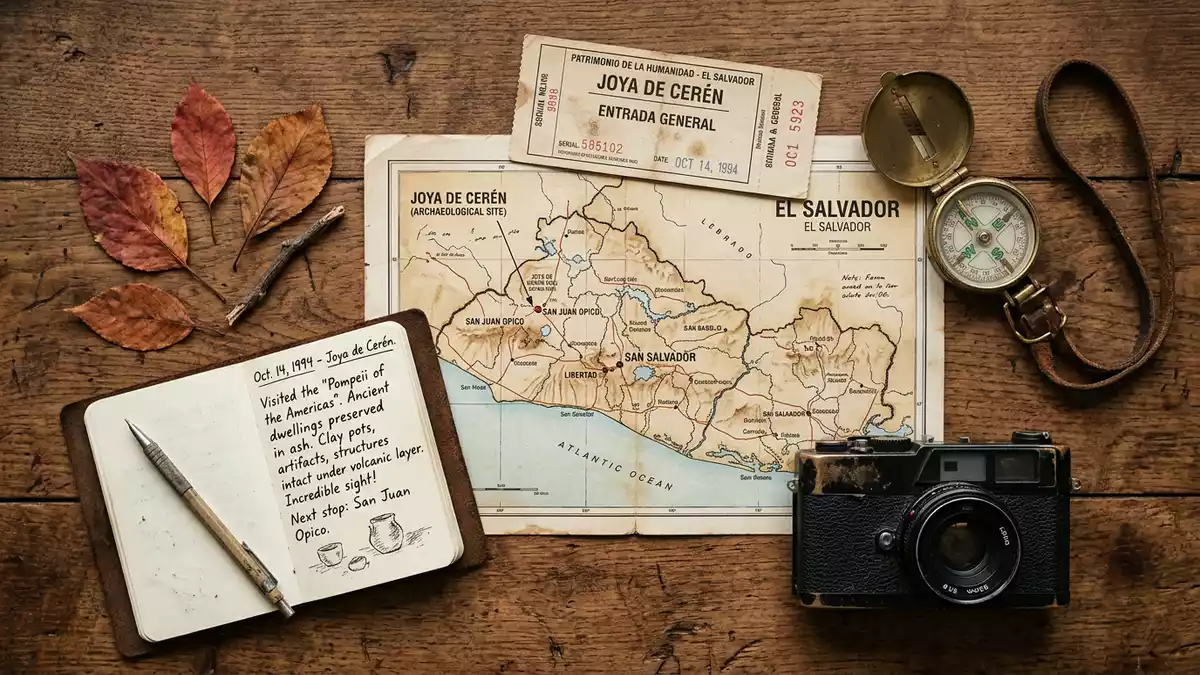
Joya de Ceren is a buried farming village in El Salvador’s Zapotitan Valley. Volcanic ash sealed its earthen houses, food stores, tools and cultivated plants around AD 600, leaving an unusually detailed record of ordinary life.
Joya de Ceren beneath the ash of Loma Caldera
The archaeological site lies near San Juan Opico, in the Department of La Libertad. It preserves a pre-Hispanic settlement associated with Maya agricultural communities during the Late Classic period.
An eruption of Loma Caldera covered the village during the seventh century AD. Layers of ash protected buildings and objects that tropical conditions would normally destroy, including household equipment, plant remains and carbonised organic materials. The settlement was discovered in 1976, when a clay structure appeared during construction work.
Earthen houses, public buildings and working spaces
Joya de Ceren is formed from groups of buildings arranged around communal spaces. The surviving remains include houses, storehouses, a kitchen, a public building and a sweat bath. A religious building stood beside the village plaza, with another building associated with a shaman.
Construction materials reveal differences between building types. Public buildings and the sweat bath used rammed earth, while household structures used wattle and daub. Thatch roofs have also been identified. These details give the site a physical character distinct from stone-built ceremonial centres.
The excavated areas also preserve evidence of food production. Fields contained maize plants at different stages of growth, while gardens included herbs, henequen, guava and cacao. Pots, sleeping mats, animal remains and agricultural tools belong to the same domestic setting.
Daily life in a protected archaeological landscape
Joya de Ceren is associated with the daily activities of farmers rather than royal monuments. The objects remain connected to rooms, storage areas, gardens and working spaces, creating a detailed picture of domestic organisation. Its exceptional archaeological preservation supports this reading.
The village was inscribed on the UNESCO World Heritage List in 1993. Its protected remains document the lives of ordinary Mesoamerican farmers, a subject less visible in monumental archaeological sites. The settlement’s buildings and artefacts also show relationships between household work, cultivation, storage and communal activity.
The site extends across a protected archaeological property in La Libertad. Joya de Ceren is part of the cultural heritage of El Salvador, while its volcanic burial connects the settlement with the geology of the Zapotitan Valley. Its World Heritage inscription in 1993 recognises the evidence preserved beneath the ash.
Visiting Joya de Ceren: what travellers from Western Europe should know
- Joya de Ceren lies in the Zapotitan Valley, about 6 km south of San Juan Opico and 36 km north-west of San Salvador. The access road connects San Salvador with San Juan Opico.
- The archaeological remains are earthen structures beneath protective coverings. The visit takes place across an archaeological park with exposed foundations, rooms, communal buildings and cultivated areas.
- The official language is Spanish and the currency is the US dollar.
- Entry requirements depend on your nationality; UK travellers can check the FCDO travel advice at gov.uk/foreign-travel-advice, Irish travellers the Department of Foreign Affairs at ireland.ie.
Searching for Joya de Ceren on social platforms
These links open searches for Joya de Ceren on each platform.Frequently asked questions about Joya de Ceren
Where is Joya de Ceren?
Joya de Ceren is near San Juan Opico in the Department of La Libertad, within El Salvador’s Zapotitan Valley.
What can visitors see there?
The archaeological park presents earthen houses, public buildings, storage areas, a kitchen, a sweat bath, gardens and objects preserved by volcanic ash.
What makes Joya de Ceren distinctive?
Its ash-covered buildings and domestic artefacts preserve detailed evidence of ordinary farming life during the seventh century AD.


