
Jungfraujoch, where Europe’s highest railway meets the ice
Published on 08/18/2026 at 14:32 | Editorial responsibility: Rafael Müller, Editor-in-Chief AD HOC NEWS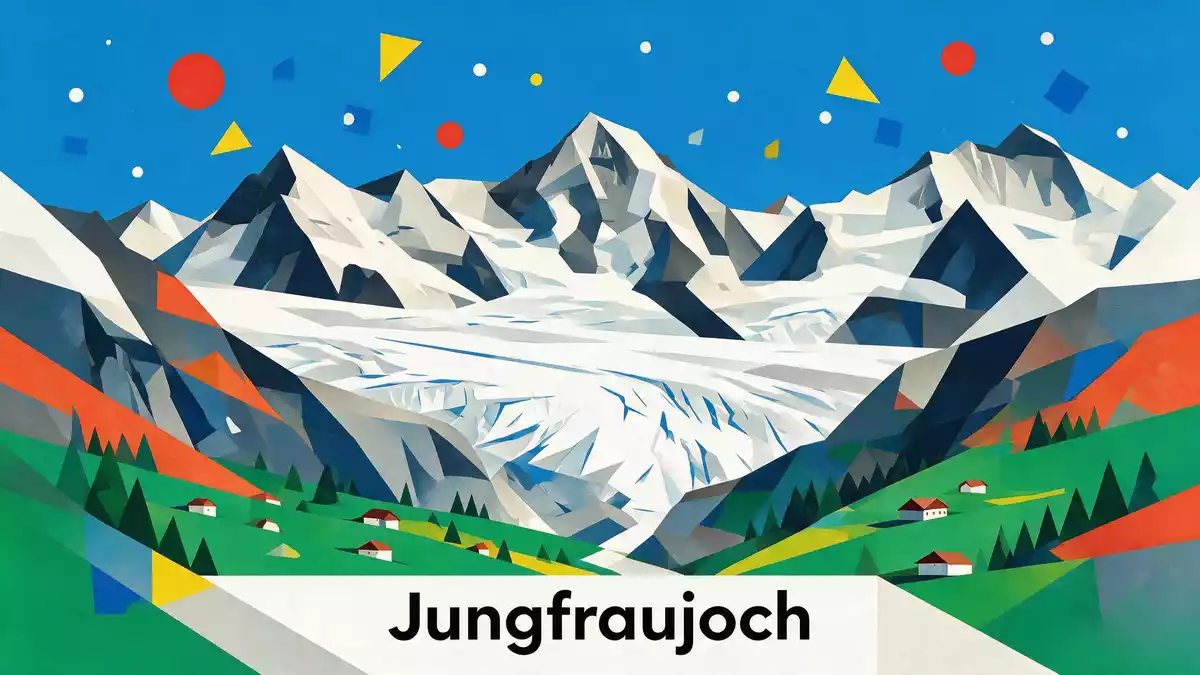
High above the Bernese Alps, Jungfraujoch forms a broad, glaciated saddle between the peaks of Jungfrau and Mönch, reached by a mountain railway that climbs deep through the rock to a station at 3,454 m (11,332 ft). This high-altitude platform, long associated with both tourism and science, combines tunnels, terraces and research buildings set against the ice flowing down towards the Aletsch Glacier.
A high mountain saddle turned into a railway terminus
Jungfraujoch lies on the boundary between the cantons of Bern and Valais, connecting the rocky ridges of the Jungfrau and the Mönch above the glaciers of the Bernese Alps.the saddle between Jungfrau and Mönch The setting is exposed and glaciated, with ice fields falling away from the station complex and snow lying across the plateau for much of the year.
The modern role of Jungfraujoch is inseparable from the Jungfrau Railway, conceived in the nineteenth century by the Zürich industrialist Adolf Guyer-Zeller and built in stages from 1896 onwards.Adolf Guyer-Zeller’s idea in 1893 Construction of the line began on 27 July 1896 and involved driving a tunnel up through the massif, much of it under the Eiger and the Mönch, to reach the high saddle.tunnel construction from 1896 to 1912 The breakthrough at Jungfraujoch came in February 1912, and on 1 August 1912 the first train carried passengers to the new terminus, turning an area once reserved for climbers into an accessible viewpoint.
Europe’s highest railway station and the underground journey
The railway station at Jungfraujoch stands at 3,454 m above sea level, a height that gives it the status of the highest railway station in Europe and defines its character as a “Top of Europe” terminus.railway station at 3,454 m The station complex itself is largely enclosed, set into the rock, with platforms, concourses and tunnels connecting to terraces and galleries in the surrounding ice.
The approach by rail starts at Kleine Scheidegg and leads through the Jungfrau Tunnel, where intermediate stations such as Eismeer allow travellers to step out and look through windows cut into the east face of the Eiger towards the “sea of ice” below.Jungfrau Tunnel and Eismeer station More than seven kilometres of the line run through tunnels, climbing roughly 1,400 m from the lower sections to Jungfraujoch along a route carved into the mountains.9.34 km line with long tunnel sections The result at the terminus is a compact, multi-level structure embedded in rock and snow, with walkways leading out towards glacier viewpoints and indoor exhibition areas.
The Sphinx Observatory and views over the Aletsch Glacier
Above the main station area, the Sphinx building rises from a rocky outcrop on the south side of Jungfraujoch, reached by a lift that ascends more than 100 m from the interior and opens onto enclosed and open viewing platforms.Sphinx building and platform The tourist terrace of the Sphinx stands at about 3,572 m (11,719 ft), while the meteorological terrace above reaches slightly higher, making the building one of the highest research observatories accessible to the public in Switzerland.altitudes of Sphinx terraces
Inside the Sphinx complex, laboratories contribute to atmospheric and astronomical research as part of international programmes, continuing a tradition that dates back to the completion of the observatory in 1937.Sphinx observatory completed in 1937 From the external platforms, the view extends over the high peaks and across the Aletsch Glacier, the longest glacier in the Alps and a core part of the Swiss Alps Jungfrau–Aletsch World Heritage property.Aletsch Glacier and World Heritage setting The combination of scientific domes, metal walkways and surrounding icefields gives Jungfraujoch a distinctive mix of research station and mountain belvedere.
Visiting Jungfraujoch: what travellers from Western Europe should know
- Jungfraujoch lies in the Bernese Alps on the boundary between the cantons of Bern and Valais in Switzerland, reached by the Jungfrau Railway from Kleine Scheidegg.
- The station area sits at high altitude on a glaciated saddle, and walking routes between the platforms, tunnels and terraces cross snow and ice, with some sections exposed to alpine weather.
- Facilities include enclosed halls, an ice tunnel known as an Ice Palace within the glacier, and access by lift to the Sphinx terraces above the main complex.
- The official language is German and the currency is the Swiss franc.
Searching for Jungfraujoch on social platforms
These links open searches for Jungfraujoch on each platform.
Frequently asked questions about Jungfraujoch
Where is Jungfraujoch?
Jungfraujoch is a high-alpine saddle in the Bernese Alps of Switzerland, between the peaks of Jungfrau and Mönch, on the boundary between Bern and Valais.
What should visitors expect on a trip to Jungfraujoch?
Visitors encounter a high-altitude railway terminus embedded in rock and ice, with indoor halls, glacier tunnels and terraces leading out to views over surrounding peaks and glaciers.
What makes Jungfraujoch distinctive among mountain destinations?
It combines Europe’s highest railway station, early twentieth-century tunnel engineering and the Sphinx research observatory with direct views over the Aletsch Glacier from a glaciated saddle.


