
Kapadokya’s rock valleys and cave settlements
Published on 08/11/2026 at 15:01 | Editorial responsibility: Rafael Müller, Editor-in-Chief AD HOC NEWS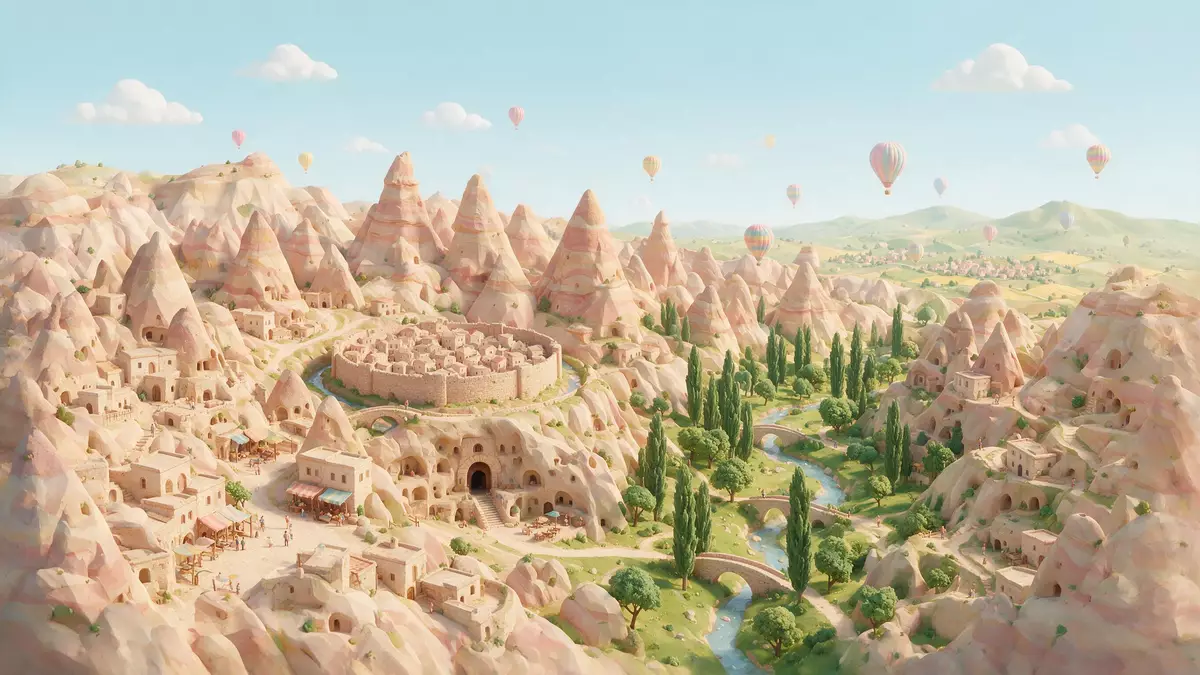
Kapadokya around Göreme is a landscape of soft volcanic rock, carved chambers and steep-walled valleys. The area is closely associated with the rock-cut churches and cave dwellings of central Anatolia, shaped over centuries by settlement in tuff.
Volcanic rock and carved space
The region’s most striking feature is the pale rock itself. Tuff, formed from volcanic ash, has been cut into homes, storage spaces, chapels and passageways across the hills around Göreme.
That carved landscape gives Kapadokya its unusual appearance. Cliffs, spires and valley walls are interrupted by openings, stairways and façades that sit directly in the rock rather than beside it.
Göreme and the monastic landscape
Göreme is one of the best-known bases for exploring the area and for seeing the concentration of rock-cut religious sites. The Göreme Open-Air Museum preserves churches and chapels with wall paintings from the Byzantine period.
The paintings, stone-cut interiors and narrow approaches form a dense historic ensemble. Kapadokya also includes wider valley scenery, where ridges and gullies run between villages and agricultural plots.
From shelter to heritage landscape
Kapadokya is associated with long use of the same soft stone for shelter, storage and worship. The result is a landscape where built space and geology are difficult to separate.
Churches, dwellings and carved façades sit in the same rock formations, and the area’s historical layers remain visible in the stone. The place is best understood as a region rather than a single monument.
Visiting Kapadokya: what travellers from Western Europe should know
- Kapadokya lies in central Turkey, and Göreme is a practical base for reaching the main valleys and rock-cut sites by road.
- Admission arrangements and opening hours are set by the site's operator and change with the season; the official website is the only binding source.
- Spring and autumn bring milder conditions for walking between valleys. Early morning and late afternoon give softer light on the rock formations.
- Some routes include steep paths, uneven stone and steps cut into the rock. A visit can involve a fair amount of walking on rough ground.
- Turkish lira is used locally, and English is common in visitor-facing places. Small purchases may still be easier with cash.
- Entry requirements depend on your nationality. UK travellers should check the FCDO travel advice at gov.uk/foreign-travel-advice; Irish travellers the Department of Foreign Affairs at ireland.ie; EU and EEA citizens their own national foreign ministry.
Searching for Kapadokya on social platforms
These links open searches for Kapadokya on each platform.
Frequently asked questions about Kapadokya
Where is Kapadokya?
Kapadokya is in central Turkey, around Göreme and the surrounding valleys. It is a region rather than a single site.
What should visitors expect?
Expect carved rock, chapel interiors, valley walks and rough ground in places. The landscape combines geology and human use in one setting.
What makes it distinctive?
The soft volcanic rock and the density of carved spaces give Kapadokya its character. Churches, dwellings and pathways are all part of the same terrain.


