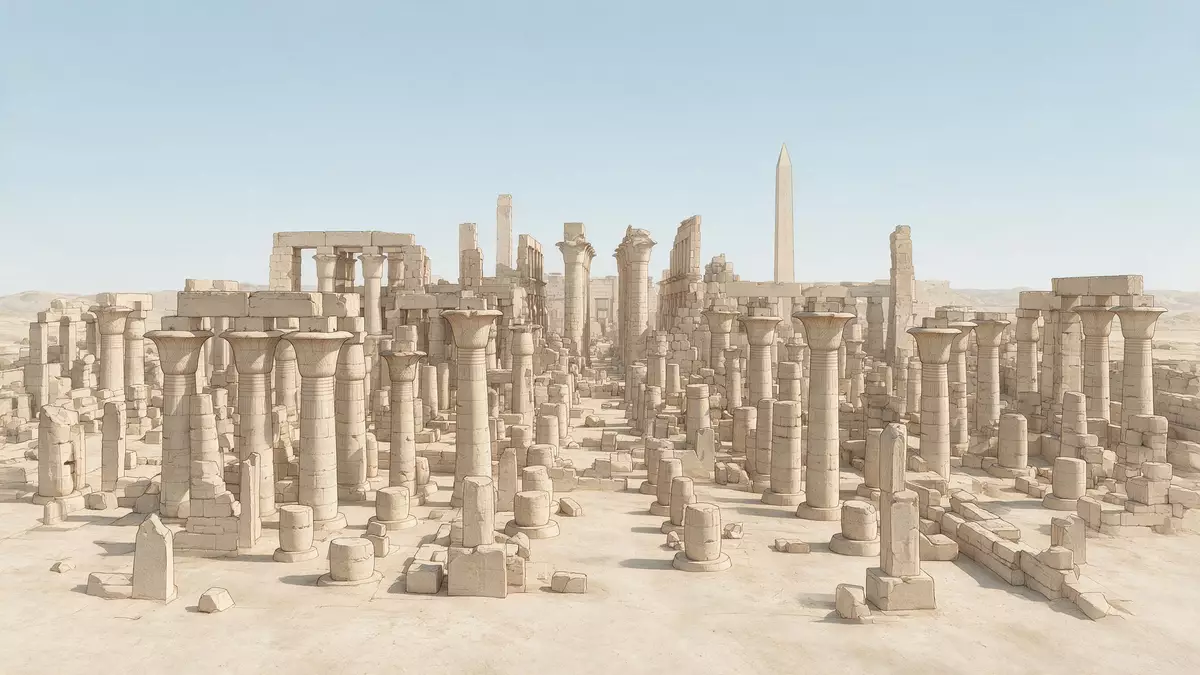
Karnak’s columned courts and temple halls
Published on 08/10/2026 at 15:08 | Editorial responsibility: Rafael Müller, Editor-in-Chief AD HOC NEWS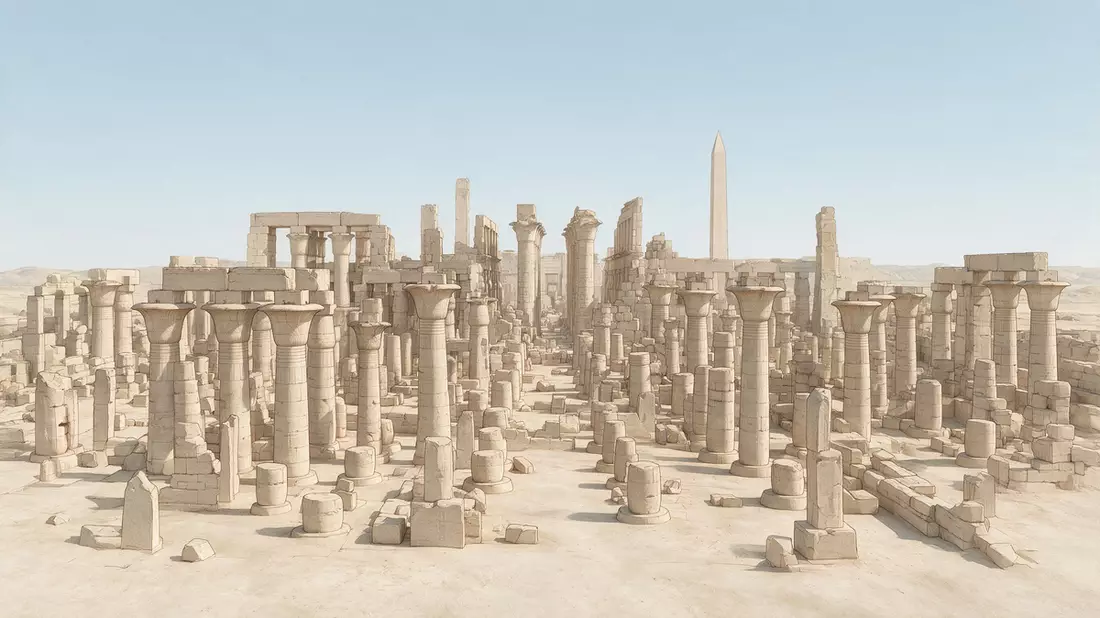
Karnak in Luxor is a sprawling temple complex of courts, pylons and columned halls from ancient Egypt. Its most famous spaces date from the New Kingdom, when rulers including Seti I and Ramesses II added major monuments to a sanctuary that had grown for centuries.
Karnak’s monumental approach
The first impression at Karnak comes from the long sequence of gateways and open courts. Stone walls, broken statues and massive pylons create a route that moves from broad exterior spaces into denser sacred zones.
The Great Hypostyle Hall is the best-known interior. Its forest of columns, with taller central rows and lower side aisles, preserves one of the most striking survivals of ancient Egyptian temple architecture.
Stone, inscriptions and sacred space
Karnak is built mainly in sandstone, with many surfaces covered in reliefs and hieroglyphs. The decoration records offerings, royal names, ritual scenes and divine imagery, especially for Amun-Re, the chief deity of the Theban triad.
Obelisks, shrines and smaller temples punctuate the complex. The site reflects repeated building campaigns under pharaohs of the Eighteenth, Nineteenth and later dynasties, with each generation adding new layers to the sacred precinct.
A temple that changed through dynasties
The place is associated above all with the cult of Amun, but it also includes elements linked to Mut, Khonsu and other gods. That mixture gives Karnak a layered plan rather than a single unified design.
Visitors encounter a sequence of visible historical phases: older blocks reused in later structures, towering gates, and open courts beside enclosed sanctuaries. The result is a record of royal patronage expressed in stone.
Visiting Karnak: what travellers from Western Europe should know
- Karnak is in Luxor, on the east bank of the Nile in southern Egypt. It is reached from Luxor by road.
- Admission arrangements and opening hours are set by the site's operator and change with the season; the official website is the only binding source.
- Morning light suits the open courts and the tall columns, while midday sun is harsher across exposed stone.
- The complex involves long walks on uneven ground, broad courtyards and many stone thresholds.
- Arabic is the local language, and Egyptian pound cash is useful for small purchases and services nearby.
- Entry requirements depend on your nationality. UK travellers should check the FCDO travel advice at gov.uk/foreign-travel-advice; Irish travellers the Department of Foreign Affairs at ireland.ie; EU and EEA citizens their own national foreign ministry.
Searching for Karnak on social platforms
These links open searches for Karnak on each platform.
Frequently asked questions about Karnak
Where is Karnak?
Karnak is part of Luxor in southern Egypt, on the east bank of the Nile. It forms one of the main ancient temple precincts in the Theban area.
What should a visit feel like?
Expect a large open-air complex with gates, courts and interior halls. The change from open space to columned enclosure is the dominant experience.
What makes Karnak distinctive?
Its scale, stone architecture and long dynastic history make it stand out as a layered religious complex. The Great Hypostyle Hall and the sequence of pylons are among its defining features.