
Kigali Genocide Memorial: a hillside of remembrance and learning
Published on 08/16/2026 at 14:12 | Editorial responsibility: Rafael Müller, Editor-in-Chief AD HOC NEWS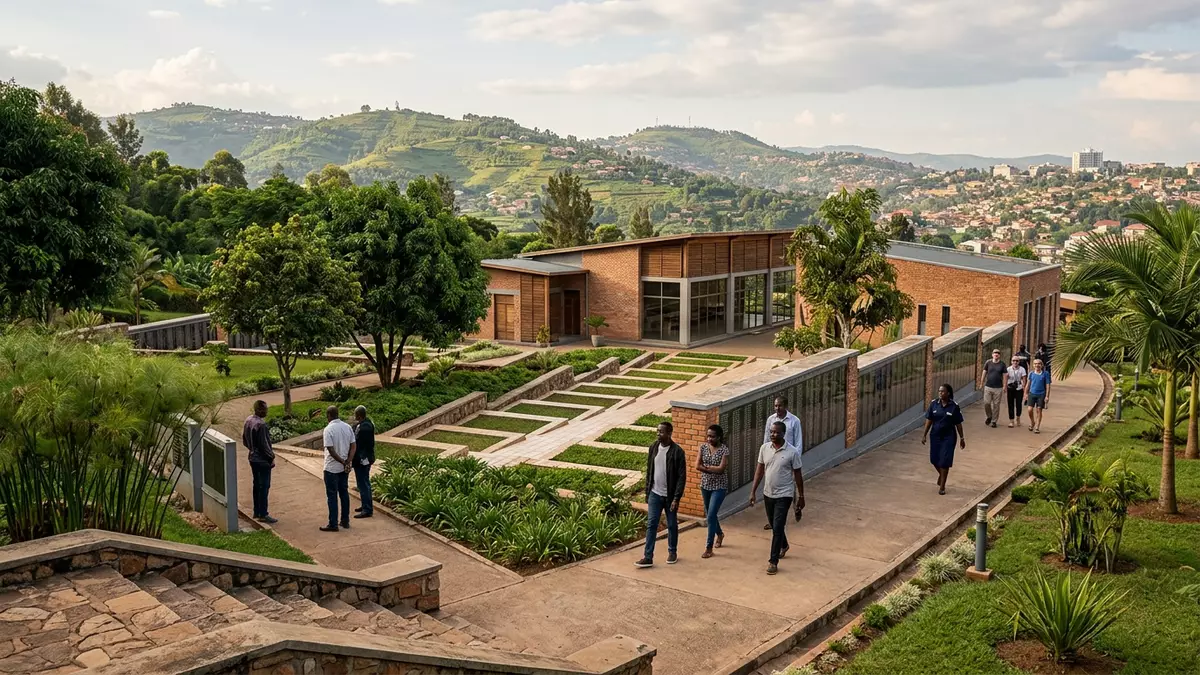
On a hillside in Gisozi above Kigali, Kigali Genocide Memorial combines mass graves, exhibitions and quiet gardens in a single place of remembrance and reflection. Opened in 2004, it is a focal point for mourning the victims of the Genocide against the Tutsi and for understanding how Rwanda’s history unfolded towards 1994 and beyond.
A hillside cemetery for 250,000 victims
Kigali Genocide Memorial occupies a slope in the Gisozi area of Kigali, chosen by city authorities after the Genocide against the Tutsi as a burial ground for residents killed in and around the capital. In the gardens below the memorial buildings, large concrete burial structures hold the remains of around 250,000 people, making the site one of the most significant cemeteries linked to the genocide. The hillside in Gisozi is laid out in terraces, with paved paths and plantings that frame these mass graves as formal, enduring structures rather than temporary resting-places.
The memorial grew from collaboration between Rwandan authorities and the Aegis Trust, a peacebuilding organisation originally established at the National Holocaust Centre in the United Kingdom. Kigali Genocide Memorial serves both as a cemetery and as a national centre for remembrance and education, with the Genocide Archive of Rwanda housed on site alongside public spaces. The memorial is described as the final resting place for 250,000 victims of the Genocide against the Tutsi, underlining its central role in national commemoration. The memorial’s story links the burial grounds directly to the wider effort to document and teach about the genocide.
Exhibitions, archive and education centre
Above the mass graves, Kigali Genocide Memorial includes a series of permanent exhibitions and an education centre. The main exhibition, housed within the memorial buildings, traces Rwandan history before the 1994 Genocide against the Tutsi, the hundred days of violence, and Rwanda’s path through justice, reconciliation and renewal. A second exhibition focuses on genocidal violence in other parts of the world, while a children’s memorial gives particular attention to young victims and the impact of the genocide on families. Together, these displays form a museum that visitors can follow in sequence, moving from historical background to personal testimonies and contemporary responses. Three permanent exhibitions anchor the educational role of the site.
The Genocide Archive of Rwanda is located within Kigali Genocide Memorial, providing a dedicated space where documents, photographs, audio recordings and other materials relating to the genocide are preserved. The archive’s collections cover pre-genocide history, the events of 1994 and post-genocide reconstruction, and they are accessible both through a physical reading room and through a separate digital platform. This makes the memorial a working research centre as well as a public museum. In addition, Kigali Genocide Memorial hosts an education centre where programmes on peace and values are delivered, building on initiatives begun by Aegis Trust and later integrated into Rwanda’s national schools curriculum. The Genocide Archive of Rwanda strengthens the site’s role in documenting and teaching about the genocide.
Gardens, architecture and atmosphere
The physical layout of Kigali Genocide Memorial combines architecture and landscape. The memorial buildings stand on the upper part of the slope, with galleries opening onto courtyards and walkways. Below, garden spaces surround the burial structures, with lawns, shrubs and trees arranged along the hillside. Paths connect the different levels, and seating areas are placed so that visitors can pause near the graves or between exhibition visits. This arrangement makes the gardens an integral part of any visit, not a separate park, and the transition from interior galleries to outdoor terraces forms a continuous route through remembrance and learning. An amphitheatre designed by John McAslan + Partners is part of the site, providing a venue for commemorative events and educational gatherings linked to the memorial’s work. The overall masterplan combines buildings and gardens as one memorial park.
Within this landscape, Kigali Genocide Memorial uses materials such as concrete and stone for its burial structures and retaining walls, while the buildings themselves carry a contemporary civic character rather than monumental historic architecture. The contrast between constructed elements and planting is deliberate: hard surfaces frame the graves and exhibition halls, while vegetation softens the slopes and offers shade. The result is a site that functions both as a cemetery and as a public educational space, where visitors move between interior narrative displays and exterior spaces for reflection. The amphitheatre and other facilities make Kigali Genocide Memorial a working venue for talks, ceremonies and learning sessions, adding another layer to its role beyond static commemoration. The visit information underlines how these different parts form one coherent memorial.
Visiting Kigali Genocide Memorial: what travellers from Western Europe should know
- Kigali Genocide Memorial stands in Gisozi, a district on the north-west side of Kigali, reached by road from the city centre by car, taxi or local bus services.
- The memorial occupies a hillside site with terraced paths, outdoor steps and changes in level between the burial grounds, gardens and exhibition buildings.
- English, French and Kinyarwanda are widely used in Rwanda and the currency is the Rwandan franc.
- Entry requirements depend on your nationality; UK travellers can check the FCDO travel advice at gov.uk/foreign-travel-advice, Irish travellers the Department of Foreign Affairs at ireland.ie.
Searching for Kigali Genocide Memorial on social platforms
These links open searches for Kigali Genocide Memorial on each platform.
Frequently asked questions about Kigali Genocide Memorial
Where is Kigali Genocide Memorial located?
Kigali Genocide Memorial is situated in Gisozi, a sector of Gasabo district in Kigali, on a hillside reached by road from the city centre.
What can visitors expect during a visit?
Visitors move through permanent exhibitions on the Genocide against the Tutsi, a children’s memorial, gardens surrounding mass graves and facilities such as the Genocide Archive of Rwanda.
What makes Kigali Genocide Memorial distinctive among memorial sites?
The combination of burial grounds for around 250,000 victims, museum-style exhibitions, an education centre and a working genocide archive gives Kigali Genocide Memorial a dual role as both cemetery and learning hub.


