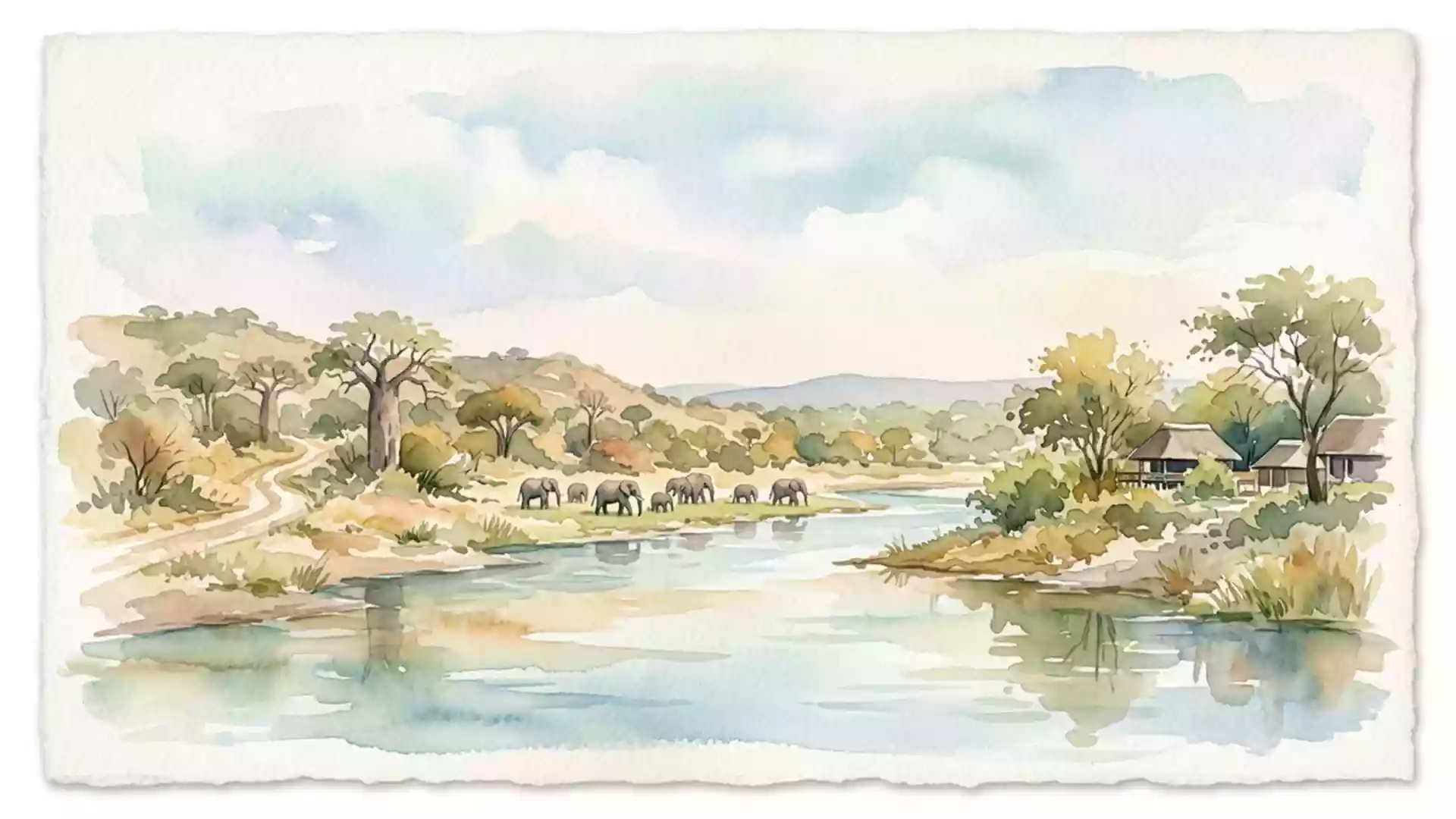
Kruger National Park and Skukuza, the organised wild heart of South Africa
Published on 08/22/2026 at 21:52 | Editorial responsibility: Rafael Müller, Editor-in-Chief AD HOC NEWS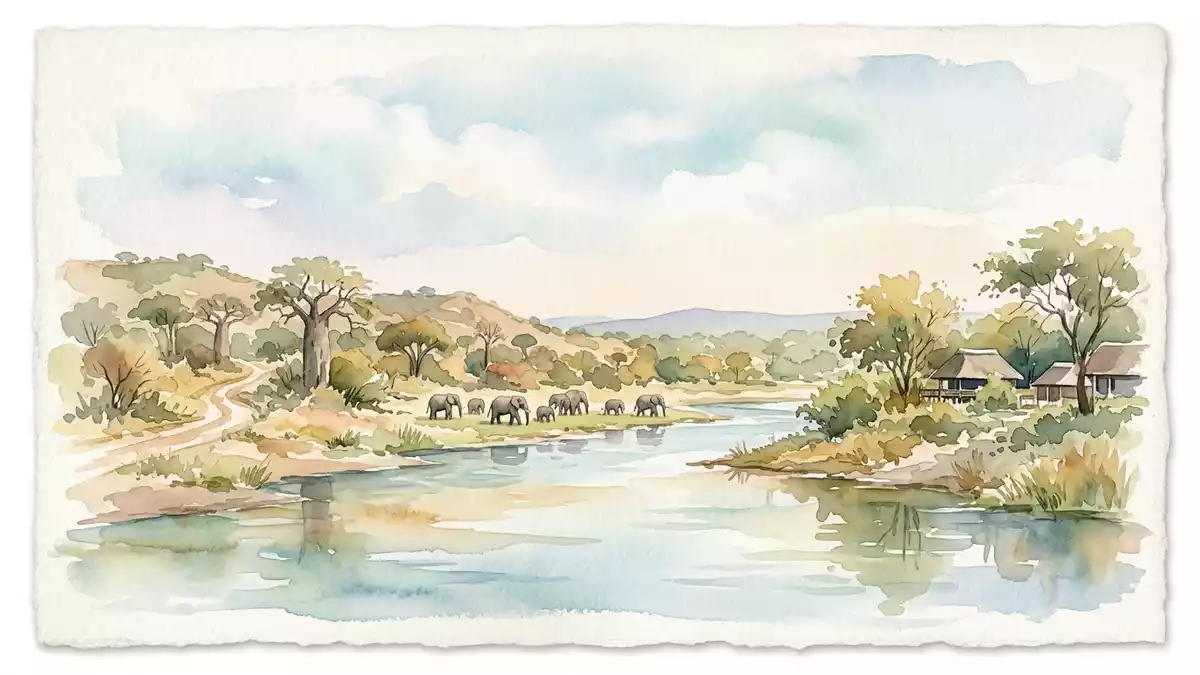
Kruger National Park in northeastern South Africa is a vast protected landscape where organised infrastructure meets sprawling savannah and riverine forest, with Skukuza serving as its busy administrative heart. The park, named for Paul Kruger and formally proclaimed as South Africa’s first national park in 1926, spreads across Limpopo and Mpumalanga provinces and reaches out from Skukuza into a mosaic of bushveld that has shaped wildlife conservation for a century.South Africa’s first national park in 1926
From Sabi Game Reserve to a continental-scale park
The roots of Kruger National Park lie in the late nineteenth century, when parts of the Lowveld were set aside as the Sabi Game Reserve to protect wildlife from uncontrolled hunting.Sabi Game Reserve was established in 1898 In 1926, the National Parks Act brought several protected blocks together under the Kruger name, honouring Paul Kruger, the former president of the South African Republic and a central figure in the country’s political history.named for Paul Kruger in 1926
Today the park extends for around 320 km (about 200 miles) from north to south and reaches up to 80 km (about 50 miles) from east to west, forming a long, relatively narrow strip of protected land along the Mozambique border.about 200 miles long and up to 50 miles wide Its area of roughly 19,500 km² (7,500 square miles) makes it the largest national park in South Africa, with terrain that is mostly gently undulating, broken by low hills and crossed by a dense web of paved and gravel roads that bring large areas within reach of visitors in vehicles.largest national park in South Africa
Skukuza: the “capital” on the Sabie River
Skukuza, on the southern bank of the Sabie River in Mpumalanga, is both the largest rest camp in Kruger National Park and its administrative headquarters.administrative headquarters at Skukuza The camp’s position at the confluence of the Sabie and N’waswitshaka Rivers has long given it strategic importance, and in the early twentieth century it was known as Sabie Bridge, a name that reflected a nearby river crossing used by the Selati railway.Sabie Bridge on the Selati railway line
In 1936 the camp took on the name Skukuza, derived from a Tsonga nickname given to James Stevenson-Hamilton, the park’s first warden, whose tenure from 1902 helped to shape the early conservation regime.Skukuza named from a Tsonga nickname Skukuza functions almost like a small town, with accommodation ranging from campsites and rondavels to cottages and guest houses, alongside facilities such as shops, restaurants, a library, a museum and a fuel station that support both visitors and the operations of South African National Parks.Skukuza camp facilities and lodging options
Wildlife, ecosystems and a transfrontier vision
Kruger National Park is known for its variety of ecosystems, ranging from open savannah dotted with knob-thorn and marula trees to riverine corridors lined with dense woodland along rivers such as the Sabie and the Crocodile. Within this landscape, predators including lion, leopard, cheetah and spotted hyena move among large herbivores such as elephant, buffalo, rhinoceros, zebra, wildebeest and impala, while smaller antelopes, giraffes and warthogs add further layers of life.range of large mammals
The park’s biodiversity spans hundreds of bird species, reptiles, amphibians and fish, with more than 500 bird species and around 150 mammal species recorded across its sweeping Lowveld habitats.wide range of species recorded Kruger also forms part of the Great Limpopo Transfrontier Park, a conservation initiative linking it with Limpopo National Park in Mozambique and Gonarezhou National Park in Zimbabwe to create a vast cross-border protected area that allows wildlife to range across an extended landscape beyond national boundaries.Great Limpopo Transfrontier Park
Visiting Kruger National Park: what travellers from Western Europe should know
- Kruger National Park lies in northeastern South Africa, spanning Limpopo and Mpumalanga provinces, with Skukuza on the southern bank of the Sabie River functioning as the main administrative camp.
- Roads in the park are a mix of tarred and gravel surfaces, and inside Skukuza rest camp paths link accommodation, river viewpoints and communal facilities across gently undulating ground.
- Skukuza is reached through the park’s southern gates, with Paul Kruger Gate as the closest, and road access connects it with nearby towns such as Hazyview outside the protected area.
- The official language is English alongside other South African languages, and the currency is the South African rand.
- Entry requirements depend on your nationality; UK travellers can check the FCDO travel advice at gov.uk/foreign-travel-advice, Irish travellers the Department of Foreign Affairs at ireland.ie.
Searching for Kruger National Park on social platforms
These links open searches for Kruger National Park on each platform.Frequently asked questions about Kruger National Park
Where is Kruger National Park and Skukuza located?
Kruger National Park lies in the northeast of South Africa, in Limpopo and Mpumalanga provinces, with its headquarters at Skukuza on the Sabie River.
What can visitors expect on a first visit to Skukuza and its surroundings?
Visitors encounter a large, organised rest camp with extensive facilities set beside a major river, surrounded by accessible roads into bushveld where wildlife, including the Big Five, ranges through varied habitats.
What makes Kruger National Park distinctive among African game reserves?
Kruger’s combination of size, long protected history, administrative centre at Skukuza and its role within the Great Limpopo Transfrontier Park gives it a structured yet far-reaching conservation character across the southern African Lowveld.