
Leptis Magna and the Roman city by the Mediterranean
Published on 09/23/2026 at 15:35 | Editorial responsibility: Rafael Müller, Editor-in-Chief AD HOC NEWS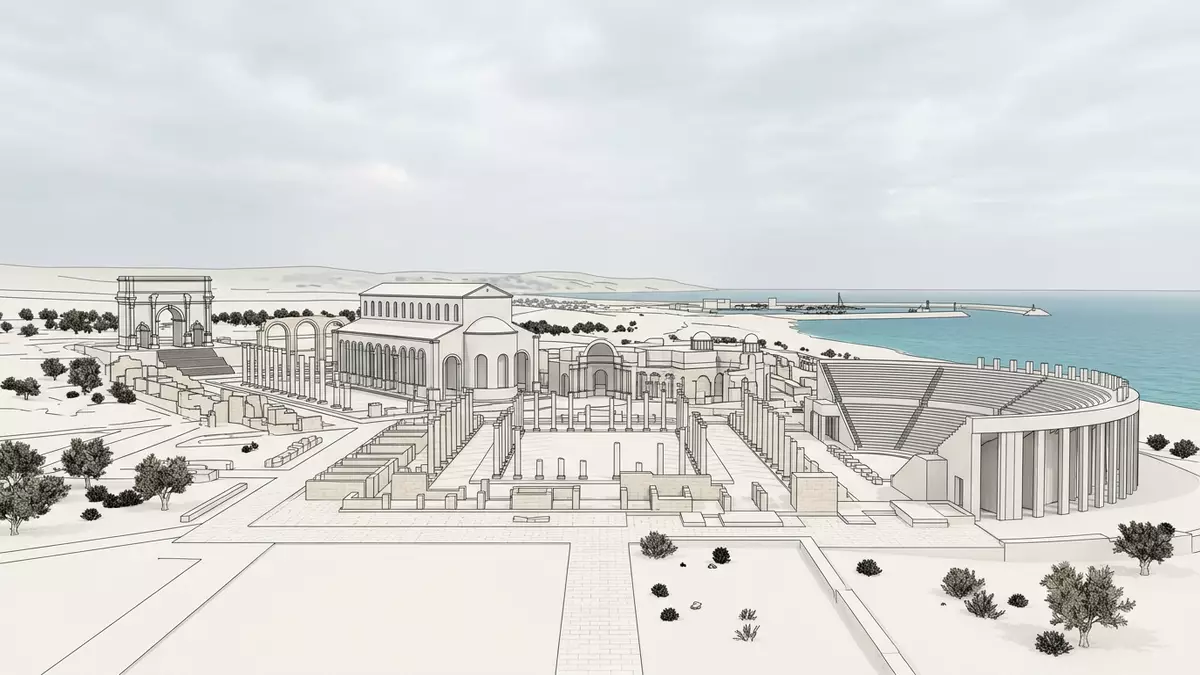
Leptis Magna stretches beside the Mediterranean near Al Khums in Libya as a broad field of Roman streets, forums, theatres, basilicas and harbour structures. Its visible scale comes from the way these buildings remain legible across the coastal plain, with the sea forming a constant geographical presence. Founded as a Phoenician settlement in the seventh century BCE, the city entered the Roman world and reached its imperial prominence under Septimius Severus.
Leptis Magna: a city laid out beside the sea
The ruins lie near the mouth of the Wadi Lebda, east of Tripoli and close to Al Khums. The ancient city occupied a coastal position connected with maritime trade, while its surviving monuments extend across an urban plan of streets, public squares and monumental buildings.
Leptis Magna received UNESCO World Heritage status in 1982. The designation covers an archaeological landscape of nearly 400 hectares, including the main urban area, harbour works and monuments beyond the central streets. The formal name is the Archaeological Site of Leptis Magna.
Its construction materials include local limestone, marble and imported stone. Columns, paving, carved capitals and wall fragments remain across the site, creating a record of Roman building practices in North Africa without reducing the city to a single monument.
From Phoenician settlement to Roman metropolis
Tyrian settlers founded Leptis Magna in the seventh century BCE. The settlement belonged to the wider Punic world before its incorporation into the Roman Empire in 46 CE, when the city became part of the province of Africa.
The city’s most prominent imperial chapter is linked to Septimius Severus, who was born at Leptis Magna and ruled as Roman emperor from 193 to 211 CE. His reign brought a large programme of public architecture, including a new forum, a basilica, harbour improvements and a monumental arch.
The Severan period added marble surfaces and elaborate carved decoration to the city’s public spaces. The Severan basilica and public buildings remain central to the reading of Leptis Magna, linking the emperor’s birthplace with the civic architecture of Roman Africa.
Theatre, basilica and harbour monuments
The Augustan Theatre occupies a prominent place among the city’s surviving buildings. Its semicircular seating area faces the stage structure, while inscriptions and architectural fragments record the civic culture of the Roman period.
The amphitheatre lies beyond the central urban monuments. It was constructed in the first century CE and retains the oval arena, tiers of seating and substantial retaining walls. The surviving masonry shows how entertainment buildings formed part of the wider city plan.
The Severan Basilica is a long civic hall with a central nave and colonnaded aisles. Its surviving columns and carved capitals give the building a strong vertical rhythm, while the wall bases preserve the scale of a monumental interior whose roof has disappeared.
A four-way arch associated with Septimius Severus marks a major junction in the Roman streets. Its carved surfaces include imperial imagery, and its position connects the ceremonial architecture of the Severan period with the movement of the city’s principal roads.
Near the coast, harbour works and quays indicate the maritime dimension of Leptis Magna. The relationship between the port, public buildings and streets remains visible in the archaeological remains, giving the site a wider setting than an isolated forum or theatre. The Roman theatre and forum ruins belong to this connected urban landscape.
Visiting Leptis Magna: what travellers from Western Europe should know
- Leptis Magna lies near Al Khums on Libya’s Mediterranean coast, east of Tripoli. The site is reached by road from Al Khums, with the ruins extending towards the shoreline.
- The archaeological area is broad and includes streets, open plazas, monumental buildings and harbour remains. Comfortable walking footwear suits uneven ground and exposed masonry.
- The site contains open-air ruins as well as partially enclosed architectural spaces. Sun, wind and coastal vegetation form part of the physical setting.
- The official language is Arabic and the currency is the Libyan dinar.
- Entry requirements depend on your nationality; UK travellers can check the FCDO travel advice at gov.uk/foreign-travel-advice, Irish travellers the Department of Foreign Affairs at ireland.ie.
Searching for Leptis Magna on social platforms
These links open searches for Leptis Magna on each platform.
Frequently asked questions about Leptis Magna
Where is Leptis Magna?
Leptis Magna is on Libya’s Mediterranean coast near Al Khums, east of Tripoli and close to the mouth of the Wadi Lebda.
What can visitors see at Leptis Magna?
The archaeological area includes Roman streets, the Augustan Theatre, an amphitheatre, forums, the Severan Basilica, monumental arches and harbour remains.
What makes Leptis Magna distinctive?
Its buildings preserve a connected Roman urban landscape beside the Mediterranean, while the city’s history joins Phoenician origins with the Severan dynasty and Roman Africa.


