
Leptis Magna’s grand Roman city by the Libyan sea
Published on 09/08/2026 at 07:17 | Editorial responsibility: Rafael Müller, Editor-in-Chief AD HOC NEWS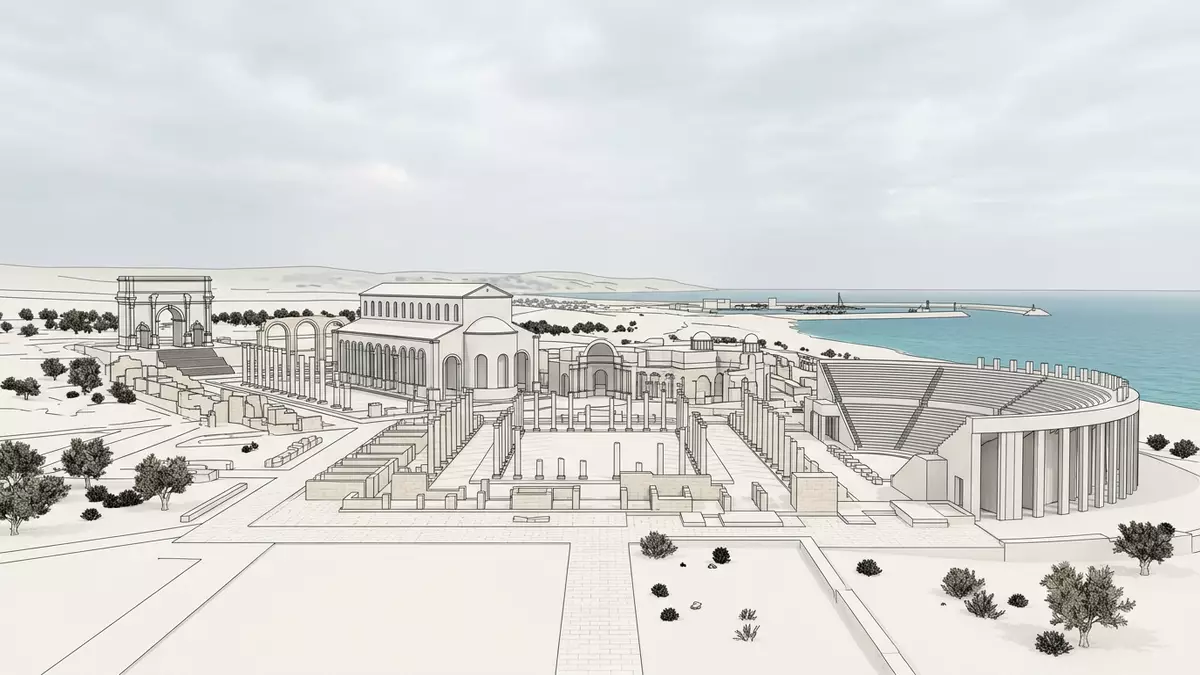
On the Mediterranean coast near Al Khums in Libya, Leptis Magna preserves an extensive Roman city laid out in stone beside the sea. Founded as a Phoenician trading post and later expanded under Roman rule, it became one of the principal cities of Tripolitania and retains a whole urban landscape in ruins rather than a single monument.
A Roman metropolis shaped by empire and commerce
Leptis Magna began as a coastal settlement established by traders from the central Mediterranean, positioned at the mouth of the Wadi Lebda where caravans from the hinterland could reach the sea. Over time it grew into a major city in the Carthaginian sphere and was incorporated into the Roman provincial system as part of Africa, benefiting from agricultural land inland and maritime routes along the North African shore.Phoenician city founded
Under Roman administration Leptis Magna developed monumental architecture, public spaces and a harbour that reflected its status. By the early imperial period it was recognised as a significant urban centre in Tripolitania, with a theatre, an amphitheatre and colonnaded streets that organised movement between its quarters.largest city of Tripolitania The city’s position on the coast south-east of present-day Tripoli allowed ships to approach a constructed harbour guarded by masonry works and serviced by warehouses.
Septimius Severus and the Severan building programme
One of the most striking aspects of Leptis Magna is its association with the Roman emperor Septimius Severus, who was born in the city in the second century and later ruled the empire from 193 to 211. During his reign the urban fabric of Leptis Magna was enlarged and embellished with new public monuments, reflecting imperial attention to his hometown.enlarged and embellished by Septimius Severus
The Severan period introduced a new forum complex, a basilica and additional harbour structures, extending the city’s grid closer to the sea and formalising axes between civic spaces. Masonry arches, colonnaded avenues and sculpted reliefs from this phase survive in situ, showing how the city’s architecture combined local stone with imported decorative elements.Roman architecture and harbour Walking among these remains, the contrast between earlier Carthaginian foundations and the more regular Roman street layout appears in shifts of orientation and building scale.
UNESCO recognition and the preserved urban landscape
The archaeological site of Leptis Magna extends over a sizeable area east of Al Khums, covering streets, squares, religious buildings and entertainment complexes rather than isolated fragments. This breadth of preservation has led to formal recognition as a cultural property of outstanding value, and the site was inscribed on the UNESCO World Heritage List in 1982 under criteria that highlight its architecture and testimony to Roman urban life.World Heritage inscription in 1982
The remains include a theatre facing the sea, an amphitheatre on the landward side and markets with colonnades framing paved courts, giving visitors a sense of how different functions were distributed across the city.theatre, amphitheatre and marketplace Streets radiate from major junctions, some lined with columns that still stand in rows, while the outlines of houses and baths fill the spaces between them. With the Mediterranean visible beyond the ruins, the relationship between the city’s stone fabric and its coastal setting is clear on site.
Visiting Leptis Magna: what travellers from Western Europe should know
- Leptis Magna lies on the Mediterranean coast of Libya near Al Khums, south-east of Tripoli, and is reached overland from the surrounding region.
- The site covers an extensive area with stone-paved streets, uneven surfaces and substantial remains, so moving between the theatres, forums and harbour works involves walking over archaeological terrain.
- The Mediterranean shoreline lies beside the ruins, and low rises separate the urban area from the sea, giving varied viewpoints over the coastal landscape and the city’s major monuments.
- Arabic is the official language and the currency is the Libyan dinar.
- Entry requirements depend on your nationality; UK travellers can check the FCDO travel advice at gov.uk/foreign-travel-advice, Irish travellers the Department of Foreign Affairs at ireland.ie.
Searching for Leptis Magna on social platforms
These links open searches for Leptis Magna on each platform.
Frequently asked questions about Leptis Magna
Where is Leptis Magna located?
Leptis Magna stands on the Mediterranean coast in Libya near Al Khums, south-east of Tripoli, at the mouth of the Wadi Lebda.
What can visitors expect to see at Leptis Magna?
Visitors encounter an extensive Roman cityscape with theatres, an amphitheatre, market complexes, streets and harbour structures preserved in stone across a broad coastal site.
What makes Leptis Magna distinctive among Roman sites?
Leptis Magna combines association with Emperor Septimius Severus and a wide range of intact urban elements, offering one of the most complete views of Roman city planning beside the sea.


