
Louvre opens Centuries of Gold and Shadow on 7 October
Published on 09/27/2026 at 09:27 | Editorial responsibility: Rafael Müller, Editor-in-Chief AD HOC NEWS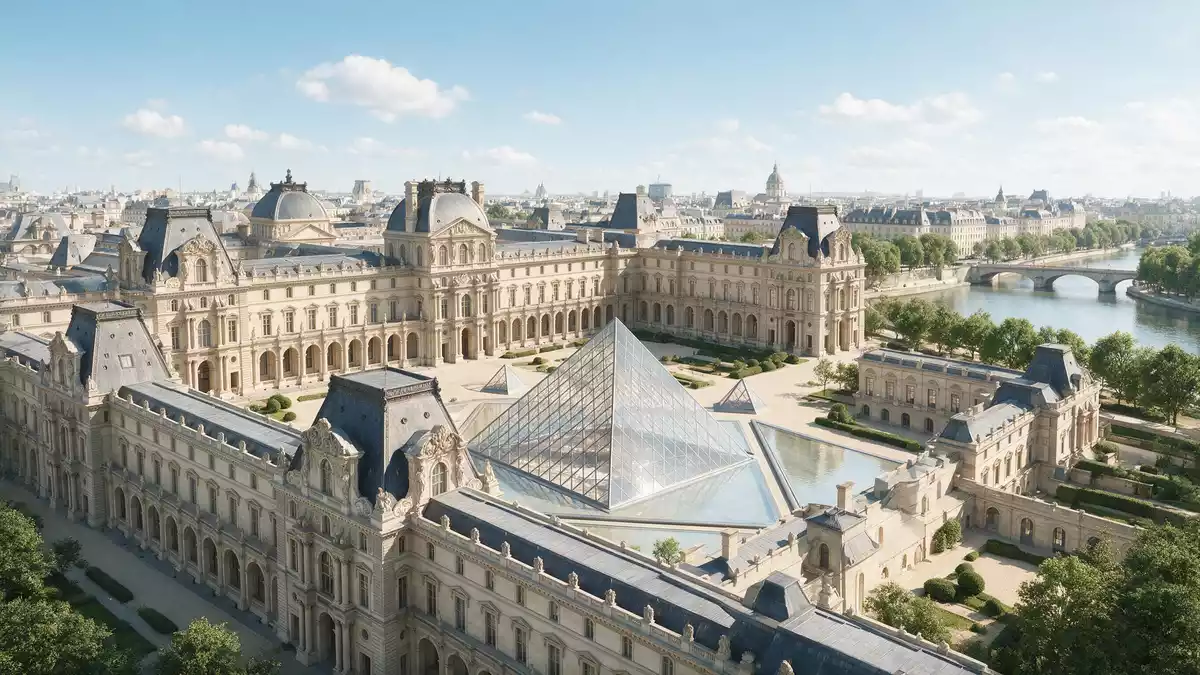
At the Louvre (Musée du Louvre) in Paris, the concert cycle Centuries of Gold and Shadow begins on 7 October 2026 and runs until 22 January 2027. The opening performance brings Cantoría Ensemble, directed by Jorge Losana, to the museum stage at 8pm on 7 October, linking Spanish Baroque music with the opening of the Zurbarán exhibition.
Centuries of Gold and Shadow begins at the Louvre on 7 October
The museum’s official programme lists Centuries of Gold and Shadow as a concert series running from 7 October 2026 to 22 January 2027. The first event is Cantoría Ensemble - directed by Jorge Losana, presented at 8pm on 7 October as the ensemble’s debut at the Louvre.
The opening programme is built around music connected with the Spanish Golden Age. The performance accompanies Zurbarán, 1598-1664, one of two exhibitions opening at the museum on 7 October, while the second is Sculpting Colour: Masterpieces from the Museo Nacional de Escultura, Valladolid. The official concert programme identifies the date, venue, ensemble and connection with the exhibition.
The Louvre palace gives the Spanish programme a historic setting
The museum occupies part of a large palace on the right bank of the Seine in Paris. The building stands on the site of a twelfth-century fortress, and its present form grew through successive royal building campaigns.
Francis I began a new royal residence on the site in 1546, with Pierre Lescot overseeing the first section of the present palace. The revolutionary government opened a public museum there in 1793. The glass pyramid and underground visitor complex were added during the major remodelling of the 1980s and 1990s, with the underground facilities opening in 1989. These layers place the 7 October concert inside a palace that has served royal, civic and museum functions across several centuries. The historical outline is documented by Britannica’s Louvre history.
Spanish exhibitions connect the concerts with autumn programming
The concert cycle is part of a wider Spanish focus at the museum. Zurbarán, 1598-1664, and Sculpting Colour both run from 7 October 2026 to 25 January 2027, giving the opening concert a direct programme link to exhibitions in the same autumn schedule.
The connection is more specific than a general seasonal theme. The 7 October performance is described as a presentation of Spanish music at the end of the Golden Age and is scheduled in honour of Zurbarán’s opening. Later concerts in the cycle continue through 22 January 2027, but the official listing confirms the opening date and performers rather than a full programme for every concert.
Visiting Louvre: what travellers from Western Europe should know
- Centuries of Gold and Shadow runs at the Louvre from 7 October 2026 to 22 January 2027. Cantoría Ensemble opens the series on 7 October 2026 at 8pm.
- The 7 October event is listed as a concert at the Louvre and is linked to the opening of Zurbarán. The programme listing does not announce a special entrance or closure for the performance.
- The venue is in Paris, France, on the right bank of the Seine, within the former palace complex that includes the Cour Napoléon and its glass pyramid entrance.
- The site combines historic palace architecture with underground public areas, courtyards and galleries, so the visit involves a large, multi-level museum complex rather than a single concert hall.
Searching for Louvre on social platforms
These links open searches for Louvre on each platform.
Frequently asked questions about Louvre
When does Centuries of Gold and Shadow take place at the Louvre?
The concert cycle runs from 7 October 2026 to 22 January 2027. Cantoría Ensemble opens it on 7 October 2026 at 8pm.
What is the Louvre?
The Louvre is a museum housed partly in a former royal palace in Paris. The public museum opened in 1793.
Where is the Louvre and how do you get there?
The Louvre is in Paris, France, on the right bank of the Seine. Its historic complex includes the Cour Napoléon and the glass pyramid entrance.


