Machu Picchu: an Inca city in the clouds above Aguas Calientes
Published on 08/12/2026 at 14:22 | Editorial responsibility: Rafael Müller, Editor-in-Chief AD HOC NEWS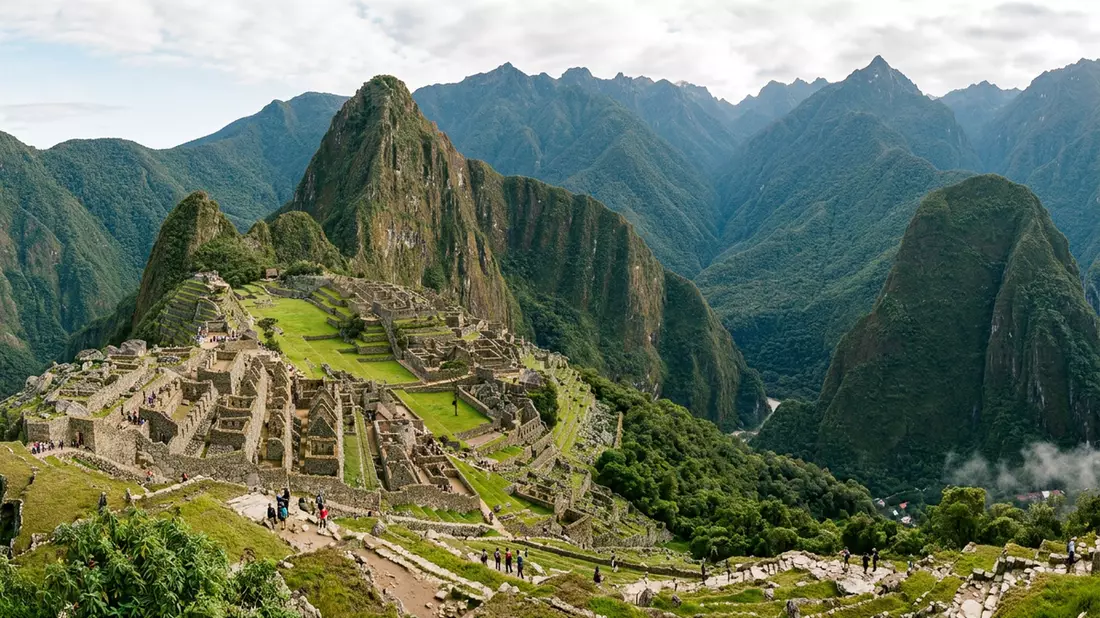
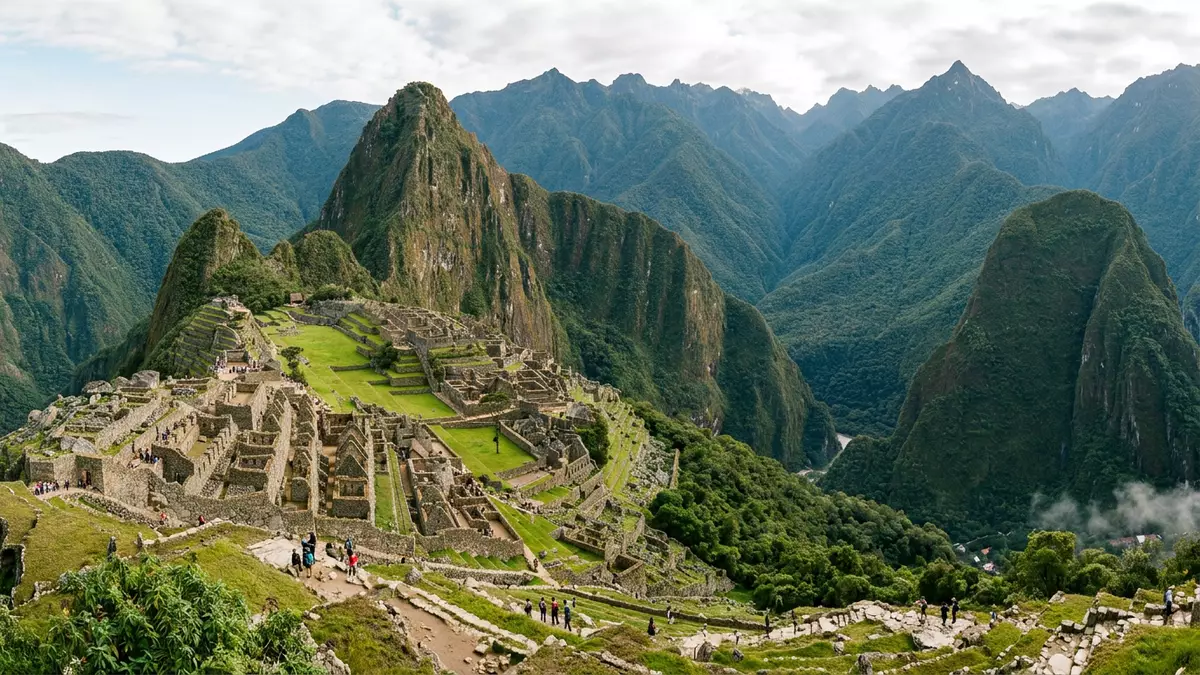
Machu Picchu is an Inca citadel high above the Urubamba valley near Aguas Calientes in southern Peru, a stone city suspended between steep Andean ridges and deep forested gorges. Built in the fifteenth century and abandoned in the sixteenth century after the Spanish conquest, it occupies a narrow saddle of rock at about 2,430 m (7,970 ft) above sea level and pairs precision-cut granite walls with sweeping agricultural terraces on impossibly steep slopes.Historic Sanctuary of Machu Picchu
An Andean ridge between peaks and river
The historic sanctuary of Machu Picchu occupies mountain slopes and summits at the meeting point between the Peruvian Andes and the edge of the Amazon Basin, with the citadel itself perched above a bend in the Urubamba River.32,592 ha of mountain terrain The ruins sit on a narrow ridge between the summit known as Machu Picchu, the “Old Peak”, and the sharper summit of Huayna Picchu, with steep cliffs dropping from the stone platforms to the valley below.Machu Picchu above the Urubamba valley
The broader protected area around the citadel is recognised as the Historic Sanctuary of Machu Picchu, a mixed World Heritage property that combines archaeological remains with spectacular mountain scenery, dense vegetation and numerous watercourses.mixed World Heritage property Within this landscape the stone city is laid out on a series of artificial platforms cut into the ridge, with long terraces stepping down towards the river and stone stairways linking clusters of houses, ritual spaces and viewing points.
An Inca royal estate of stone and terraces
Machu Picchu is a fifteenth-century Inca settlement built in finely dressed white granite, with walls whose blocks are fitted so closely that joints are barely visible.Inca settlement founded by Pachacuti Archaeological and historical research places its construction around 1450 during the reign of Pachacuti Inca Yupanqui, when the Inca empire was expanding across the Andean highlands and into the Urubamba valley.constructed during Inca Pachacuti’s reign The occupation of the site is dated mainly between about 1420 and 1530, with the entire complex falling into abandonment after the sixteenth-century conquest.radiocarbon dating of occupation
The city is divided into sectors that reflect different uses: an area of agricultural terraces with channels and steps, residential clusters of roofless houses, and religious precincts that include finely proportioned temples and carved ritual stones.agricultural terraces and dwellings At its height the settlement had capacity for hundreds of residents, with stairways, plazas and canals creating a dense built environment on the narrow ridge.capacity for around 1,000 residents The stonework uses a variety of techniques, from rougher walls in the outer sectors to extraordinarily precise masonry in sacred zones.
Discovery, protection and status
After the collapse of the Inca empire, Machu Picchu lay abandoned and largely overgrown until the early twentieth century, when Quechua-speaking residents guided explorers towards the ridge and the citadel began to be documented in wider scholarship.guided to the site in 1911 On 24 July 1911 Hiram Bingham reached the overgrown terraces and stone walls with a Yale University expedition, bringing the site to international attention and initiating decades of archaeological study.Hiram Bingham’s 1911 visit
Peru designated the area a National Historic Sanctuary in 1981, recognising both the citadel and its surrounding terrain as a single cultural landscape.National Historic Sanctuary designation In 1983 UNESCO inscribed the Historic Sanctuary of Machu Picchu on the World Heritage List as a mixed property for its outstanding cultural and natural values, describing it as a masterpiece of urban planning, architecture and engineering within a dramatic mountain setting.UNESCO World Heritage inscription in 1983 The sanctuary covers tens of thousands of hectares and includes peaks, valleys, forests and rivers around the citadel, all managed under conservation frameworks.
Visiting Machu Picchu: what travellers from Western Europe should know
- Machu Picchu lies in the Machupicchu District of Urubamba Province in southern Peru, above the Urubamba River and close to the small town of Aguas Calientes.
Rail access runs through the Sacred Valley towards Aguas Calientes, and roads and railways link the region with the city of Cusco. - The ruins stand at about 2,430 m (7,970 ft), on a narrow ridge with numerous stone stairways and uneven terraces; visiting the site involves sustained climbing on stone steps at altitude.
- Within sight of the citadel are the peaks of Huayna Picchu and Machu Picchu Mountain, which rise higher above the valley and frame many views of the ridge and terraces.
- The official language is Spanish and the currency is the Peruvian sol.
- Entry requirements depend on your nationality; UK travellers can check the FCDO travel advice at gov.uk/foreign-travel-advice, Irish travellers the Department of Foreign Affairs at ireland.ie.
Searching for Machu Picchu on social platforms
These links open searches for Machu Picchu on each platform.Frequently asked questions about Machu Picchu
Where is Machu Picchu located?
Machu Picchu stands on a mountain ridge above the Urubamba River in the Machupicchu District of Urubamba Province in southern Peru, near the town of Aguas Calientes.location above the Sacred Valley
What should visitors expect on a visit?
Visitors encounter extensive stone terraces, roofless Inca houses, temples and ritual platforms linked by many stairways on a narrow ridge at about 2,430 m (7,970 ft) above sea level.ruins at 2,430 m above sea level
What makes Machu Picchu distinctive?
Machu Picchu combines finely worked Inca stone architecture, agricultural terraces and ritual spaces with a dramatic Andean setting above a deep river valley, and is protected as a UNESCO Historic Sanctuary and World Heritage Site.UNESCO Historic Sanctuary and World Heritage Site