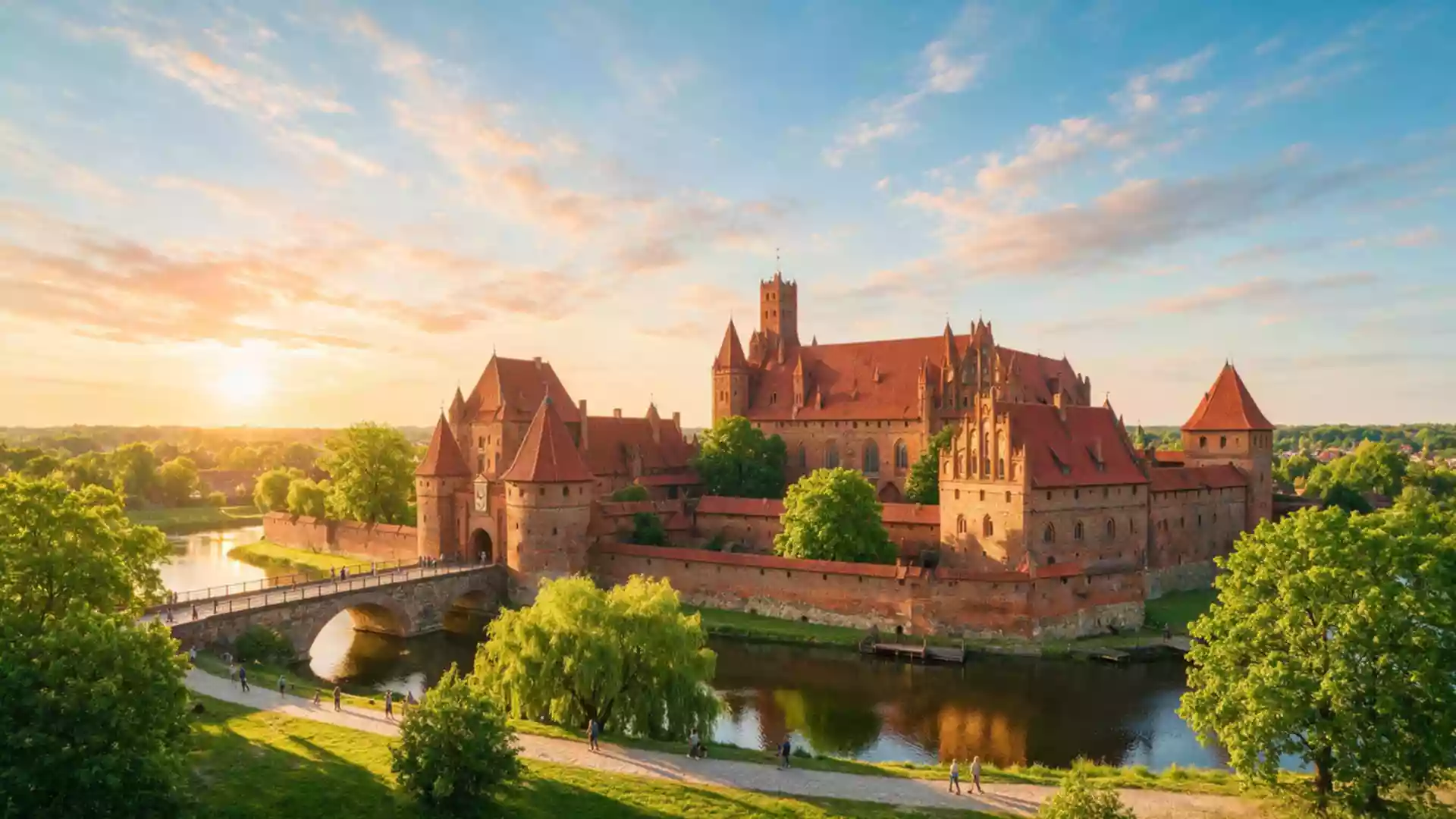
Malbork Castle closes stained-glass exhibition on 2 October
Published on 10/24/2026 at 19:50 | Editorial responsibility: Rafael Müller, Editor-in-Chief AD HOC NEWSAccess changes in October
- The Castle Museum announced the stained-glass exhibition closure from 2 October 2026.
- The change concerns the High Castle and alters access to one exhibition inside the complex.
- UNESCO describes Malbork Castle as a 13th-century fortified monastery enlarged after 1309.
- The World Heritage site stands on the east bank of the River Nogat in northern Poland.
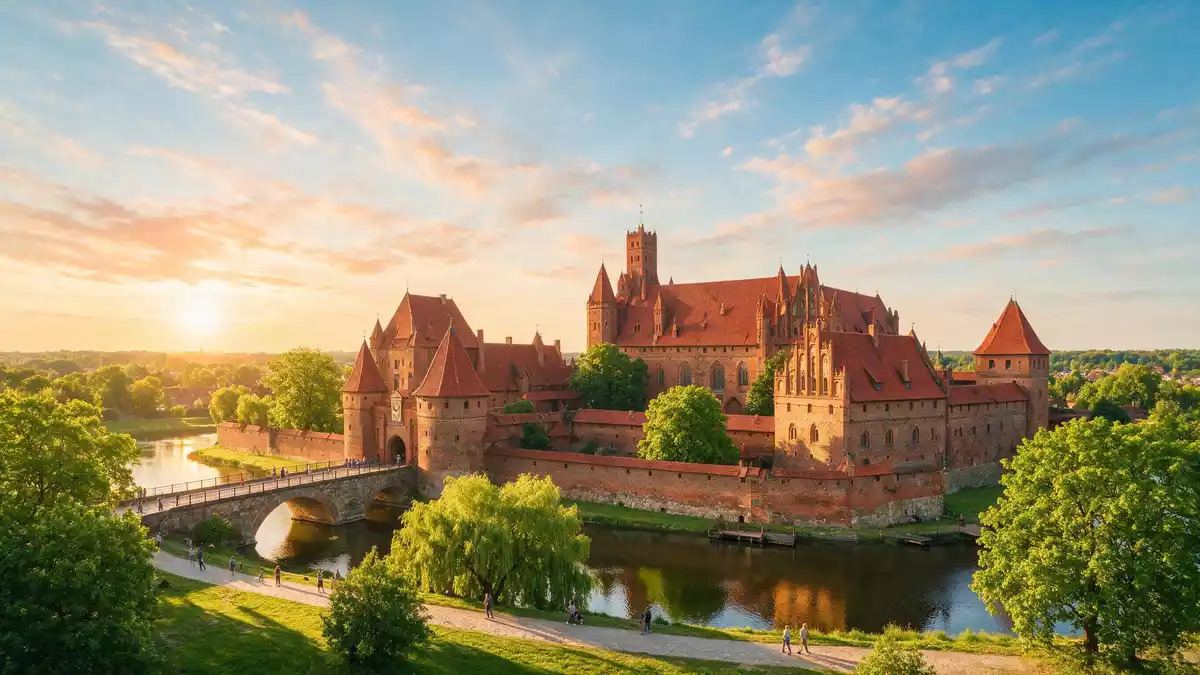
Malbork Castle (Zamek w Malborku) closed its stained-glass exhibition in the High Castle from 2 October 2026, giving visitors to Malbork, Poland, a concrete access change to note. The museum’s current visitor information also records other conservation-related restrictions across the complex.
Malbork Castle stained-glass exhibition closes on 2 October
The Castle Museum states that the stained-glass exhibition located in the High Castle is unavailable to visitors from 2 October 2026. The notice is part of the operator’s page on changes to visiting arrangements and remains relevant for visits after that date.
The closure affects a named exhibition rather than the entire castle complex. Visitors can still encounter the High Castle as part of the wider monument, but the exhibition itself is not included while the restriction remains in force. The museum’s notice does not provide a reopening date, so no end date can be attached to the change. The operator’s visitor access notice gives the decisive date and location together.
Conservation history gives the closure wider context
The exhibition is connected with the High Castle, the quadrilateral stronghold at the centre of the castle-convent. UNESCO identifies the complex as a thirteenth-century fortified monastery of the Teutonic Order that was substantially enlarged after 1309, when the Grand Master’s seat moved there from Venice.
The site is also a record of restoration itself. UNESCO says the castle was meticulously restored in the nineteenth and early twentieth centuries, suffered severe damage during the Second World War, and was restored again using earlier conservation documentation. The present access change therefore concerns a collection displayed within a monument whose appearance has been shaped by successive conservation campaigns. The UNESCO World Heritage description records the complex’s historical layout and conservation significance.
Other visitor restrictions remain in place at the High Castle
The museum’s notice also says that the Monastic Route is unavailable while conservation work continues around the west cloister and the dignitaries’ chambers in the High Castle. The work began in mid-June 2026 and is expected to continue until the beginning of December 2026.
The notice links those works with possible temporary restrictions in other spaces. It also records that the permanent amber exhibition has been unavailable since 7 April 2026 for modernisation, with the museum presenting its amber holdings in a temporary exhibition instead. These are separate changes from the stained-glass closure and should not be treated as one single exhibition shutdown.
Visiting Malbork Castle: what travellers from Western Europe should know
- The stained-glass exhibition in the High Castle is closed from 2 October 2026. The museum’s notice does not state a reopening date.
- The Monastic Route is unavailable during conservation work around the west cloister and dignitaries’ chambers, with work expected to continue until early December 2026.
- Malbork Castle stands in northern Poland on the east bank of the River Nogat. The complex comprises the High Castle, Middle Castle and Outer Bailey.
- The site includes courtyards, historic interiors and defensive spaces within a large brick castle complex. Routes can therefore involve uneven historic surfaces and enclosed passages.
Searching for Malbork Castle on social platforms
These links open searches for Malbork Castle on each platform.
Frequently asked questions about Malbork Castle
What has changed at Malbork Castle?
The stained-glass exhibition in the High Castle has been unavailable since 2 October 2026. The museum also reports restrictions linked to conservation work and the unavailable Monastic Route.
Where is Malbork Castle and how do you get there?
Malbork Castle is in Malbork in northern Poland, on the east bank of the River Nogat. The complex is organised into the High Castle, Middle Castle and Outer Bailey.
What is Malbork Castle?
It is a thirteenth-century fortified monastery of the Teutonic Order, substantially enlarged after 1309 and recognised by UNESCO as a World Heritage site.