

Mayon Volcano records Strombolian activity on 11 October
Published on 10/18/2026 at 04:33 | Editorial responsibility: Rafael Müller, Editor-in-Chief AD HOC NEWS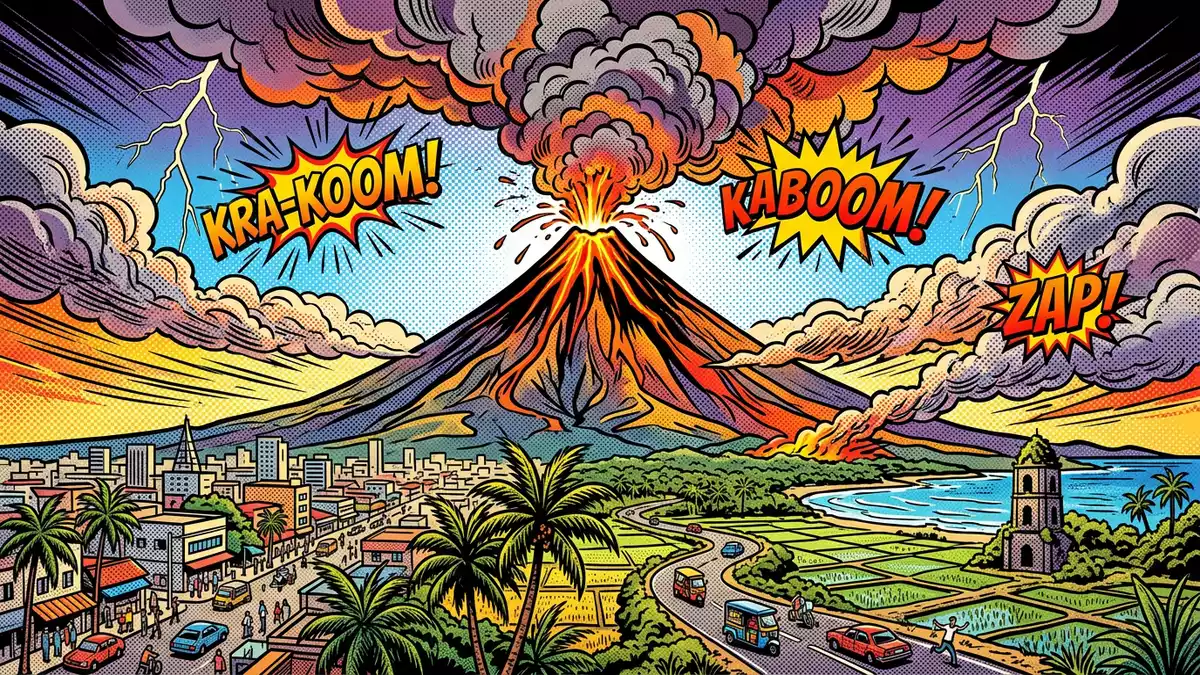
A minor Strombolian event at Mayon Volcano (Bulkang Mayon) in Albay was recorded at 3.18am on 11 October 2026, bringing fresh volcanic activity to the area near Legazpi. The event produced a plume that rose 500 metres above the summit and drifted west-north-west, according to state volcanologists.
The activity was low level, but it has a direct consequence for visits: the volcano remains under Alert Level 2 and entry into the permanent danger zone is prohibited.
Mayon Volcano records minor activity on 11 October
The Philippine Institute of Volcanology and Seismology, known as PHIVOLCS, reported the event at the crater summit. Strombolian activity consists of intermittent volcanic explosions that can eject incandescent fragments of lava or bursts of expanding gases.
The 11 October activity report states that PHIVOLCS cameras captured the plume. The Philippine Daily Tribune separately reported another ash emission at 5.15am, when a plume rose 600 metres above the summit and drifted west.
Alert Level 2 indicates moderate volcanic unrest. It allows authorities to maintain restrictions around the summit while monitoring earthquakes, gas emissions, steam and ash activity.
Mayon Volcano activity puts its summit zone off limits
The volcano rises above Albay Gulf north-west of Legazpi City. It is a symmetrical stratovolcano with a small summit crater, and recorded eruptions extend back to 1616, according to the weekly volcanic activity report.
The 11 October event therefore matters to travellers less as a scheduled attraction than as a current access condition. The six-kilometre Permanent Danger Zone separates the restricted summit area from the wider landscape around Legazpi, where the volcano is viewed from outside the prohibited zone.
The same report recorded six to 14 volcanic earthquakes per day during 7 to 14 October. Sulfur dioxide emissions averaged between 905 and 1,474 tonnes per day during that period, while emissions rose between 100 and 900 metres above the crater.
What the 11 October activity means for a Mayon visit
For visitors from Western Europe, the main practical point is that the news concerns the summit and its restricted approaches. The volcanic activity does not create permission to enter the danger zone, and aviation authorities were advised to keep aircraft away from the summit.
Visiting Mayon Volcano: what travellers from Western Europe should know
- The relevant event occurred at 3.18am on 11 October 2026 at the crater summit, when a minor Strombolian plume rose 500 metres.
- Access to the six-kilometre Permanent Danger Zone is prohibited while Alert Level 2 remains in force.
- The volcano is in Albay, north-west of Legazpi City, in the Bicol region of the Philippines.
- The summit is an active volcanic environment with a crater and steep upper slopes; visitors must remain outside the restricted zone.
- Entry requirements depend on your nationality; UK travellers can check the FCDO travel advice at gov.uk/foreign-travel-advice, Irish travellers the Department of Foreign Affairs at ireland.ie.
Searching for Mayon Volcano on social platforms
These links open searches for Mayon Volcano on each platform.
Frequently asked questions about Mayon Volcano
When did the Strombolian activity occur at Mayon Volcano?
The activity was recorded at 3.18am on 11 October 2026 and produced a plume 500 metres above the summit.
What is the current access rule at Mayon Volcano?
Entry into the six-kilometre Permanent Danger Zone is prohibited while Alert Level 2 remains in force.
Where is Mayon Volcano and how do you get there?
It is in Albay, north-west of Legazpi City in the Philippines. The wider area is approached through Legazpi, but the summit danger zone remains closed.


