
Medina of Essaouira: a walled Atlantic city in Morocco
Published on 09/22/2026 at 16:02 | Editorial responsibility: Rafael Müller, Editor-in-Chief AD HOC NEWS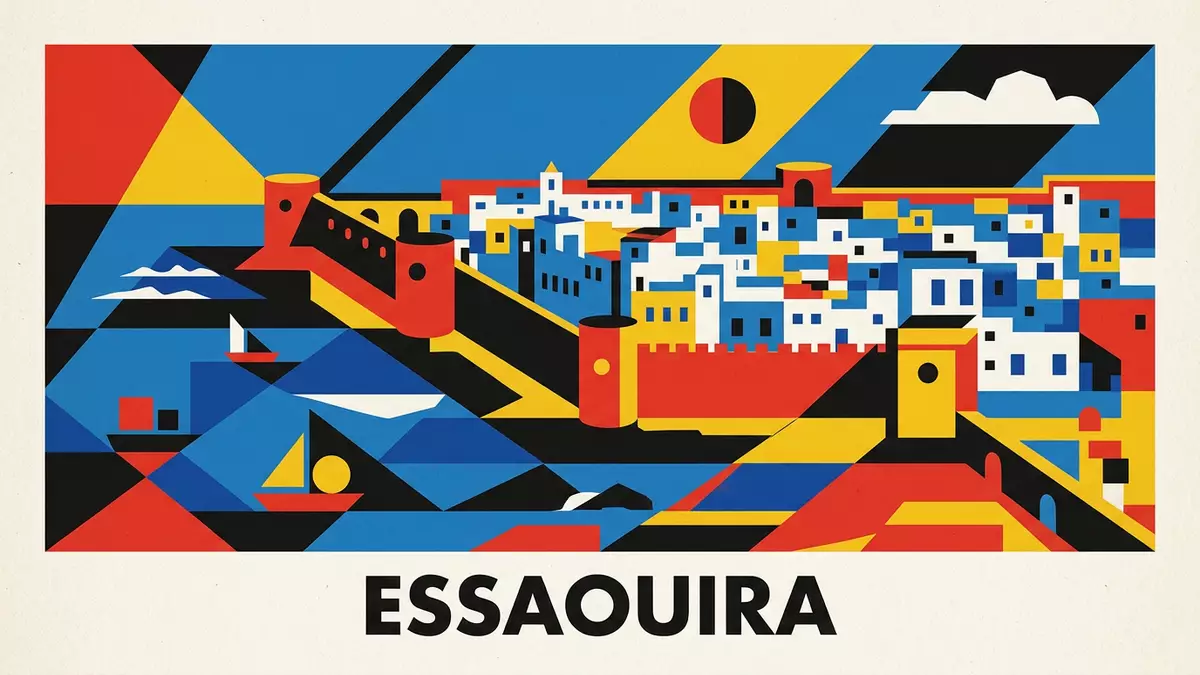
Medina of Essaouira is the historic walled centre of Essaouira on Morocco’s Atlantic coast. Its compact streets, sea-facing ramparts and whitewashed façades form a townscape shaped by trade, fortification and cross-cultural architecture.
Medina of Essaouira between ocean and ramparts
The medina occupies a coastal position beside the harbour and the Atlantic. Its walls define a clear boundary between the dense urban fabric and the open sea, while the Skala ramparts carry rows of old bronze cannons above the shoreline.
Essaouira’s historic name was Mogador, a name that remains attached to the harbour and the surrounding region. The modern city developed in the eighteenth century under Sultan Sidi Mohammed ben Abdallah, who established Essaouira as an important port and administrative centre.
An eighteenth-century plan with European influence
The medina was laid out in the eighteenth century and is associated with the French architect Théodore Cornut. Its plan combines Moroccan urban traditions with streets and fortifications influenced by European military design.
The walled town contains narrow lanes, small squares, mosques, synagogues, riads and houses arranged around interior courtyards. White walls and blue-painted doors appear throughout the old city, alongside carved wood, plasterwork and stone details.
The architecture reflects Essaouira’s position between several cultural worlds. Arabic, Amazigh, Jewish, African and European influences appear in the history and built form of the town, without reducing the medina to a single architectural style.
From port city to protected historic landscape
Essaouira’s harbour lies beside the medina and remains a defining part of the city’s identity. Fishing boats, nets, wooden structures and stone quays form a working maritime setting next to the historic walls.
The Mellah, the former Jewish quarter, adds another layer to the old city. Synagogues, houses and urban passages record the presence of a Jewish community that contributed to Essaouira’s commercial and cultural life.
UNESCO inscribed the Medina of Essaouira on the World Heritage List in 2001. The designation covers the historic urban fabric, its walls and its relationship with the harbour and coastal setting.
Visiting Medina of Essaouira: what travellers from Western Europe should know
- Essaouira lies on Morocco’s Atlantic coast, west of Marrakesh and south-west of Safi. The medina is reached through the city’s historic gates, with the harbour and Skala ramparts beside it.
- The old city is explored on foot through narrow lanes, stone passages and uneven paving. The ramparts include steps and elevated walkways above the shoreline.
- The official language is Arabic and the currency is the Moroccan dirham.
- Entry requirements depend on your nationality; UK travellers can check the FCDO travel advice at gov.uk/foreign-travel-advice, Irish travellers the Department of Foreign Affairs at ireland.ie.
Searching for Medina of Essaouira on social platforms
These links open searches for Medina of Essaouira on each platform.Frequently asked questions about Medina of Essaouira
Where is Medina of Essaouira?
It is the historic walled centre of Essaouira on Morocco’s Atlantic coast. The harbour and shoreline ramparts lie beside the old city.
What can visitors expect inside the medina?
The medina contains narrow lanes, whitewashed houses, courtyards, markets, religious buildings and historic ramparts. Walking routes connect the gates, harbour and Skala.
What makes the medina distinctive?
Its eighteenth-century urban plan joins Moroccan traditions with European-influenced fortifications. The combination of white façades, blue details, sea walls and harbour architecture defines Essaouira’s historic centre.


