Medina of Tunis and its layered streets and souks
Published on 08/07/2026 at 15:04 | Editorial responsibility: Rafael Müller, Editor-in-Chief AD HOC NEWS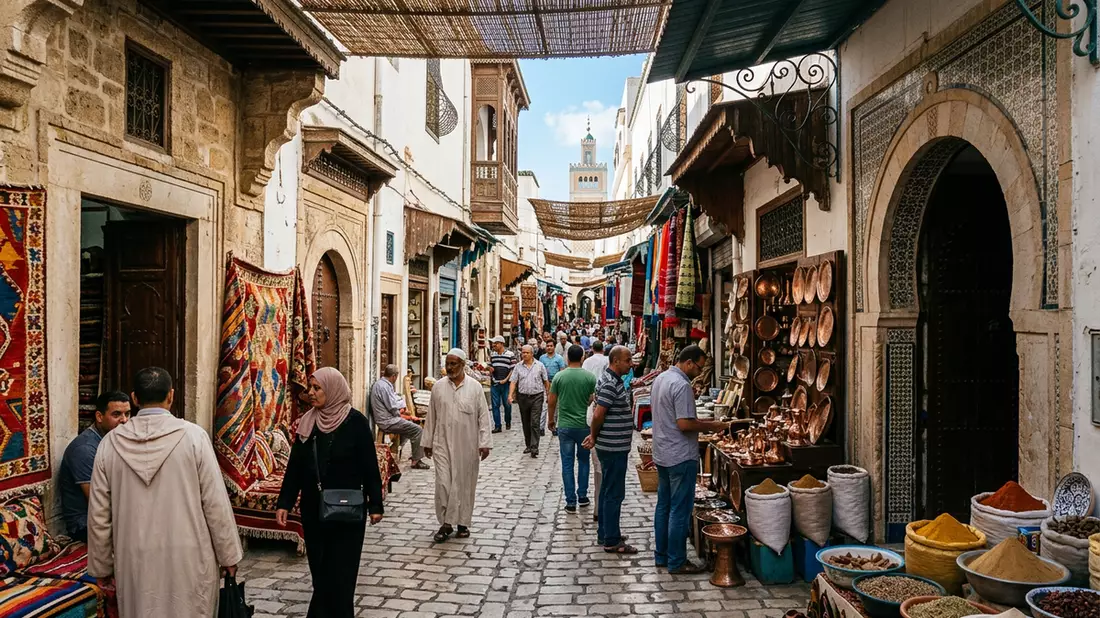
Medina of Tunis is the historic core of Tunis, shaped by narrow streets, courtyard houses, mosques, and market lanes that still define its street pattern. Founded in the 7th century and developed under the Aghlabids, Hafsids, Ottomans, and later rulers, it presents a dense urban fabric rather than a single monument.
The old city as an inhabited fabric
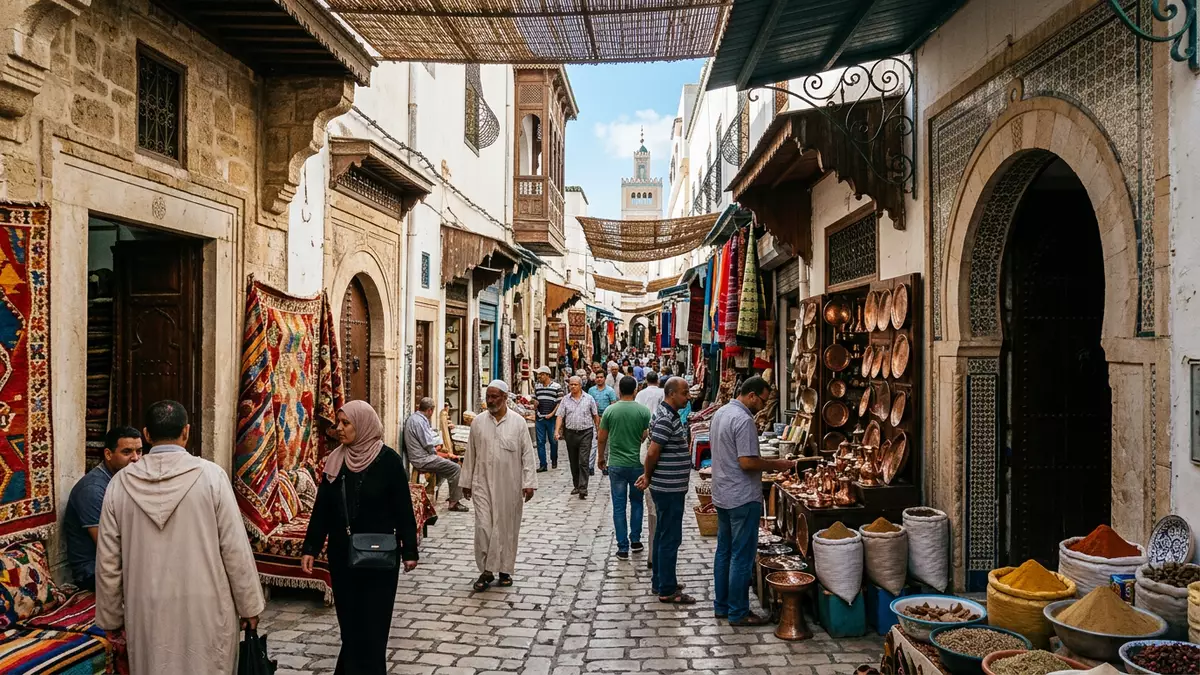
The medina is not a museum quarter arranged around one landmark. It is a living concentration of homes, workshops, prayer spaces, and souks, with white walls, timber doors, and passages that turn repeatedly between shade and light.
Its most striking quality is the continuity of scale. Major streets are rare, while smaller lanes lead to mosques, foundouks, and houses organised around inner courts. The Great Mosque of Zitouna anchors the district and has long stood at its centre.
Mosques, madrassas, and courtly houses
Medina of Tunis preserves a layered religious and domestic landscape. The Zitouna Mosque belongs to the early Islamic history of the city, while later dynasties added madrasas, zawiyas, and other institutions that broadened the medina’s role beyond trade.
Several historic houses and palaces survive as places of public culture, including Dar Hussein and Dar Lasram. Their courtyards, tiled rooms, carved woodwork, and stucco decoration show the refined urban traditions associated with Tunis under the Hafsids and the Ottoman period.
Souks, crafts, and everyday movement
The souks give the medina its strongest sense of movement. Stalls and small shops line lanes devoted to perfume, leather, metalwork, textiles, and daily goods, and the district keeps a clear division between specialised trading streets and quieter residential pockets.
That mixture of commerce and residence gives Medina of Tunis its particular rhythm. A visitor passes from a busy market lane to a mosque court, then into a more enclosed street with a house frontage and little else visible except walls, doors, and occasional signs.
Visiting Medina of Tunis: what travellers from Western Europe should know
- The medina lies in central Tunis and is reached on foot, by taxi, or by local transport from other parts of the city.
- Admission arrangements and opening hours are set by the site's operator and change with the season; the official website is the only binding source.
- Late morning and early evening are the most comfortable times for walking, especially in the hotter months.
- Expect uneven paving, frequent steps, narrow lanes, and some walking through crowded or enclosed streets.
- Arabic and French are widely used in the district, and cash is practical for small purchases in the souks.
- Entry requirements depend on your nationality. UK travellers should check the FCDO travel advice at gov.uk/foreign-travel-advice; Irish travellers the Department of Foreign Affairs at ireland.ie; EU and EEA citizens their own national foreign ministry.
Searching for Medina of Tunis on social platforms
These links open searches for Medina of Tunis on each platform.
Frequently asked questions about Medina of Tunis
Where is Medina of Tunis?
It is the historic centre of Tunis, in Tunisia, and forms one of the city’s most distinctive urban districts. Its lanes spread around the Great Mosque of Zitouna and the surrounding souks.
What should a visitor expect?
Expect a dense old city with markets, religious buildings, and domestic courtyards linked by narrow streets. Walking here means uneven ground, frequent turns, and close-range views of architecture and trade.
What makes Medina of Tunis distinctive?
Its strength lies in the way religious, domestic, and commercial spaces sit side by side within a long-established urban fabric. The district preserves the atmosphere of an Islamic city built through successive dynasties.