
Mercado de las Brujas and the ritual streets of La Paz
Published on 09/24/2026 at 12:53 | Editorial responsibility: Rafael Müller, Editor-in-Chief AD HOC NEWS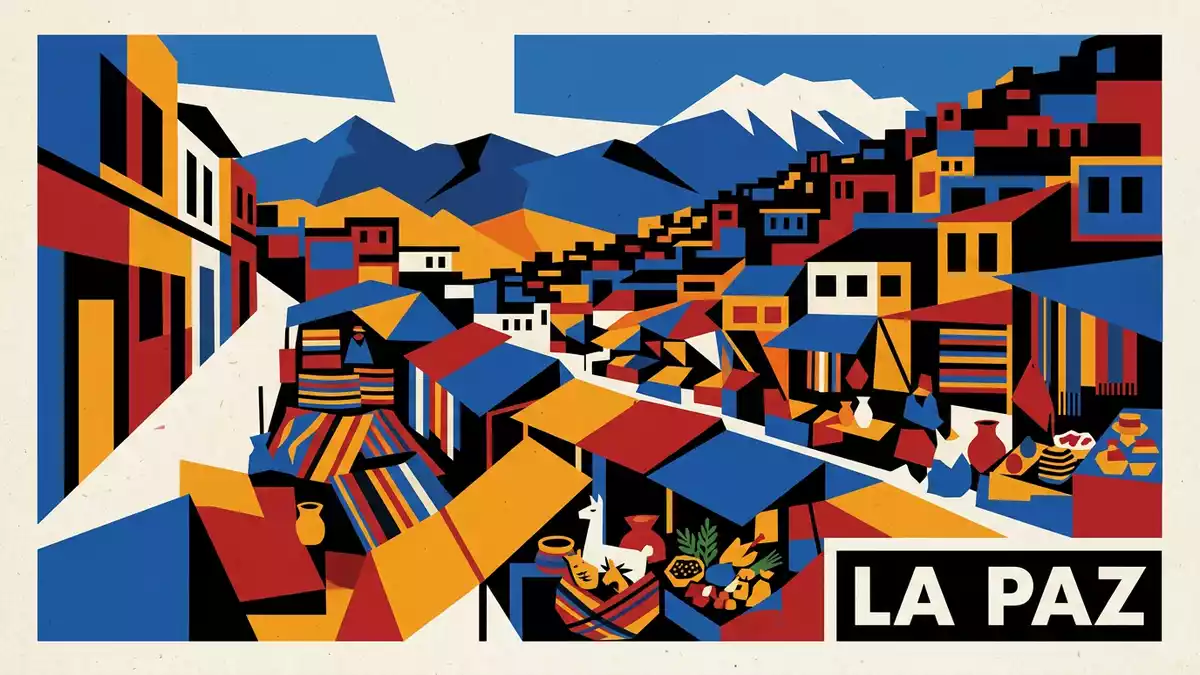
Mercado de las Brujas spreads through the El Rosario neighbourhood of La Paz as a street market of herbs, offerings, amulets and ritual objects. Its stalls occupy narrow commercial streets, where Andean spiritual practice appears beside textiles, souvenirs and everyday city life.
The streets around Calle Linares
Mercado de las Brujas is centred on Calle Linares and extends through Jiménez, Santa Cruz and Illampu. The market lies in central La Paz, near the Basilica of San Francisco and the street of Sagárnaga.
The setting is urban rather than enclosed. Shops and small street kiosks occupy the surrounding lanes, with painted walls, hanging goods and colourful umbrellas forming part of the market scene. the market streets include Linares, Jiménez, Santa Cruz and Illampu.
Herbs, amulets and Andean offerings
Merchants sell medicinal herbs, flowers, ointments, incense, home remedies and amulets. Other stalls display coloured sweets, coca leaves, cigarettes, dried starfish, lacquered frogs and objects associated with ceremonial offerings.
A central figure in Andean ritual life is Pachamama, often translated as Mother Earth. Offerings known as ch’allas can combine sweets, herbs, coloured wool, coca leaves and a preserved llama foetus, called a sullu. Andean offering objects appear together as materials for ceremonies connected with health, prosperity, protection and safe travel.
Yatiris and other ritual specialists are associated with the market. Their work includes readings, blessings and the preparation of offerings. The market therefore functions as a place of commerce and as a visible meeting point for living religious practices.
A living cultural tradition in Bolivia
The name Mercado de las Brujas is an established Spanish name for this part of La Paz. The market was declared Intangible Cultural Heritage of La Paz in 2019, recognising its historical, cultural and social importance.
Its traditions draw on Aymara ideas about nature, human life and reciprocal relationships with Pachamama. The market’s goods are not a single uniform belief system. They include herbal medicine, protective objects, fortune practices, Catholic references and Andean ritual materials.
The market’s public identity also reflects the city’s history. La Paz combines highland traditions with colonial architecture and dense commercial streets. Around Calle Linares, ritual objects are displayed openly within that mixed urban setting. ritual goods in La Paz include materials linked with Aymara religious practice.
August has a particular place in Bolivian traditions surrounding Pachamama. During this month, offerings may be assembled as mesas, blessed with alcohol and consumed in a fire. The market provides many of the separate materials used in these ceremonies.
Visiting Mercado de las Brujas: what travellers from Western Europe should know
- Mercado de las Brujas occupies streets in El Rosario, central La Paz. Calle Linares, Jiménez, Santa Cruz and Illampu are the principal street references.
- The market is reached on foot from the Basilica of San Francisco and Sagárnaga. La Paz’s steep central streets form part of the approach.
- The official language is Spanish and the currency is the Bolivian boliviano.
- Entry requirements depend on your nationality; UK travellers can check the FCDO travel advice at gov.uk/foreign-travel-advice, Irish travellers the Department of Foreign Affairs at ireland.ie.
Searching for Mercado de las Brujas on social platforms
These links open searches for Mercado de las Brujas on each platform.
Frequently asked questions about Mercado de las Brujas
Where is Mercado de las Brujas?
It is in El Rosario, central La Paz, around Calle Linares and neighbouring streets. The Basilica of San Francisco and Sagárnaga are nearby landmarks.
What can visitors expect to see?
Stalls display herbs, incense, amulets, flowers, ointments, coca leaves, sweets and materials for Andean offerings. Yatiris and ritual specialists are also associated with the market.
What makes the market distinctive?
Mercado de las Brujas places living Andean ritual practices within the commercial streets of La Paz. Its cultural status, ritual goods and urban setting belong together.


